

Every few years, the conglomerate is declared dead and the argument stays the same: markets reward focus, punish breadth and the only honest valuation is the sum of the parts.
For groups that run many unrelated businesses under one management structure and expect synergies that rarely arrive, the criticism is often fair.
Unique offering
The debate, however, rests on the category error and forgets that an investment holding company is a different kind of institution.
It does not seek to run everything under one management roof. It owns actively, builds platforms, holds them for as long as value creation continues and redeploys capital when a better use emerges.
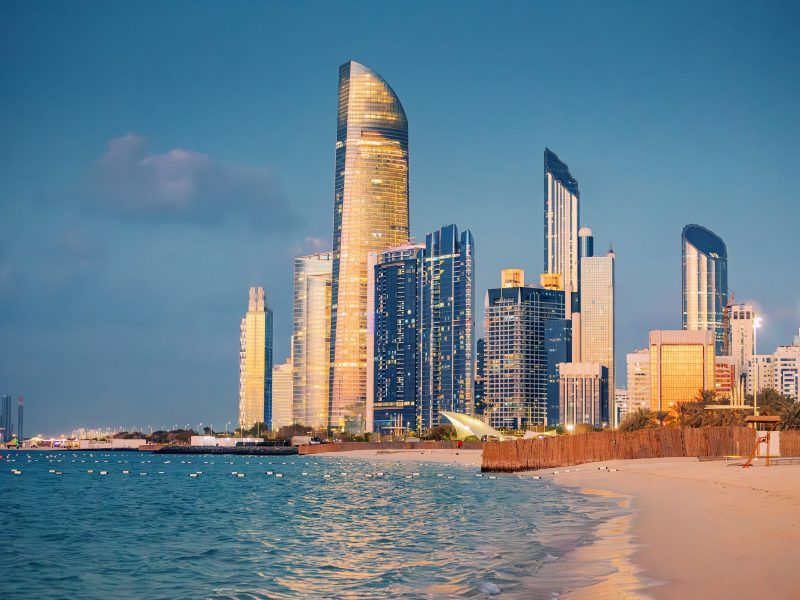
Headquartered in Abu Dhabi, Alpha Dhabi has 250-plus businesses spanning AI and technology, healthcare, energy, real estate and other sectors central to the UAE’s economic transformation. That breadth is the outcome of investment decisions, not the objective.
Where we invest is a matter of strategy, set by the board and executive management. The investment function turns that strategy into assets and outcomes, within a governance framework that applies to every decision.
The most valuable investments are rarely one-off holdings. They are platforms: scaled, durable positions in a sector or asset class that can compound over time and attract further capital. Many are national champions in the making, UAE businesses with the potential to lead regionally and globally, and identifying where the next one should be built is central to what we do.
Redeploying capital is key
Equally important is knowing when to let go. Our posture is patient, but ownership is not indefinite by default. Every position reaches a point when the group is no longer its best owner or when the value is better captured and put to work elsewhere. Deciding when to realise an investment, on what terms, and where the proceeds go next matters as much as the decision to enter.
In between, we own actively, taking board seats and holding companies to clear performance and governance standards, while judging every opportunity against the risk taken to earn it.
Collaboration with TA’ZIZ
Two recent decisions show how this works on different clocks. In May, we signed a strategic collaboration agreement with TA’ZIZ covering roughly $10B of capital investment in new industrial chemicals at Ruwais, subject to final investment decisions and regulatory approvals.
Anchored on domestic demand and aligned with Operation 300B, it is platform-building in its classic form: long lead times, heavy capital intensity and a need for patient, carefully staged capital.
MICAD Credit JV
In August, we doubled our commitment to the MICAD Credit JV, managed by Mubadala Capital, to US$1B and raised our ownership to 40%. With approximately US$1.7B in assets across 45 portfolio companies, the venture reflects our view of private credit as a strategic portfolio pillar.
Credit moves at a different rhythm, returning principal over time and creating capital that can be recycled into the next opportunity.
The contrast is deliberate. Exposures that respond differently to the same environment mean no single cycle dictates our capacity to act.
Private credit scrutiny
Private credit has faced scrutiny following high-profile bankruptcies in the United States, and questions about underwriting standards are fair.
We welcome them, because they reinforce the case for disciplined partner selection, conservative position sizing, and continuous monitoring. As an ADX-listed company, we also operate within the disclosure, audit, and market-conduct requirements that come with that responsibility.
Focus and breadth are not opposites. The question that matters is not how many sectors a holding company is in, but whether each position has a reason to be there, whether value is realised and recycled at the right time, and whether the next platform is being built with discipline.
For Abu Dhabi, whose economic vision depends on scaling new industries and national champions, an actively built, harvested, and renewed portfolio is a model built for the purpose.
Stay Up to Date with the Latest Updates at Finance ME
Dubai Real Estate Reports 20% YoY Gain in 2025 Transactions
Defence Stocks Rally in EMEA and APAC with 50% U.S. Spending Boost
Qatar Financial Centre: H.E. Mansoor Rashid Al-Khater Appointed as New CEO