


Bahrain Bourse is positioning regional market access as a key incentive for foreign investors as the Kingdom aims to replicate the success of its national fintech strategy in capital markets.
However the GCC’s segmented markets deters investment decisions crowding out the development of capital markets in smaller markets with smaller populations.
The Kingdom’s strategy rests on a straightforward proposition: reduce the administrative friction of cross-border investment, widen access to listed securities and make it easier for capital to move between markets.
Elevate, the Kingdom’s national programme, was launched last year and is ramping up next year with a IPO pipeline of eight firms.
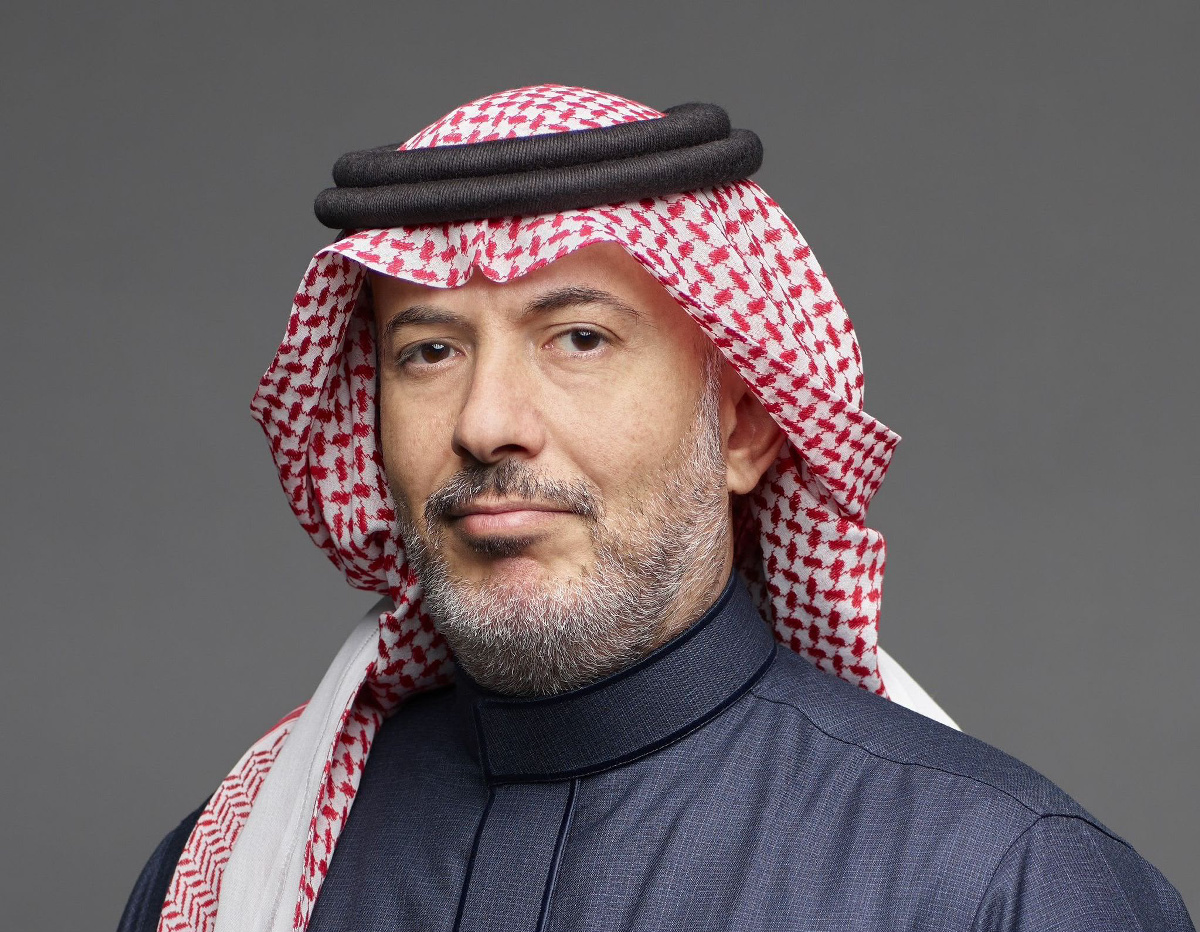
Speaking from Manama, I spoke with Shaikh Khalifa bin Ebrahim Al Khalifa, the CEO of the Bahrain Bourse, at Fintech Forward 2026 about the Kingdom’s strategy and what the Bourse is doing to deepen liquidity, streamline offerings and attract foreign capital investment.
Barriers to investment
The Bourse’s three-year strategy aims to connect exchanges, expand capital raising and deepen liquidity – but connectivity alone cannot guarantee either investor demand or stronger markets.
The Gulf wants to operate as a unified investment destination. For investors trying to access its capital markets, however, the region can still feel like six separate jurisdictions. That fragmentation is the opportunity Bahrain Bourse is seeking to tap into.
Rather than compete solely on the scale of its domestic market, the exchange is betting that better connectivity between Gulf exchanges can make Bahrain a useful entry point to the region’s investment opportunities. Its strategy rests on a straightforward proposition: reduce the administrative friction of cross-border investment, widen access to listed securities and make it easier for capital to move between markets.
The problem, as Bahrain Bourse sees it, is one that regional investors already understand.
“The problem we constantly hear from asset managers is: ‘If I invest across the GCC, I need to open six accounts, maintain six accounts, and deal with the requirements of all six GCC countries’ said Al Khalifa.
For international investors assessing the Gulf as a regional allocation, that complexity can add to the operational burden of accessing multiple markets. Bahrain Bourse wants to make connectivity part of its answer.
“This is where the exchange hub becomes useful. An investor could open an account in just one country connected to the hub and access all the other markets” said the CEO.
The question is whether easier access can translate into deeper liquidity, more active investors and sustained demand for the region’s securities.
Connectivity as Strategy
The foundation for this approach already exists in Tabadul: the exchange hub established by Bahrain Bourse and Abu Dhabi Securities Exchange (ADX) in 2022.
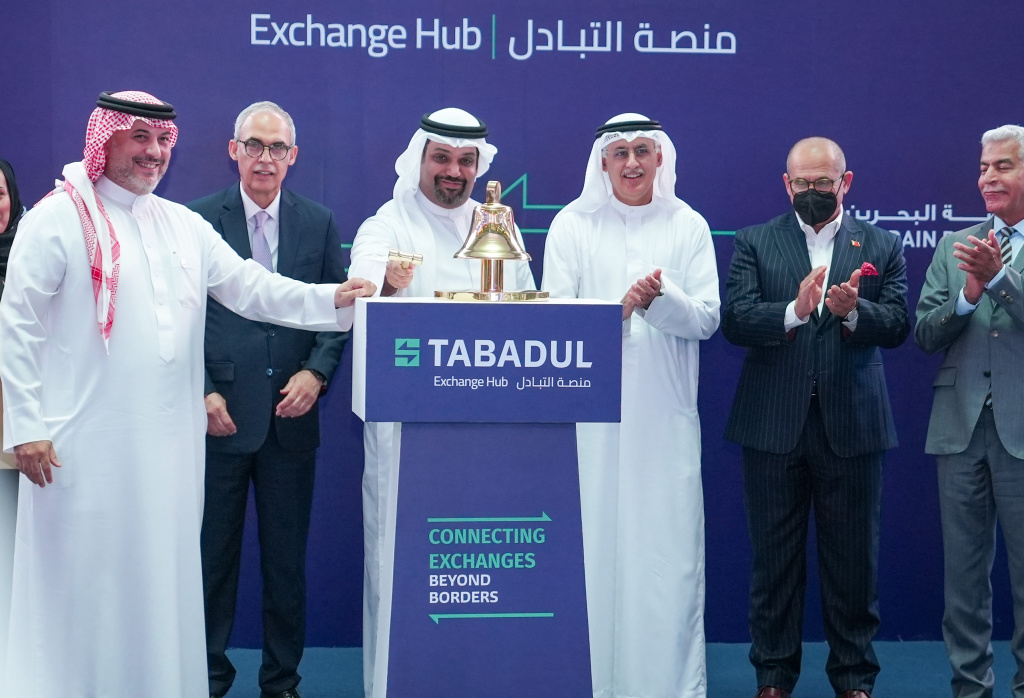
Operating on a mutual-market-access model, it enables investors to trade on participating exchanges through authorised local brokers. The initiative is intended to facilitate cross-border access without requiring each market to abandon its own systems.
For Bahrain, this creates a potential route to greater regional relevance. Its competitive proposition need not depend exclusively on attracting issuers and investors to the domestic market; it can also rest on the ability to connect those investors with opportunities elsewhere in the Gulf.
Bahrain Bourse & ADX
The exchange is looking to extend that approach.
“Bahrain Bourse and ADX have established an exchange hub, which is connected to the broader infrastructure,” the CEO said. In simple terms, if you have two markets, you shouldn’t need to open two completely separate accounts or arrangements. If you open an account and complete the necessary analysis in Bahrain, you should be able to access the UAE market directly and vice versa.”
The technical and operational work behind that proposition is significant. Cross-border access depends on connecting the institutions responsible for custody, settlement and securities infrastructure, not simply providing investors with another trading interface.
“There is significant back-office work required to make the process simple and easy for users. We need to connect the custodians, central securities depositories and other infrastructure.”
The CEO pointed to Hong Kong and Shanghai’s Stock Connect as an example of how distinct markets can retain separate systems while making transactions easier through a dedicated connection. The Hong Kong Exchanges and Clearing Limited Stock Connect is a mutual market access program launched in 2014, that links the Shanghai Stock Exchange (SSE) and the Stock Exchange of Hong Kong (SEHK)
“We have seen a similar model between Hong Kong and Shanghai through Stock Connect. They have different markets and different systems, but the connection between them makes transactions easier.”
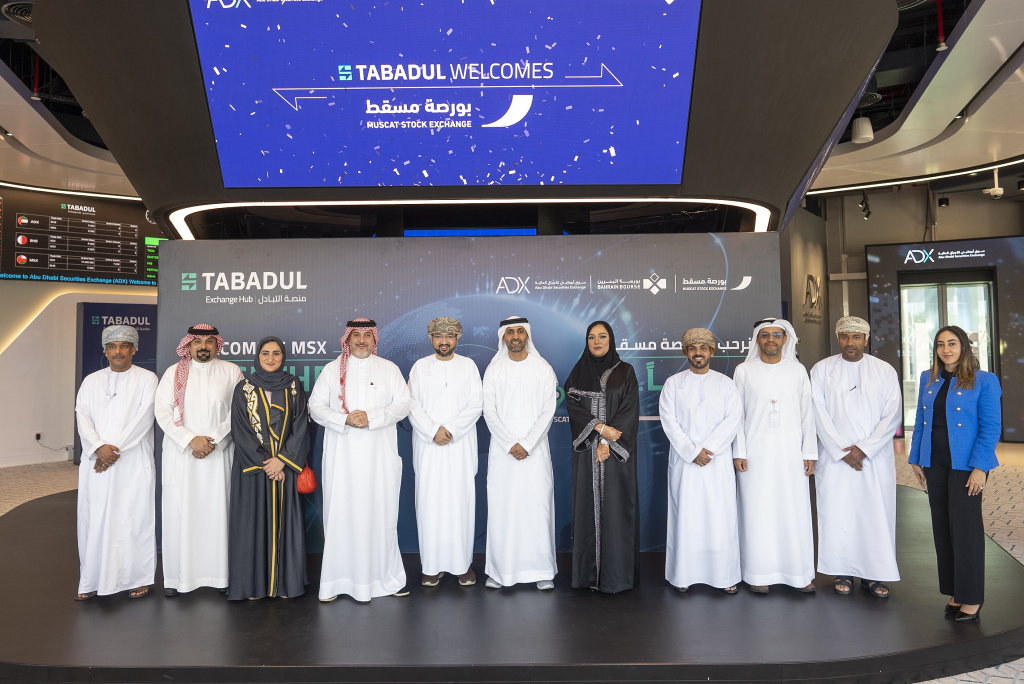
The ambition extends beyond Bahrain and Abu Dhabi. The exchange is engaging with Muscat and other markets as it seeks to develop a broader GCC network.
“I hope there will be more GCC markets connected in the future. We are trying to develop a broader GCC-wide approach.”
For foreign investors, the potential appeal is clear: a more accessible route into regional securities. For Bahrain, the strategic opportunity is to become part of the infrastructure through which that access is delivered.
But the distinction between facilitating investment and attracting it remains important. A connected exchange can make transactions easier but it cannot, on its own, ensure that investors want to buy the securities available.
Three-pronged approach
Bahrain Bourse’s broader Capital Market Development Plan, Elevate, is designed to address that challenge over three years, with phases labelled Ignite in 2026, Accelerate in 2027 and Harvest in 2028.
The sequencing reflects the exchange’s view that capital-market development requires more than the introduction of new financial products. Investor participation, supporting infrastructure and suitable regulatory frameworks must develop alongside them.
“Most of the work we undertake in 2026 will focus on igniting participation, bringing everyone together and working on the environmental issues, that need to be addressed – whether through technology or legal and regulatory frameworks.”
The following year is intended to move from groundwork towards projects capable of accessing private capital and generating cash flow.
“There are several measures that will accelerate their access to private markets and capital markets. There will be a group of projects that can be used to generate funding and cash flow.”
The objective is to adapt existing mechanisms to make capital markets more accessible to businesses and investors, while ensuring the different parts of the ecosystem function together.
“I personally look at it like an ecosystem. In an ecosystem, all the components need to work together at the same time. You cannot have the car operating at one point and the charging station operating at another. Everything must work together, the same place and at the same time. That is how you activate a market.”
The argument is particularly relevant to the exchange’s ambitions for new products. Introducing additional instruments before there is sufficient demand, investor understanding or market infrastructure could undermine their prospects.
“If we try to introduce innovative products now, before the necessary infrastructure exists, we may kill those products before they have a chance to succeed.”
A functioning capital market needs willing investors, credible issuers and sufficient activity to support meaningful transactions. Connectivity can help bring those participants together, but it is not a substitute for them.
Lessons from Bahrain’s fintech strategy
The Kingdom’s fintech sector is a story of what Bahrain did right but in another sector adjacent to its capital markets.
In 2017, the CBB introduced a fintech regulatory sandbox allowing frameworks for new products while the Kingdom’s established banking sector – prior to fintech reforms – gave startups the correct credit lines for expansion.
The Kingdom now leads on fintech development with supportive digital rails, APIs and open banking networks with a relaxed Cloud Policy for fintechs and banks. According to EY data, Bahrain offers the most cost-efficient set-up for fintechs followed by Oman and Qatar (FY25).
The Kingdom’s light touch regulation, led by the state’s sandbox, continues to attract homegrown and international crypto firms, payment solution platforms and innovative solutions across banking to innovate prior to gaining an in-country license.
Now the Kingdom is applying similar lessons of innovation and cross-border cooperation across capital markets with its Elevate programme.
IPO pipeline in FY27
The Kingdom knows it cannot compete on market size, owing to population and relative resource advantages, but it can offer a first-mover advantage for foreign banks and fintechs looking to the Kingdom as an entry point into the Gulf.
Bahrain’s capital markets are signalling the next stage in the Kingdom’s economic strategy. Elevate includes a government IPO programme involving eight companies, some of which could raise capital for new initiatives.
“The government has an IPO programme involving eight companies. Some of these are government-owned companies that may be used to raise capital for new initiatives,” Al Khalifa said.
The Bourse is also preparing for private-sector participation, seeking to position the exchange as a source of funding for companies rather than simply a venue for trading existing securities.
“We are also introducing a partnership programme to ensure that Bahrain Bourse becomes more than simply a place for data or trading. It should serve the broader ecosystem – including brokers, financial institutions and all market participants.”
The exchange’s approach to listings, however, is not simply about increasing the number of companies entering the market. Al Khalifa was keen to said emphasise the quality of IPOs than quality alone.
“We always tell companies that they should have a clear financial story and believe in the proposition that will make them successful. They shouldn’t list simply to be called a public company.”
That distinction matters to the connectivity strategy. More listings could expand the investment opportunities available to regional and international investors, but the number of listings alone would not establish whether the market had become deeper or more attractive to outside investors.
The quality of issuers, their capacity to deliver sustainable returns relative to their valuations at listing, and investor demand will remain central to the Bourse’s strategy.
The foreign-investor test
Bahrain Bourse is also looking beyond its immediate regional relationships as it seeks to build connections with international investors.
“This is not limited to one region. We are seeing a shift, and I think our focus will increasingly move from west to east,” the CEO said.
The CEO pointed to innovation in Asian markets, particularly China, while noting that investors from the United States, Australia and elsewhere continue to look towards the UK and the Kingdom as a close partner with London, Washington and Canberra.
“We are looking to the future and building connections so that we can engage and work with them.”
For Bahrain, the longer-term proposition is that a well-connected domestic market could provide foreign investors with a more efficient route into Gulf investment opportunities.
Those outcomes will depend on whether investors use the infrastructure, whether companies offer compelling investment opportunities and whether the resulting activity produces greater liquidity.
The same applies to Elevate. Its three-year timetable sets out the exchange’s intended progression from participation and infrastructure towards new products, but the ultimate measure of success will be economic rather than administrative.
Bahrain Bourse is betting that connectivity can help it compete for a larger role in the Gulf’s capital markets. The challenge is to turn that access into sustained demand and to ensure that a market with more connections also becomes a market with more depth.
Stay Up to Date with the Latest Updates at Finance ME
How Al Masraf Is Building Islamic Trade Finance Corridors
EDGE’s Rodrigo Torres on Risk, Sovereignty and Defence Finance in a Multipolar World
Presight AI to Expand Kazakhstan AI Hub, Open Azerbaijan Office