
The UAE’s relationship with Africa is entering a new phase.
What was once defined largely by trade, commodities and infrastructure is increasingly being shaped by long-term investment in energy, industry, logistics and technology.
With UAE-linked investment in Africa estimated at around $110B, the scale of the relationship is becoming difficult to separate from the continent’s broader economic transformation.
Gulf Investment on the Continent
For Gulf investors, Africa presents a combination of opportunity and complexity.
The continent is among the world’s fastest-growing regions, with a young and rapidly urbanising population, expanding consumer markets and significant reserves of critical minerals. At the same time, infrastructure and energy deficits remain substantial. Clean-energy investment continues to fall well short of what is required to support industrialisation and rising demand.
That gap is creating an opportunity to rethink how capital is deployed. Rather than investing in isolated assets, a growing number of investors are looking at interconnected ecosystems spanning energy, transport, manufacturing, digital infrastructure and natural resources.
The UAE, with its experience in infrastructure development, renewable energy and global logistics, is well positioned to participate in that shift.
Electric Mobility in Africa
Electric mobility offers one example of how these themes are converging. Africa’s large two-wheeler market, high fuel-import bill and uneven electricity infrastructure create both a challenge and an opportunity for alternative mobility models.
Companies operating in this space are increasingly building not just vehicles, but the energy, battery-swapping, manufacturing and digital infrastructure around them.
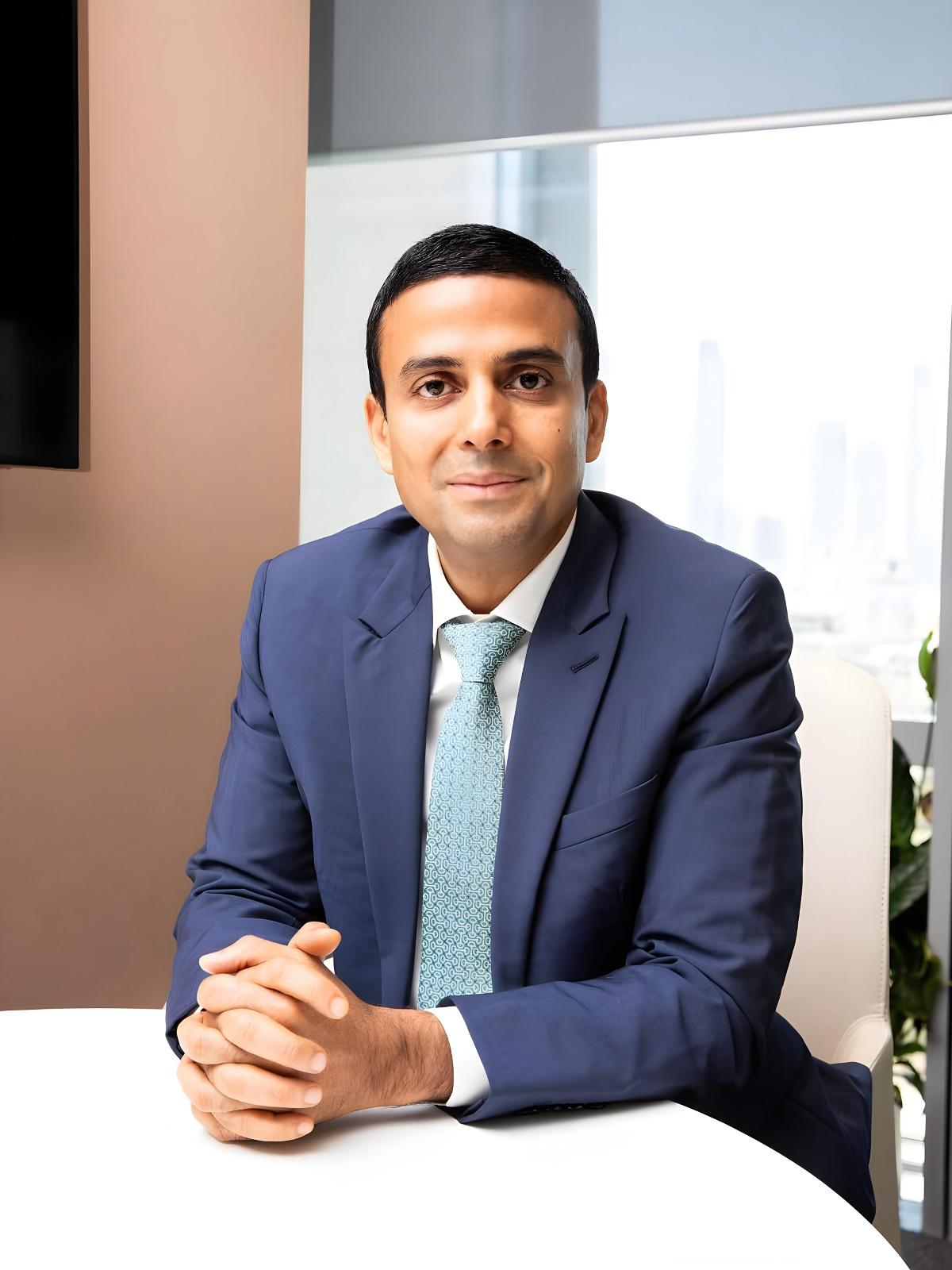
Gagan Gupta, Founder of Spiro and Chairman of Equitane, argues that the next phase of UAE–Africa investment will ultimately be defined by the ability to build local value chains rather than simply extract or export resources.
From green industrialisation and electric mobility to skills development and local manufacturing, Gupta believes the most significant opportunity lies in helping Africa build the infrastructure and capabilities needed to capture more value on the continent.
What is driving the $110B capital inflow and how do you see the UAE–Africa investment relationship evolving?
What’s driving it is a rare alignment of fundamentals.
Africa is growing at around 4.2%, nearly four times the Eurozone, with a young, fast-urbanising population. Yet it remains structurally under-capitalised in exactly the sectors that matter for its future: clean energy, infrastructure and industry.
“Only about USD 34B – under 2% of the global total in clean-energy investment were secured between 2020 and 2025,” says Gupta.
UAE investors have taken a leading role in green investment and clean-energy development, so the relationship is naturally evolving from trade and resources toward long-term industrial and energy infrastructure. That’s where the enduring returns will be.
From your experience with Spiro and Equitane, where do you see the most compelling investment opportunities in Africa over the next five to ten years?
The most compelling opportunity is green industrialisation according to the entrepreneur.
“The winners will be those who move up the value chain, capitalising on Africa’s mineral resources to anchor local processing and manufacturing rather than exporting raw materials,” said Gupta.
There are numerous opportunities around electric mobility in particular in East Africa, Central Africa, MENA but also to support Africa’s transport corridors, which are formidable boosters to lower trade costs, boost regional integration, and support the African Continental Free Trade Area. My conviction is that funding must shift from a single-asset mindset, one mine, one power plant, one road, to an ecosystem approach that jointly addresses mining, power, transport and industry.
This is what we do at Spiro with electric mobility: we put energy, manufacturing and digital infrastructure into one investable system.
What does Africa’s electric mobility transition tell us about the wider infrastructure and energy investment opportunity?
Actually, we are now over 120,000 bikes deployed, + 2,500 swap stations, 48 million-plus swaps completed and 1.3 billion CO₂-free kilometres enabled. What the scale tells you is that mobility is really an energy and infrastructure story. Investors view our swapping stations network as an infrastructure asset – closer to a toll road or a telecom grid – with predictable recurring revenue.
The scale ahead is significant: Africa spends close to USD 150B a year importing fuel, and a two-wheeler fleet heading toward 50 to 60M by 2030 is a vast base of future clean-energy demand. Where the grid is weak, we even generate and store our own solar energy at the stations.
Therefore, electric mobility is really a gateway into the far larger African energy and infrastructure opportunity.
Spiro recently closed a $270M funding round. What does the scale of that investment say about international investor appetite for African growth businesses?
It says the appetite is real, but discerning. This round, USD 215M in equity plus USD 55M from NewTrails Capital, drew capital from Europe, Africa and China.
What convinced our investors pool was proof. As founders we put in significant capital first and de-risked the model, so investors were backing a business that already works at scale.
Yes, African startup and venture financing witnessed a strong contraction this past year but regional and international investors remain active. Increasingly, they lean towards vertically integrated companies that show a long-term commitment to building local value chains and upskilling talent, because by transforming Africa’s natural resources into tangible value, businesses like ours are better positioned to attract capital globally.
Spiro’s Battery-as-a-Service model and our digital platforms that make every asset trackable also reduces the risk, enables recurring revenue.
What are the biggest risks investors still underestimate when entering African markets, and how can Gulf investors manage them?
The most underestimated risk is treating Africa as one uniform market. In reality, competitiveness has to be seen continentally but executed locally, market by market, because each has its own realities, its own policy environment, its own energy conditions.
The second is execution risk, many businesses have strong technology but simply can’t execute on the ground. The way any investor, Gulf investors included, manages both is the same: back proven, well-run models with disciplined unit economics, and partner with operators who have strong local teams that actually deliver, because capital follows proof, not promise.
Backing a platform that already spans several markets, as ours does, is itself a way to gain diversified exposure while managing single-market risk.
Looking ahead, what do you believe is the biggest African investment opportunity that the market is currently underestimating?
The single most underestimated opportunity is youth and skills. Africa has 532M young people aged 15 to 35, and the businesses that invest in equipping them, as we do through Spiro Academy, which is supporting the training and upskilling of more than 10,000 people, in particular Youth and Women, will define the decade.
It’s closely tied to how much of the industrial value chain can still be built on the continent, something the market consistently under-prices. We are proving it in mobility: moving toward more than 80% of vehicle value added in Africa, up to 90% of components localised by 2027, and battery cells produced on the continent with strategic partners such as A2MP, our mineral and metal processing platform.
The market keeps pricing Africa’s risk, but it consistently under-prices Africa’s capacity to build.
Stay Up to Date with the Latest Updates at Finance ME
EDGE’s Rodrigo Torres on Risk, Sovereignty and Defence Finance in a Multipolar World
ADNOC Distribution’s Ali Siddiqi: “Growth, Growth and Growth”