Building an investment portfolio and building a financial services group may appear to require very different disciplines. For some executives it does whereas for others there is more overlap than separation. .
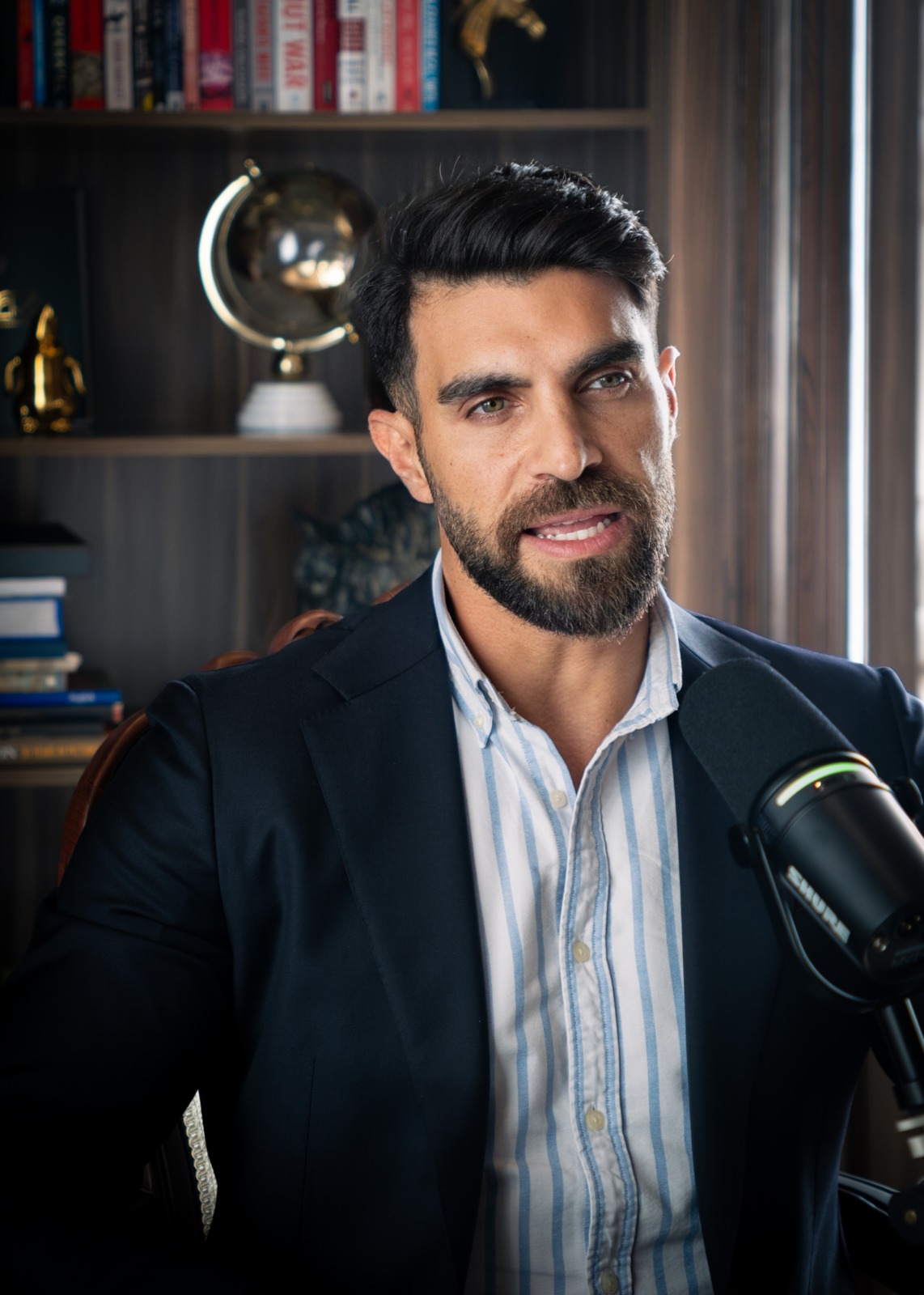
For George Rahhal, Global Executive Director of Capital Haus in DIFC, both a portfolio and a financial services group applies a similar test to both: an opportunity needs to make sense within the bigger picture.
Growth, like investing, is not strengthened simply by adding more. The value-added lies in knowing what belongs, what complements what is already there and what should be left out.
We spoke to Rahhal to ask him about his investment philosophy and the next stage of the Australian wealth management firm inside Dubai’s financial centre.
From Sydney to DIFC
Rahhal grew up in Sydney with a long standing interest in finance and economics before moving to Dubai 11 years ago.
The decision placed him inside an international business environment where clients, companies, investment opportunities and capital regularly moved across markets. It also helped shape the perspective he now brings to investment management, business growth and the international direction of Capital Haus.
His investment philosophy begins with alignment. An opportunity can appear attractive in isolation, but George believes its real value depends on how it fits a client’s objectives, risk tolerance, time horizon and wider financial position.
“Identifying opportunity and how it fits into the long term objectives of clients and the business” is how Rahhal described the approach.
Multi-lateral Thinking
The final part of that statement is important.
Rahhal’s thinking is not confined to portfolio construction. His role at the firm includes growth, entering new markets, investing into complementary business verticals and helping create alignment across the wider group. The same discipline he applies to investing also influences how he evaluates business opportunities.
A new direction needs a reason to exist beyond its immediate commercial appeal. A market, capability, or investment should strengthen something larger rather than simply add another layer of activity. This creates a more selective approach to growth, where strategic fit matters alongside potential return.
The principle becomes increasingly important as investment conversations expand.
Clients are now looking beyond traditional portfolio conversations and asking about international markets, private opportunities, currencies, geopolitical risk, digital infrastructure and new forms of investment access with the growth in investor education, awareness and wealth accumulation across the GCC. Greater choice creates more possibilities, but it also makes disciplined selection more important in the Gulf.
“Modern investment management needs to reflect that shift. Traditional assets remain relevant, yet investors increasingly expect access to a wider universe and advice that can respond more quickly to changing markets. Portfolio construction is therefore becoming less about selecting from a fixed list of assets and more about understanding how different opportunities work together around a client’s objectives” said Rahhal.
AI in Asset Management
Technology is part of that evolution.
Artificial intelligence is becoming increasingly relevant to portfolio construction and asset management, particularly where it can improve analysis, identify patterns, and help investment professionals process information more efficiently.
His interest in technology is practical rather than driven by novelty. Faster systems and broader data access only matter when they contribute to better decisions.
Rahhal’s approach to portfolio construction and asset management keeps the client’s long term objective as the reference point, with technology supporting the process rather than defining it.
Emerging Asset Classes
The same thinking applies to emerging investment themes. Attention alone is not enough to justify exposure. A new asset class or market opportunity still needs to improve the structure of the portfolio and serve a clear purpose within the wider strategy.
George’s experience across Australia and Dubai has reinforced this more global perspective. Australia gave him exposure to a mature financial environment, while Dubai placed him inside a market where entrepreneurs, investors and companies routinely think across jurisdictions.
Research is becoming another important part of that direction. Capital Haus is developing technology and research capabilities intended to give clients and prospective clients greater access to market insight and financial education.
Information: Part of the Solution
A more informed investor does not reduce the value of expertise. It raises the level at which that expertise needs to operate. When information is widely available, the challenge becomes filtering it, understanding context, connecting separate opportunities and deciding what deserves attention.
This is where his investment philosophy and role at Capital Haus converge. He is helping evaluate not only which investment opportunities make sense, but which markets, capabilities, and business directions belong within the wider organisation.
More access is not automatically better, just as more growth is not automatically stronger.
The discipline lies in understanding what fits and why. Whether the decision involves a portfolio or the next stage of the growth story at Capital Haus, the question remains the same: does this opportunity strengthen the bigger picture?
That approach is helping shape both the investment thinking one can bring to the business and the financial services group he is helping build.
Stay Up to Date with the Latest Updates at Finance ME
How Al Masraf Is Building Islamic Trade Finance Corridors
EDGE’s Rodrigo Torres on Risk, Sovereignty and Defence Finance in a Multipolar World
ADNOC Distribution’s Ali Siddiqi: “Growth, Growth and Growth”