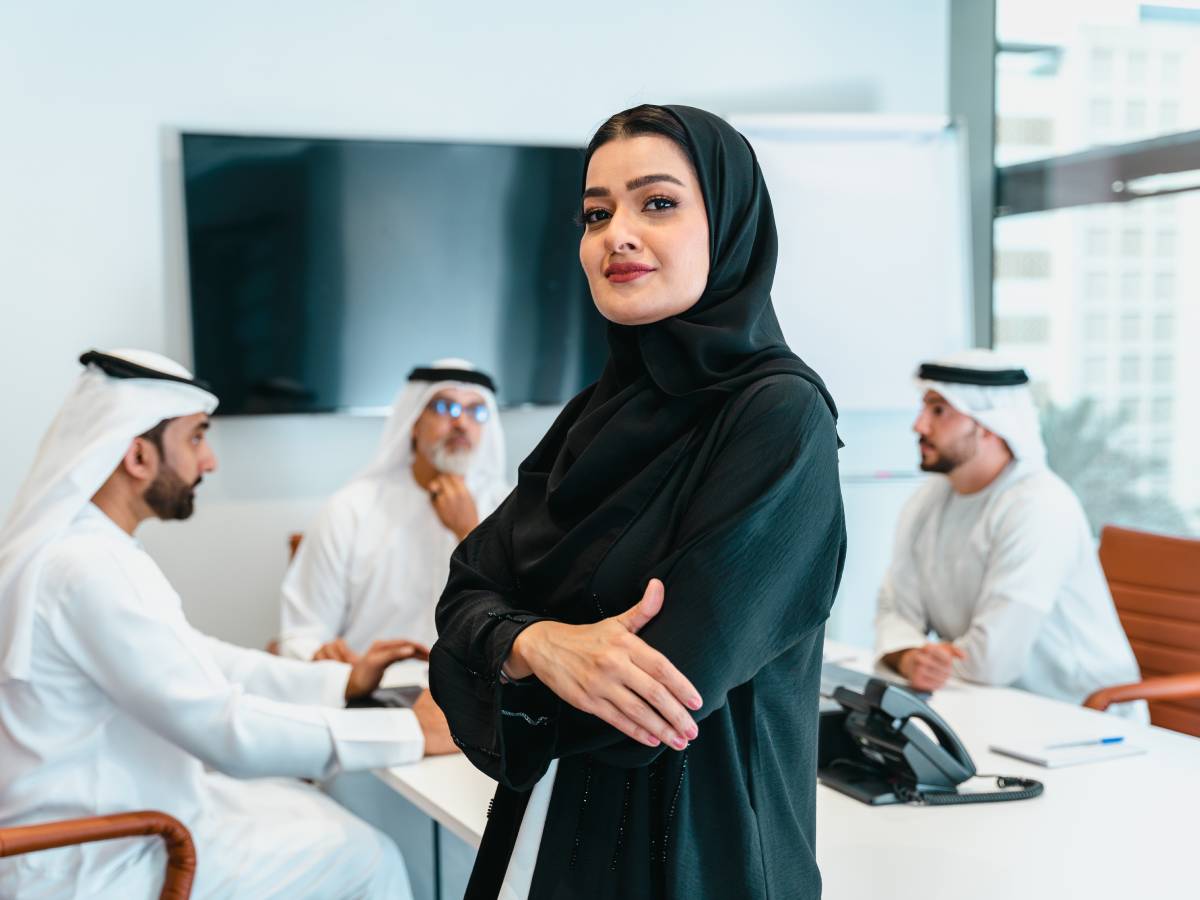
Every year on August 28, the UAE celebrates Emirati Women’s Day – a moment that highlights the extraordinary progress of Emirati women across society. But behind the headlines and statistics lies a more complex and powerful story: one of women leading under dual pressures—cultural expectations and commercial performance—and reshaping leadership in the process.
Today, Emirati women make up 66% of the UAE government workforce and hold three-quarters of government leadership roles. In the private sector, women now occupy 15% of board seats in listed companies, a figure that has doubled in just five years. These numbers indicate that Emirati women are not only stepping into leadership roles, but they are also transforming what it means to lead in one of the world’s fastest-changing economies.
Yet the reality of this rise is more nuanced. Emirati women leaders often carry an added weight: the expectation to succeed not just for themselves, but as cultural ambassadors for Emirati society. Every success is celebrated collectively, every setback scrutinised through the lens of tradition and national progress. It is leadership under a spotlight – where cultural integrity must be balanced with business imperatives, and where performance carries both personal and societal significance.
Navigating cultural and commercial pressures
The pressures facing Emirati women leaders are multi-layered. Family and community responsibilities sit alongside corporate roles, with success measured not only in career outcomes but also in contributions to social and cultural life. At the same time, the pace of economic diversification in the UAE demands rapid innovation, growth, and results.
Balancing these dual forces requires an uncommon mix of emotional intelligence, agility, and clarity. Leaders must move fluidly between roles: from representing Emirati values on the international stage, to making hard-nosed commercial decisions in boardrooms, to nurturing inclusive environments at home. This adaptability is not just admirable – it is increasingly a competitive advantage.
Cultural intelligence as a strategic edge
Rather than viewing cultural expectations as a constraint, many Emirati women leaders leverage them as a strength. Their cultural intelligence—an ability to navigate different norms, traditions, and expectations with sensitivity—gives them a unique edge in a region defined by diversity.
In the UAE, where workplaces often include dozens of nationalities, cultural fluency is invaluable. Emirati women leaders excel at building trust across boundaries, using empathy and consensus-building to unite teams around shared goals. Rooted in traditions of consultation and hospitality, their leadership style emphasises inclusion and collaboration—qualities that are becoming essential in solving today’s complex, cross-functional business challenges.
This ability to merge tradition with modern practice creates a model of leadership that is both authentic and future-ready. By grounding innovation in cultural values, Emirati women ensure that change is embraced rather than resisted—an approach that makes transformation more sustainable.
Proven strategies for inclusive leadership
From this experience, several proven strategies for inclusive leadership in the UAE’s evolving business landscape emerge:
- Perspective management: Successful leaders strike a balance between short-term business performance and long-term cultural alignment. Emirati women often demonstrate a dual-lens approach, zooming in on immediate commercial challenges while zooming out to ensure decisions honour their cultural heritage and community trust.
- Emotional regulation: The ability to stay composed under scrutiny is vital. By cultivating deep self-awareness and practising resilience, Emirati women leaders manage their own emotional triggers while acting as anchors for their teams in high-pressure environments.
- Communication across boundaries: Multilingual and culturally attuned, these leaders adapt communication styles to fit diverse audiences. They know when to be direct, when to be diplomatic, and how to use respect and dignity to build alignment even in moments of tension.
- Innovation through evolution, not disruption: Rather than imposing sudden change, Emirati women favour evolutionary innovation—building on what already works, involving stakeholders in decision-making, and linking new ideas to tangible outcomes. This inclusive style accelerates adoption and reduces resistance.
- Mentorship and legacy building: Emirati women recognise that their leadership is a generational responsibility. Many invest time in mentoring younger women, offering culturally relevant guidance on navigating pressure, and creating ecosystems of support that amplify inclusion across industries.
Building resilient organisations
What makes this leadership style particularly powerful is its impact on organisational resilience. Teams led by Emirati women often demonstrate strong cohesion and loyalty, built on trust and a culture of inclusion. Their long-term perspective ensures organisations prepare for the future rather than just chasing short-term gains.
This resilience is not theoretical – it is practical. By blending cultural authenticity with commercial acumen, Emirati women leaders help organisations manage change with less friction, foster distributed leadership, and invest in continuous learning. In fast-moving markets like the UAE, these qualities are essential to sustainable performance.
The global dimension
The capabilities Emirati women develop at home translate effectively onto the global stage. In international negotiations, they act as cultural translators, bridging local traditions with global business standards. Their ability to lead with authenticity while delivering results positions them as powerful ambassadors for the UAE in expanding markets.
Their emphasis on relationship-building over transactional deals also resonates globally, where long-term partnerships increasingly matter more than one-off wins. As UAE businesses expand abroad, the leadership model of Emirati women—balancing values with vision—is becoming an export in itself.
Why inclusive leadership matters now
The rise of Emirati women leaders offers lessons not only for gender inclusion but for leadership in a complex world. The very pressures they face—cultural representation and commercial delivery—mirror the dual demands placed on global executives operating in diverse, high-stakes environments. Their strategies provide a blueprint for leading under pressure with clarity, empathy, and effectiveness.
It also highlights the importance of investment. Programs such as LEAP, the Emirati graduate trainee development programme by Emirates Global Aluminium, in partnership with us at Ignite Training, are playing a critical role in equipping UAE Nationals – particularly women – with the skills to thrive under pressure. By blending behavioural science, business simulations, and personal growth tools, these programs prepare leaders to succeed in environments where cultural and commercial demands intersect.
A model for the future
As the UAE accelerates its diversification and global influence, the example of Emirati women in business demonstrates that pressure can be a catalyst for strength. By embracing cultural authenticity while driving innovation, they are showing how to lead in a way that is inclusive, sustainable, and globally relevant.
Their journey is not just about representation – it is about redefining leadership itself. The dual pressures they navigate have forged leaders with exceptional cultural intelligence, resilience, and vision. In many ways, they embody the future of leadership: one that turns complexity into clarity and challenge into opportunity.
For business leaders everywhere, there is a clear takeaway: the strategies developed by Emirati women under pressure are not just relevant in the UAE – they are increasingly essential in a world where culture and commerce collide.