The UAE is expected to welcome a net 9,800 millionaires in 2025, securing its position as the leading global destination for high-net-worth individuals (HNWIs), according to the Henley Private Wealth Migration Report 2025. That inflow comfortably surpasses the US (+7,500) and marks a stark contrast to countries losing wealthy residents, particularly the UK, which is set to shed a record 16,500 millionaires this year.
UAE poised to gain, UK reels
The UAE’s draw stems from a blend of policy reforms, zero income and inheritance taxes, and newly developed golden visa schemes. Legal enhancements in areas such as asset protection and succession laws, particularly in Dubai’s DIFC, have underpinned the appeal for wealthy expatriates. The inflow includes significant numbers from Pakistan, Lebanon, and Iran as geopolitical tensions spur capital flight.
By contrast, the UK’s exodus, driven by the abolition of the non-domicile tax regime in 2024 and hikes in inheritance and capital gains tax, represents the first time since Henley began tracking that a European country has led global HNWI outflows. British Chancellor Rachel Reeves confirmed that the changes mean wealthy residents will face taxes on their global income and assets after four years, prompting many to reconsider their tax residency. Henley estimates that the UK could lose approximately GBP 66 billion ($92 billion) in investable assets by 2025.
Europe’s shifting wealth map
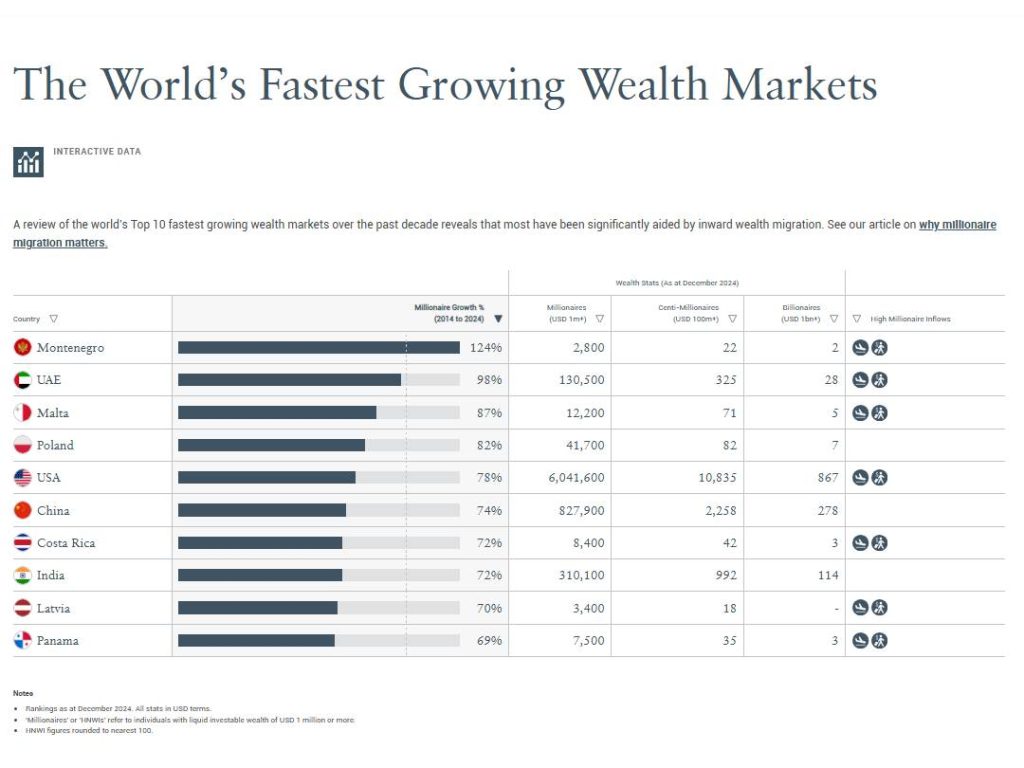
Europe as a whole is seeing a reversal in fortune. France, Spain, Germany, Ireland, Norway and Sweden are also expected to record net millionaire outflows in 2025. Meanwhile, destination nations within the region are gaining wealth—Italy (+3,600), Portugal (+1,400) and Greece (+1,200), alongside steady inflows into Switzerland (+3,000). Smaller jurisdictions, such as Montenegro, Malta, and Monaco, continue to attract HNWIs through investor programmes and tax incentives.UAE’s strategic policy mix
The UAE’s position as the global leader in wealth inflows is shaped by multiple factors. Golden visa programmes offer long-term residency tied to investment; the DIFC now hosts 120 family offices managing $1.2 trillion in assets, a 33% increase in a year. Legal reforms in inheritance and marriage law, combined with Nasdaq-style family office regulations in ADGM, underpin the country’s appeal.
A substantial part of new inflows originates from tax-averse UK millionaires, while persistent unrest in the Middle East and Asia has also driven capital toward the safety of UAE cities. Analysts estimate that up to 100 millionaires from Pakistan, over 50 from Lebanon, and more than 50 from Iran will relocate to the UAE.
Wider global trends
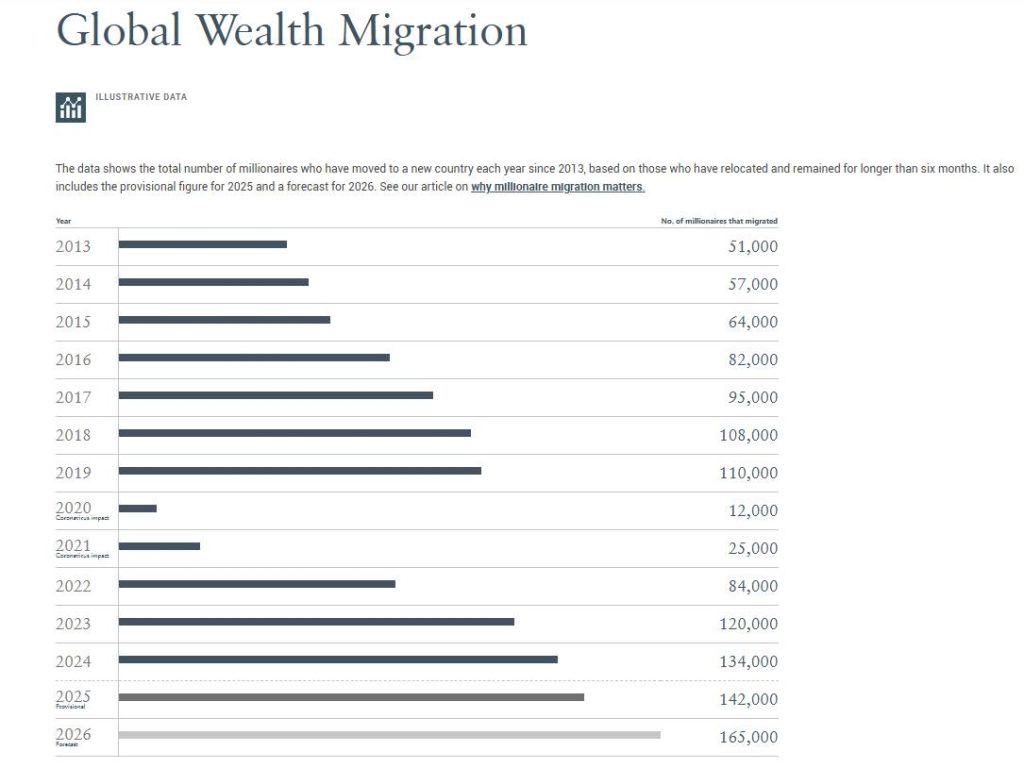
Globally, migration of 142,000 millionaires in 2025 represents nearly 0.2% of the estimated 60 million HNWIs—but the UAE’s share is among the highest in absolute and per capita terms. Outside Europe and the UAE, Saudi Arabia is expected to gain 2,400 millionaires—fueled by returning nationals and increased foreign investor confidence.
In Asia, Singapore (+1,600), Thailand (+450) and Hong Kong (+800) are also drawing HNWIs, though Singapore’s inflows are at a ten‑year low. Traditional wealth destinations, such as Australia, Canada, and New Zealand, are set to record their lowest millionaire inflows in decades.
Economic and policy stakes
This shift carries long-term ramifications. HNWI migration helps replenish foreign currency reserves, spurs growth in family offices, and supports stock markets and domestic entrepreneurship. For the UAE, it reinforces its role as a global wealth hub, complementing its strategy to diversify away from oil and integrate into the global finance sector.
Conversely, the UAE’s tax-free environment, modern legal framework, and regulatory openness position it to capitalise on global wealth redistribution. Analysts warn that the UK and parts of Europe risk losing institutional capital, with implications for economic competitiveness and innovation.