As 2025 artificial intelligence becomes embedded across financial infrastructure, the Finance Middle East AI Future Forum 2025 convened key players to examine where the technology is heading—and what it means for decision-making, regulation, and innovation.
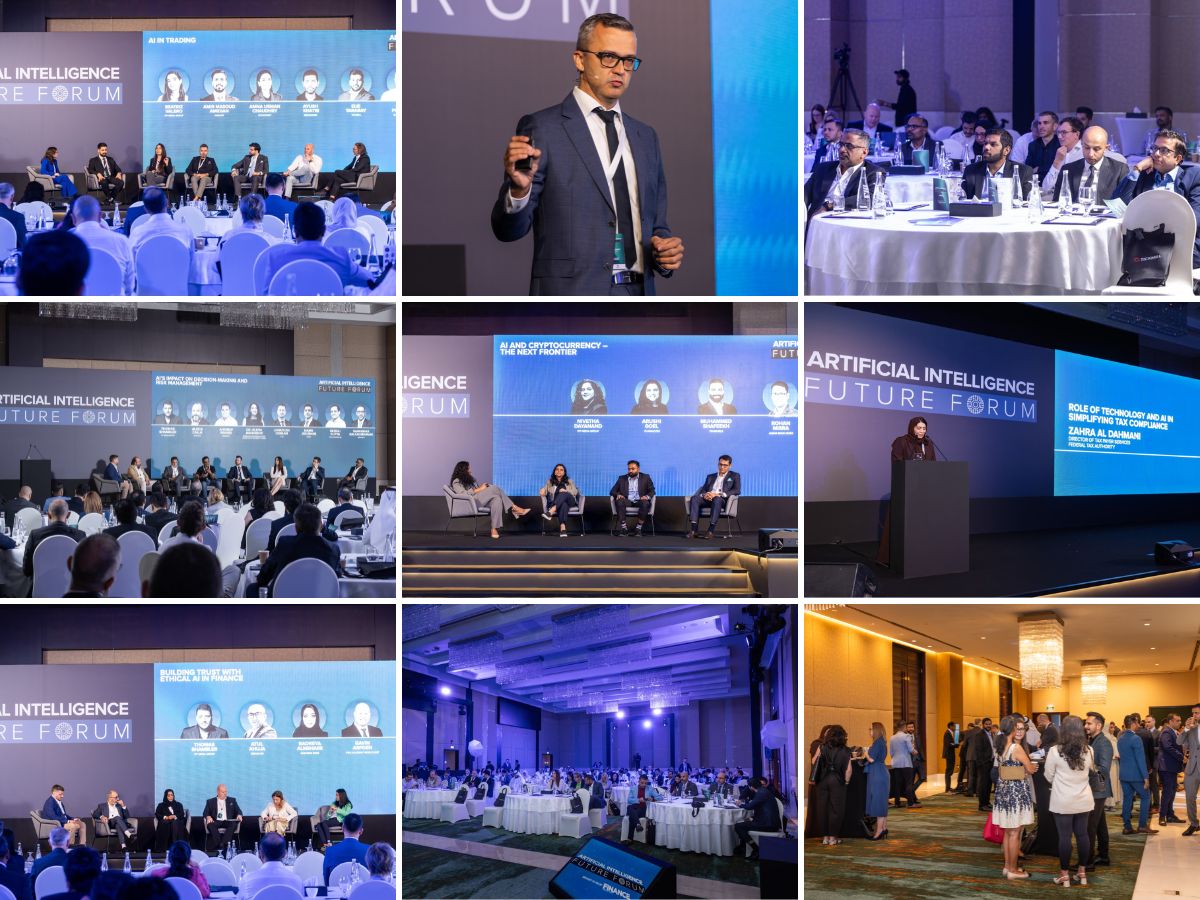
Held on April 29 at Anantara Downtown Dubai, the event featured four focused panel discussions, each unpacking a critical dimension of AI’s impact on the sector.
Here’s a recap of the sessions from the AI Future Forum 2025.
Opening address: AI and tech in tax compliance
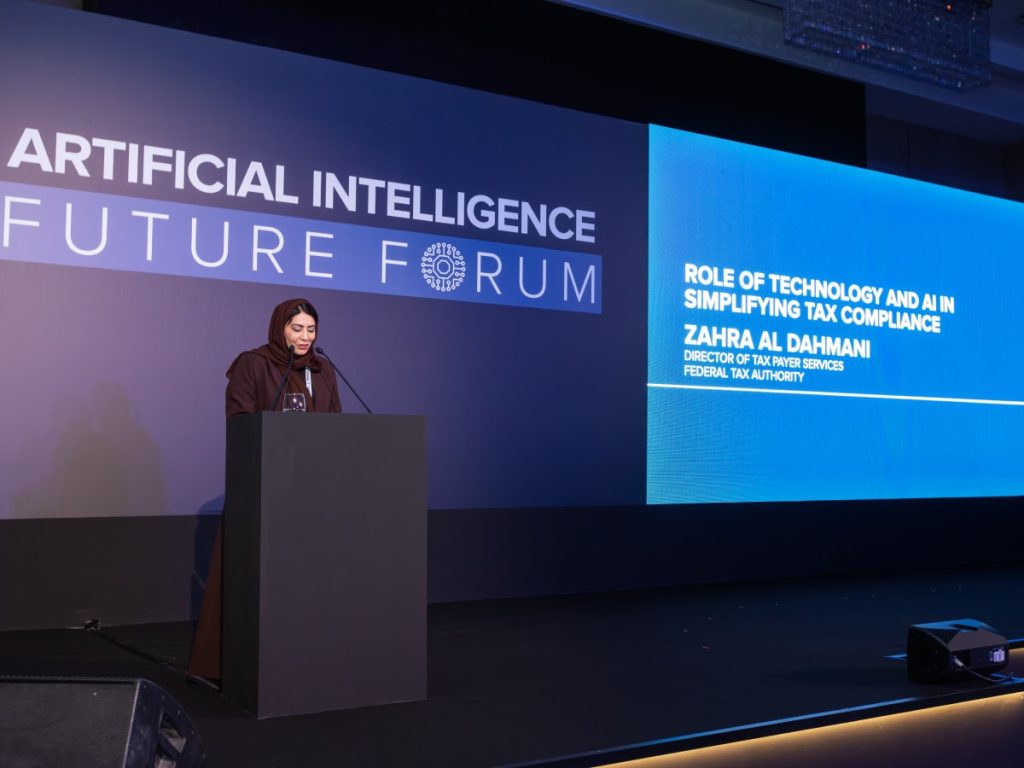
Zahra Al Dahmani, Director of Tax Payer Services at the UAE’s Federal Tax Authority (FTA), opened the Finance Middle East AI Future Forum 2025 with remarks on how technology and AI are being used to modernise tax systems.
Al Dahmani outlined how digital tools streamline taxpayer services, improve compliance monitoring, and drive operational efficiency across the FTA. She also highlighted the authority’s broader vision for integrating data analytics and automation to meet rising service and regulatory demands.
Keynote: Understanding AI-driven insights for enhanced financial strategies
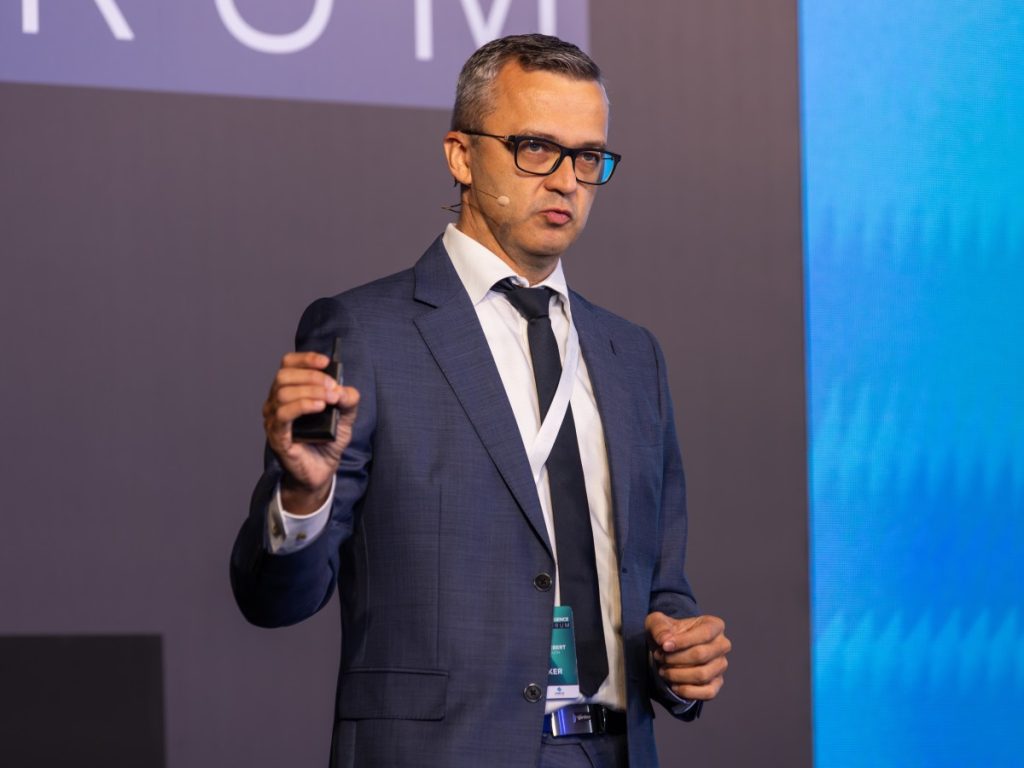
Alexej Huebert, CFO of SAP MEA South, delivered a keynote on how AI-driven insights are reshaping financial strategy and risk management.
Huebert discussed the growing role of real-time data in informing decisions, optimising resource allocation, and strengthening financial controls. He also addressed how CFOs are leveraging AI to navigate volatility and improve forecasting accuracy in increasingly complex operating environments.
Panel: AI’s impact on decision-making and risk management
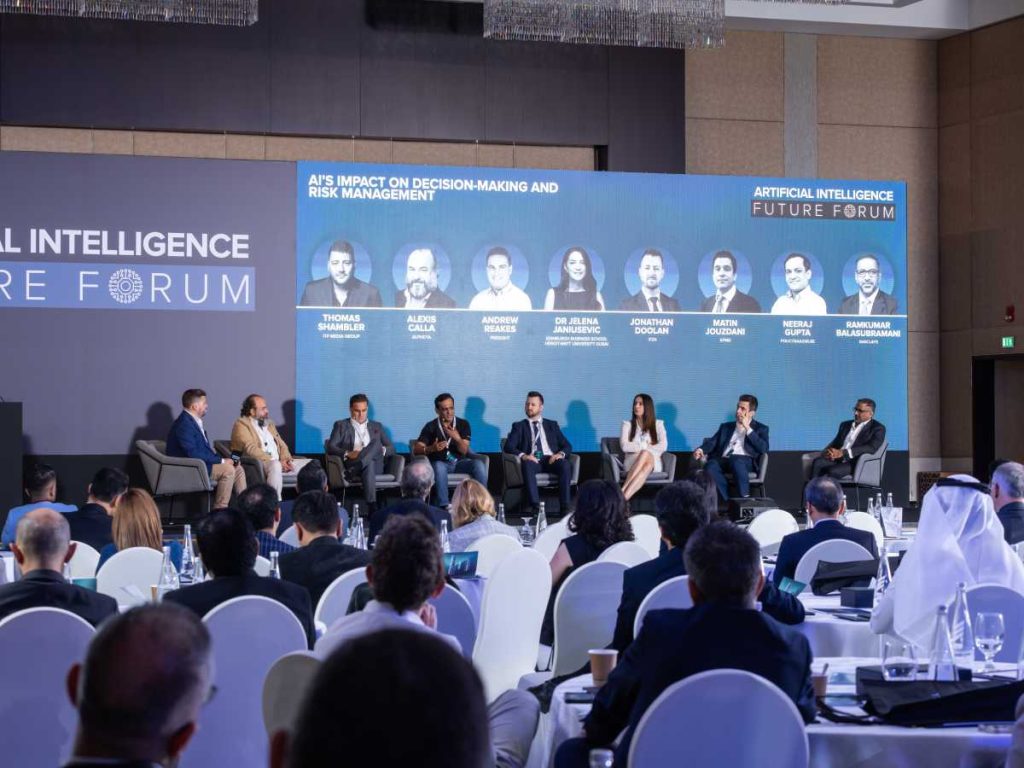
Moderated by Thomas Shambler, the opening session explored how AI is transforming financial risk frameworks. The panel featured Ramkumar Balasubramaniam from Barclays, Alexis Calla from Alpheya, Andrew Reakes from Presight, Matin Jouzdani from KPMG, Dr Jelena Janjusevic from Heriot-Watt University, Neeraj Gupta from Policybazaar.ae, and Jonathan Doolan from IFZA.
Discussions centred on AI’s role in credit scoring, stress testing, and fraud detection while addressing challenges around regulatory compliance, model explainability, and legacy system constraints.
Panel: AI in trading
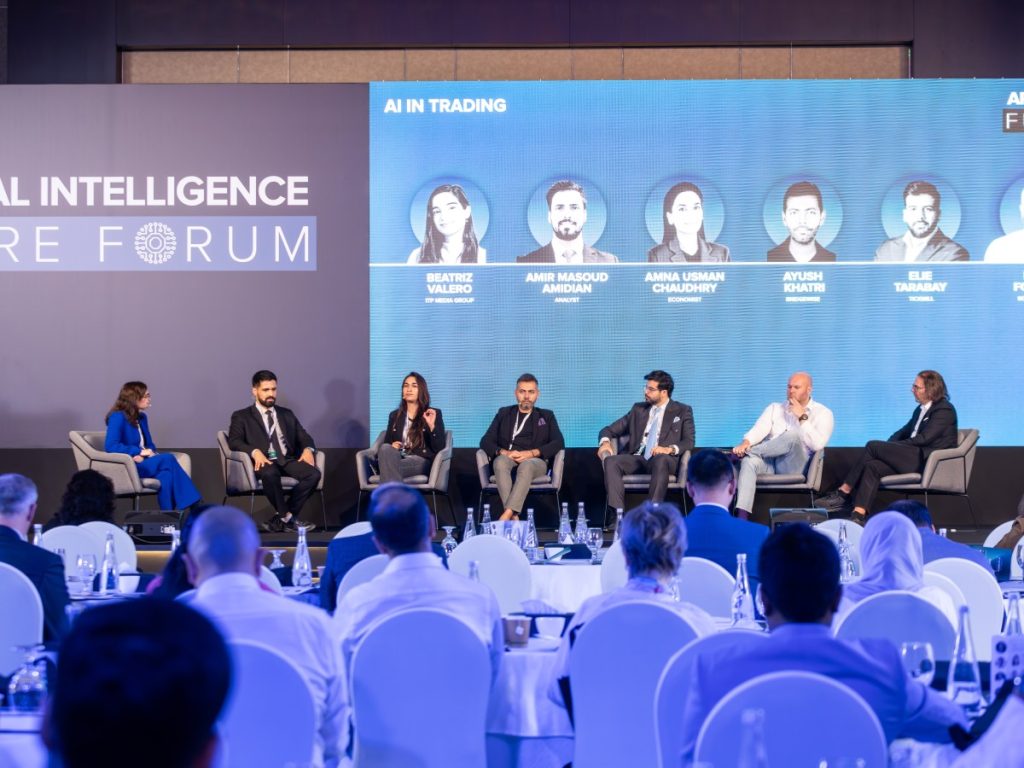
Beatriz Valero of ITP Media Group moderated the second panel, where speakers assessed AI’s growing influence on trading strategy and execution.
The panel included Amir Masoud Amidian, Amna Usman Chaudhry, Ayush Khatri of Bridgewise, Ellie Tarabay of Tickmill, Mark Foulger of Rostro Group, and Mehdi El Amine Fichtali of FinaMaze.
Topics ranged from NLP-based market sentiment tools to overfitting and model drift risks. The session also looked at the trade-offs between speed, automation, and market stability.
Fireside chat: Leveraging AI to build smarter financial systems
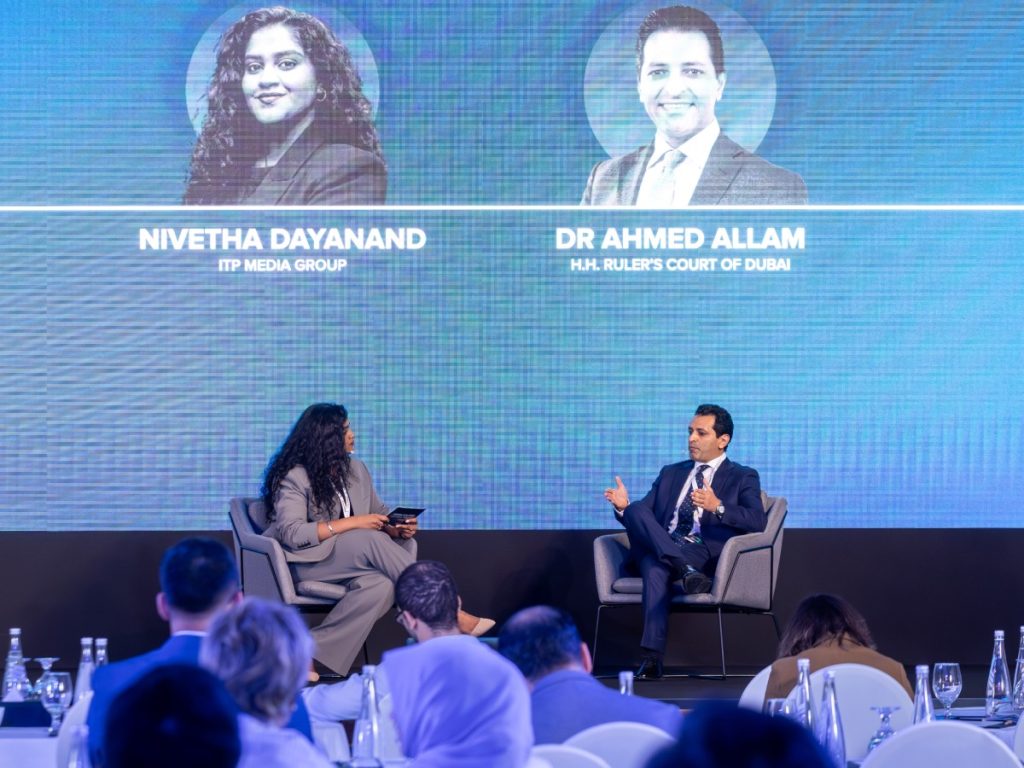
In a one-on-one session at the Finance Middle East AI Future Forum 2025, Dr Ahmed Allam, Senior Financial Expert at the HH Ruler’s Court of Dubai, joined Nivetha Dayanand to discuss how AI is transforming the operational side of finance.
The conversation focused on automation in budgeting, fraud detection, FX valuation, and internal controls. Dr. Allam noted that AI tools are already improving efficiency in public finance and enhancing forensic accuracy in financial crime investigations.
He also emphasised the need for regulatory clarity and ethical oversight as AI becomes embedded in critical systems. While automation offers speed and scale, he cautioned that human judgment remains essential in high-risk decision-making.
Panel: Building trust with ethical AI in finance
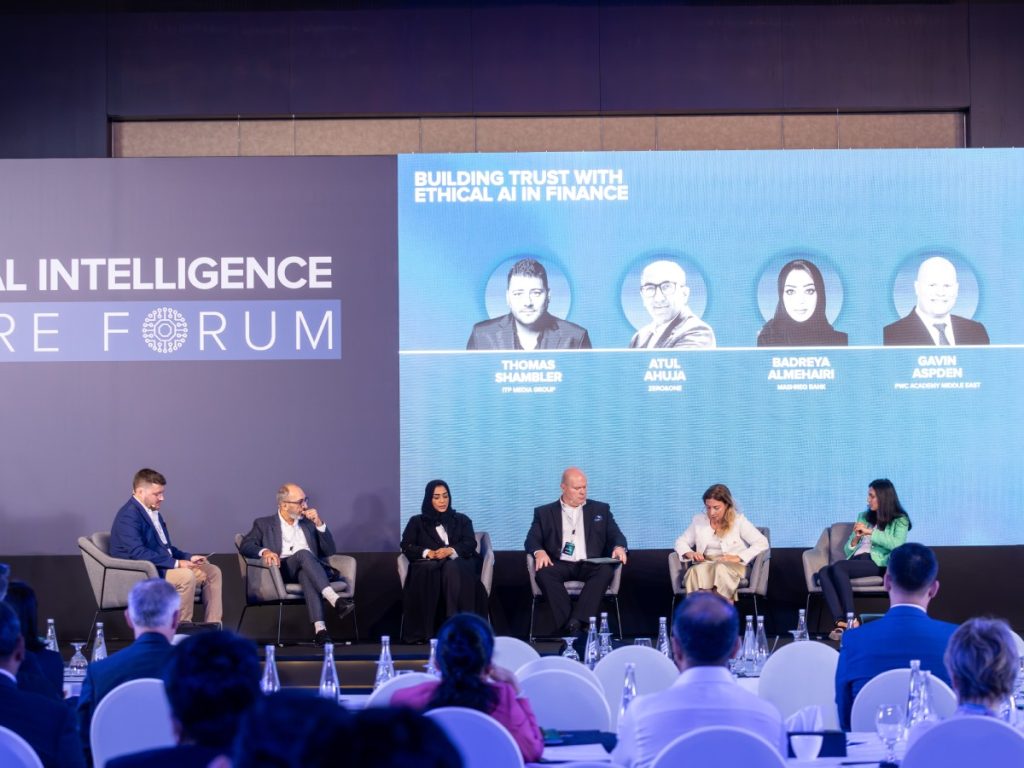
Back on stage as moderator, Thomas Shambler led a discussion on ethical AI in finance. The panel featured Gavin Aspden of PwC Academy Middle East, Bedraya AlMehairi of Mashreq, Atul Ahuja of Zero&One, Vasudha Khandeparker of Grant Thornton, and Tania Kabbani.
The conversation focused on internal governance, third-party audits, fairness testing, and the role of DEI and ESG in model development. Speakers also questioned whether the burden of ethical compliance still falls too heavily on institutions rather than regulators.
Panel: AI and cryptocurrency
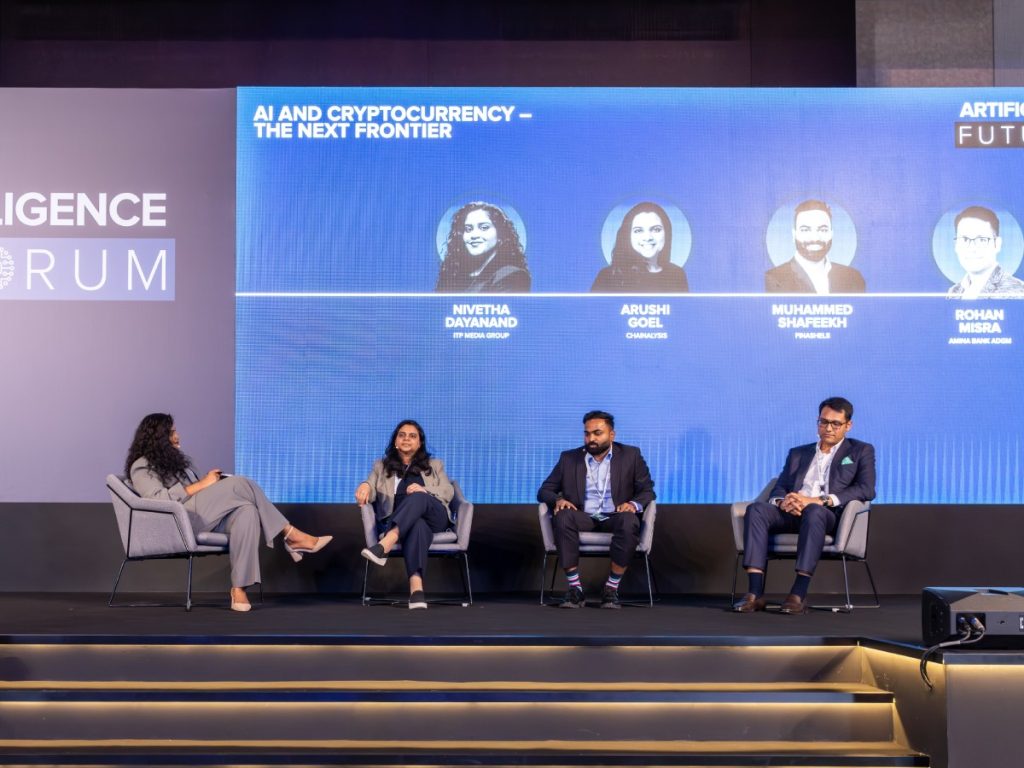
Moderated by Nivetha Dayanand, the final panel tackled the convergence of AI and blockchain systems.
Speakers included Arushi Goel from Chainalysis, Muhammed Shafeekh from Finanshels, and Rohan Misra from Amina Bank ADGM.
Key topics included the use of AI in on-chain AML and fraud detection, token design, and governance within decentralised protocols. The panel also addressed the regulatory gap around synthetic assets and the operational complexity of AI-led cryptosystems.
Finance Middle East AI Future Forum 2025 concluded with a clear message: AI is no longer emerging tech—it’s now a defining force in the way financial systems assess risk, serve customers, and respond to regulators.