

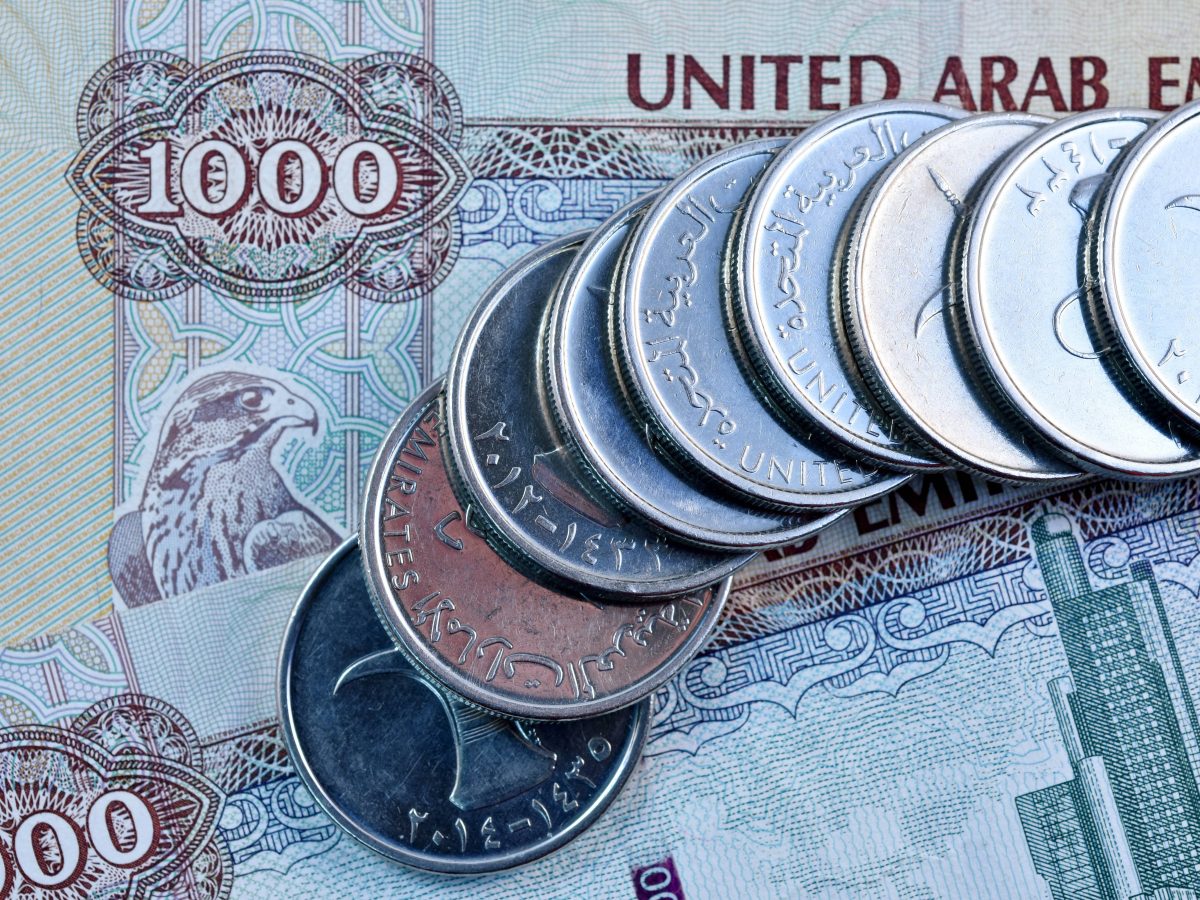
Emirates NBD, Dubai’s largest lender by assets, will begin charging customers a fee of Dh26.25 for most international transfers made via its mobile and online banking platforms starting September 1, 2025. This move signals the end of an era of free remittances and raises broader questions about banking competition in the UAE’s digital landscape.
In a notice sent to customers, the bank said the fee would apply to international remittances, including transfers made through its popular DirectRemit platform. DirectRemit allows near-instant transfers—typically within 60 seconds—to countries such as India, Pakistan, Sri Lanka, Egypt, the Philippines, and the UK. While many assumed these corridors would also be affected, Emirates NBD later clarified that DirectRemit to India, Pakistan, the Philippines, and Egypt would remain free, with charges applying to other destinations and non-DirectRemit transfers, as reported by Gulf News.
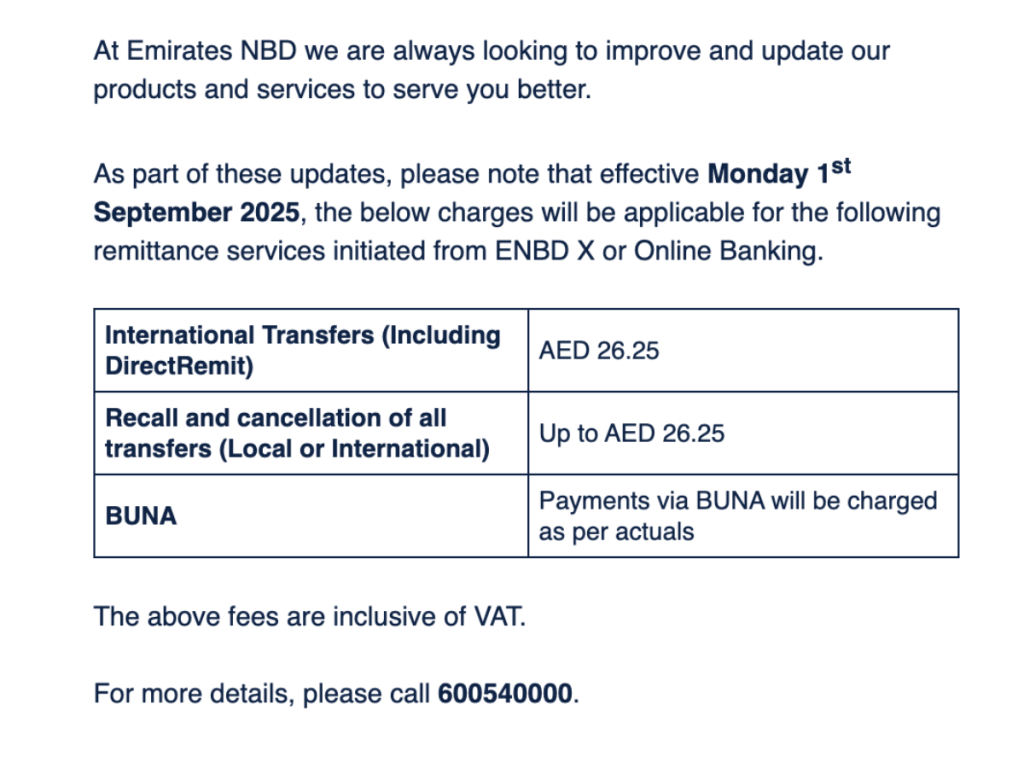
Customers will also be charged up to Dh26.25 to cancel or recall local or international transfers, regardless of the corridor.
The change brings Emirates NBD in line with several local competitors who already impose fees on remittances. RAKBank, for instance, charges Dh15.75 to send money to the Philippines and Dh26.25 to India. Mashreq Bank charges the same fee for the Philippines but offers free transfers to India and Pakistan. First Abu Dhabi Bank (FAB), meanwhile, continues to offer free instant transfers to major destinations such as India, Pakistan, the Philippines, Sri Lanka, the UK, and EU countries.
For the UAE’s large expatriate population—many of whom remit money home monthly—these fee structures can make a meaningful difference. According to the World Bank, remittances to low- and middle-income countries are projected to rise to $690 billion by 2025, growing at a rate of 2.3% in 2024 and 2.8% in the following year. A significant portion of those flows originates in the Gulf, where countries like the UAE serve as key remittance corridors for South and Southeast Asia.
The decision by Emirates NBD may reflect growing pressure on banks to monetise digital services in the face of narrowing interest margins and rising compliance costs. But it could also open the door for fintech players and money exchange houses, which have been gaining ground with more competitive foreign exchange rates and lower transfer fees.