
When more than 60% of banking customers in the Gulf are now transacting digitally, the question for traditional banks is no longer if they should transform, but how to do so without undermining the very revenue models that have sustained them.
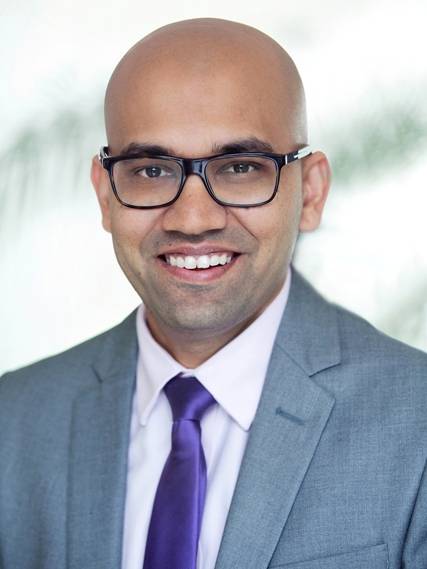
“Traditional GCC banks indeed face a delicate balancing act: modernise their platforms while protecting their most valuable revenue streams,” said Bhavya Kumar, Managing Director and Partner at Boston Consulting Group, who leads the firm’s digital work with financial institutions across the region.
Kumar suggested a two-pronged approach. “One prong modernises their platform to capture emerging digital revenue streams, while the other prong safeguards their core high-margin off erings from being cannibalised,” he explained. From his vantage point, this means establishing in-house agile product squads or spinning off agile fintech arms that can experiment with self-service features while preserving value-added offerings, such as complex lending and in-branch advisory, within premium segments.
Neobanks in the region
The region has also become a testing ground for neobank launches, both Islamic and conventional. Kumar said those that have succeeded have both low customer acquisition costs and scalable tech stacks. “From my experience looking at the ones that succeeded, two things stand out: first, driving down customer acquisition cost along with accelerated growth by leaning into heavyweight partnerships and embedded-finance integrations.
Second, the choice of a cloud-native, API-first tech stack isn’t optional—it’s table stakes for long-term scale.” He cited Wio Bank as a standout case. “In partnership with e&, Wio has white-labeled its banking-as-a-service APIs into the operator’s e-wallet and loyalty ecosystem,” Kumar explained. “Also, Wio Business taps directly into the Abu Dhabi Department of Economic Development and Dubai Economic Department platforms so that SMEs can open a fully-functional business account the moment they register their company.”
On the tech side, modern banking architecture in the GCC is beginning to resemble that of global fintechs: microservices cores like Mambu and Thought Machine, orchestrated with Kubernetes and layered with Kafka-powered event-driven messaging.
Biggest delay
Despite the technical progress, Kumar sees a bigger hurdle: organisational inertia. “Most institutions already understand that legacy core-banking platforms must be replaced or wrapped by microservices suites. What often stalls projects, however, is the pull of established governance models, lengthy committee approvals, risk-averse culture and matrixed decision-making.”
He urged CIOs to track metrics beyond traditional cost-to-income ratios. “Banks in GCC that are advanced in digital transformation have four common themes”, he began before elaborating on modernised core platforms, AI-led hyperpersonalisation, continuous product delivery and integration pipelines, and seamless handoffs between digital and physical channels.
To extract real value from fintech partnerships, Kumar advocated a layered governance structure. “Banks who do it well typically have a robust and agile governance model that embeds fi ntech investments into their core strategic and operational fabric,” he said. Strategic investment committees define priorities; separate venture units scout and integrate solutions. As regulatory frameworks mature and customer expectations continue to shift, the winners in the Gulf’s financial sector will be those who can move at fintech speed without sacrificing the rigour and trust that have defined the region’s banks for decades.