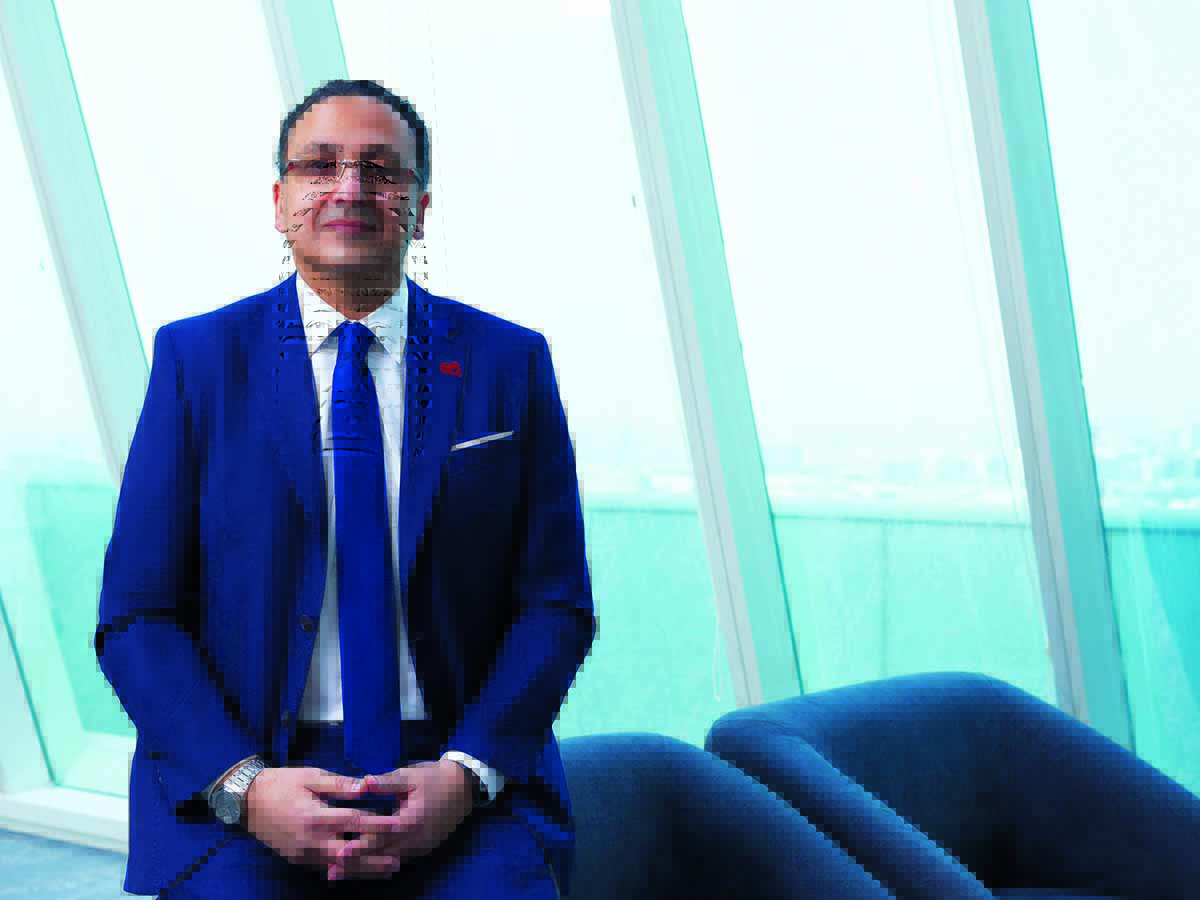
e& is ending 2025 the way investors like: with momentum, visibility and options. “This year, we’re not just meeting expectations, we’re exceeding them,” says Dr. Karim Bennis, Group Chief Financial Officer. “We’ve already delivered the strongest nine-month performance in e&’s history and are tracking well ahead of our full-year targets.”
The headline numbers tell part of the story.
The group now serves 202 million telco subscribers. Growth is broad-based: the UAE core is steady across mobile and fixed; international operations are printing double-digit year-on-year gains; and both digital verticals (e& enterprise and e& life) are compounding at a double-digit clip. But the real narrative is more structural. e& has spent the past three years re-coding itself from a domestic champion into a diversified, hedged telco-plus portfolio: more currencies, more regulated stability, more recurring digital revenues and a deeper AI operating system.
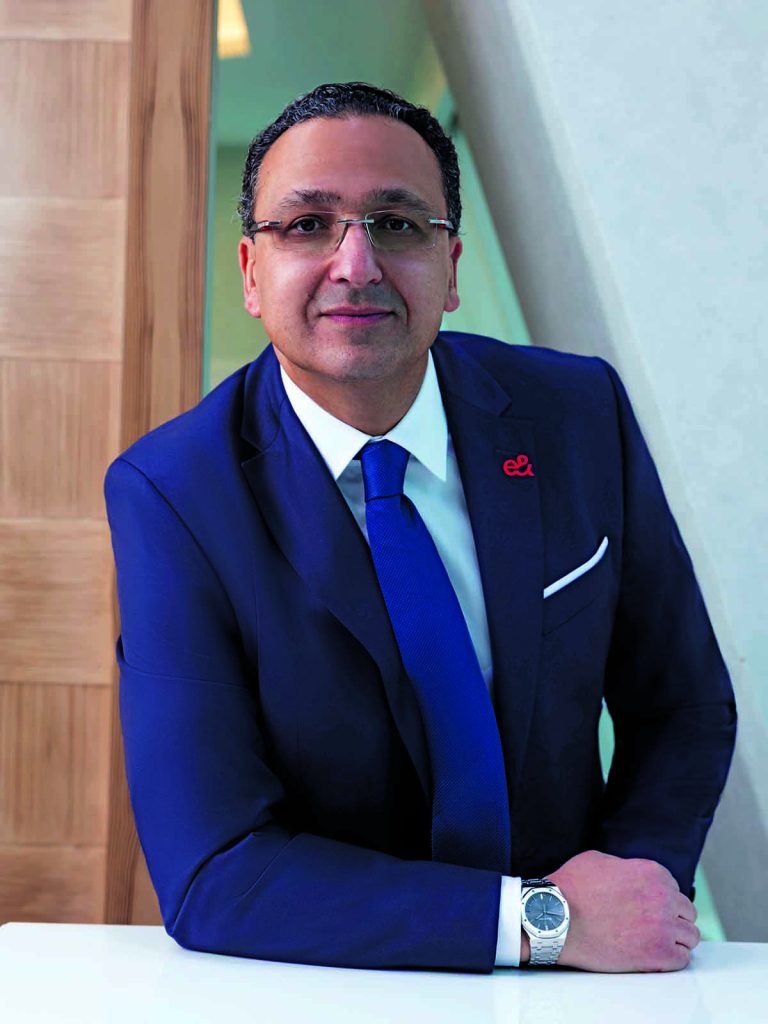
“The formula is simple,” Bennis says. “Build diversified growth engines, stay disciplined with cash and deliver consistent, rising dividends.” In 2024, e& guided revenue growth up from mid-single digits to high-single digits, ultimately delivering 10% in constant currency.
Its EBITDA margin remains among the industry’s highest. Credit markets have taken note:
the group holds AA- at S&P Global and Aa3 at Moody’s, both with stable outlooks. Leverage sits at a comfortable 1.1x net debt to EBITDA as of the first nine months of 2025.
Buying Stability, at Scale
The move that reframed the risk profile landed in November 2024: e& acquired a majority stake in PPF Telecom for EUR 2.4 billion, adding Slovakia, Hungary, Bulgaria and Serbia, four mature, stable-currency markets with well-established regulation and about 12 million subscribers. “It meaningfully increased our euro exposure and reduced our overall sensitivity to currency volatility,” Bennis notes. In plain terms: e& bought ballast.
That ballast is already paying off. Procurement is being centralized across the enlarged group, squeezing better unit economics from vendors. International financing is coordinated, creating a cleaner currency match between revenue and debt. Roaming and customer value management are being optimized across borders. “We’re unlocking synergies in procurement, financing, partnerships and roaming,” Bennis says. “Just as importantly, we’re deepening collaboration on AI, advanced analytics, and customer value management.”
Then came convergence. In Serbia, e& PPF Telecom moved for SBB for EUR 825 million, turning the CEE foothold into a fully converged operator position. Fixed-plus-mobile, at European ARPUs, with regulatory predictability and euro revenues, that’s the kind of optionality that lets a regional group run disciplined capital rotation.
Pakistan: Scale, Sequenced
If Central Europe is the hedge, Pakistan is the upside. PTCL Group now runs the country’s #1 fibre-to-the-home platform via Flash Fiber, with more than 700,000 subscribers. In 2024, the mobile business grew 25%, powered by stronger data monetization. B2B digital services (an area where e& enterprise tools travel particularly well) surged 71%. With the Competition Commission having cleared PTCL’s acquisition of Telenor Pakistan, pending final regulatory approvals, e& is poised to add about 43 million customers to its global base.
The playbook in high-volatility markets is designed for containment. “We manage performance in local terms,” Bennis says. “That means focusing on constant-currency KPIs, aligning funding with revenue currencies to create natural hedges, and sequencing capex with higher hurdle rates where policy or FX risks are more pronounced.” Pricing power is rooted in network quality and service delivery, not just tariff moves; cost structures flex via centralized procurement, infrastructure sharing, and asset-light partnerships.
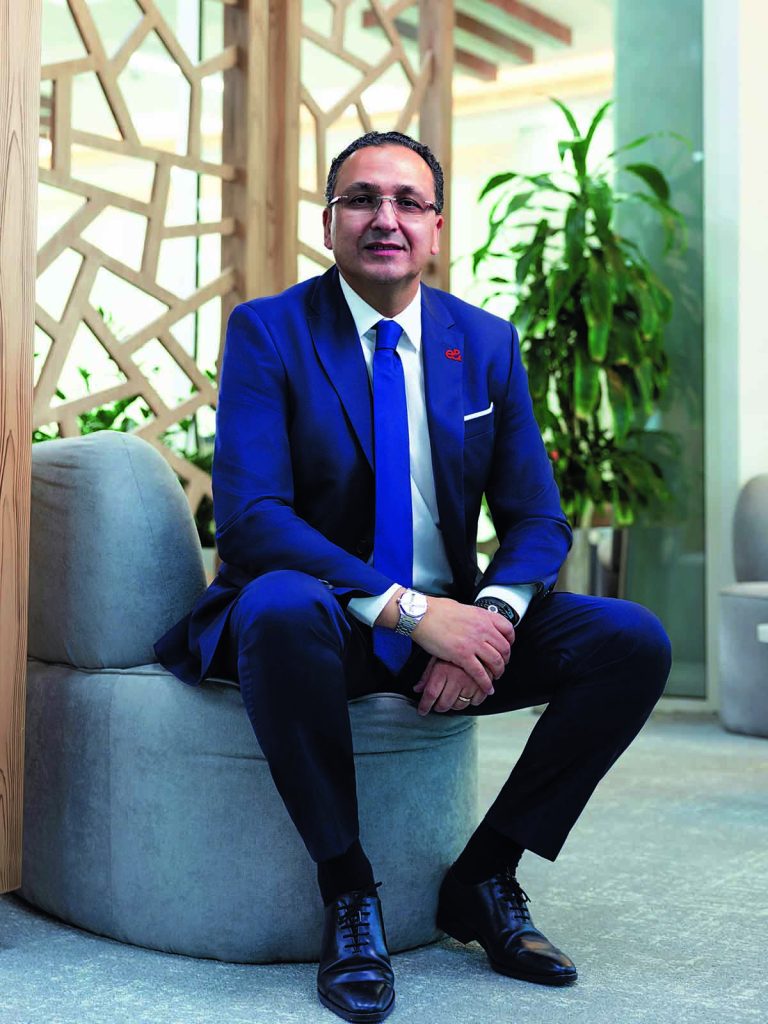
The 5.5G and Sovereign Cloud Flywheel
While macro hedging makes the portfolio resilient, technology is doing the heavy lifting on growth. In the UAE, e& has moved beyond pilots into real-world 5.5G deployments. The early beneficiaries are enterprise and government clients: smarter factories, safer logistics, and city platforms with sub-10ms latency requirements that simply weren’t possible before. “These advancements put us at the forefront of next-generation connectivity,” says Bennis. “They’re already creating measurable impact.”
On the compute layer, e& expanded its partnership with Amazon Web Services to launch the UAE Sovereign Launchpad, combining cloud, AI, and digital infrastructure in a sovereign, high-trust environment. For a region leaning into data residency, critical infrastructure protection, and regulated AI, the Launchpad becomes both a technology and a policy product. “It’s a crucial step toward advancing the UAE’s digital ambitions,” Bennis says. The roadmap includes integrating Qualcomm’s AI edge technologies, and the Launchpad sits alongside an AI-Net fabric designed to push inference and security closer to devices and sites that matter, ports, factories, utilities.
Put differently: e& is productizing trust. In an era where the GCC is buying 5G-Advanced, cloud, and cybersecurity as outcomes rather than components, the company is positioning itself as an integrator with sovereign-grade guarantees. That has revenue consequences. “We’re moving the Launchpad from pilot to full-scale deployment,” Bennis says, “and we expect it to become a long-term, revenue-generating pillar.”
Digital Verticals: Cash Beyond Connectivity
A second flywheel is e& life, the consumer platform portfolio that adds resilience to the P&L. e& money has crossed 1.9 million registered users with more than 1.25 million cards issued.
A new PayPal integration, billed as a first for the UAE, pulls domestic workers and underbanked populations more fully into digital commerce. Careem continues robust growth in the UAE. STARZPLAY rounds out media. The point isn’t to win every category but to make the core subscription relationship more valuable, providing higher ARPU bundles, richer services, lower churn.
On the enterprise side, e& enterprise is leaning into cybersecurity, cloud, and IoT. This is where AI moves from slideware to income statement. More than 200 AI use cases have been delivered; hundreds of in-house models are live in the UAE operation alone. AI is embedded in predictive network management, capital allocation modeling, risk assessment, and customer engagement. The gains show up as faster fault resolution, lower truck rolls, higher personalized upsell rates, and cleaner capex timing.
Capital Allocation: Tight Where It Should Be, Bold Where It Pays
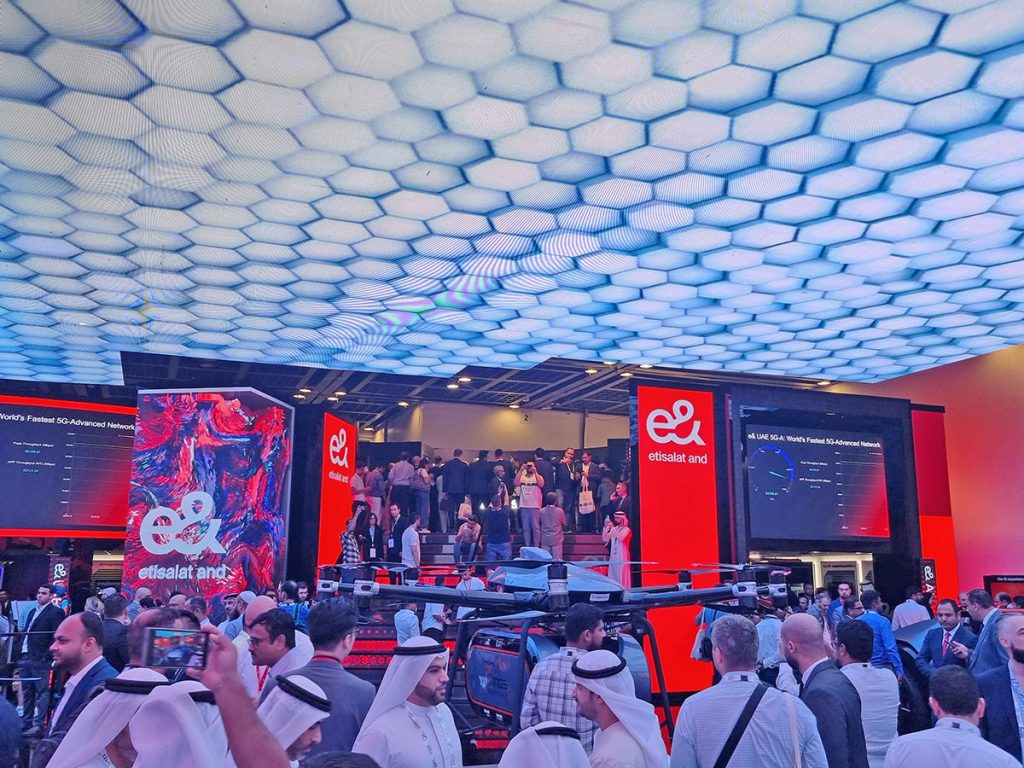
“Discipline” is a word CFOs overuse, but e& is making it operational. In 2024, the group invested AED 8.2 billion in capex, with a 14% intensity ratio excluding spectrum and licenses. The UAE, recognized for having the world’s fastest 5G network and already live with 5.5G, continues to focus capex on speed and coverage but with tighter intensity befitting a mature market. In Pakistan and Morocco, fibre deployment is being scaled to capture share while economics remain favorable; 5G rollouts are being prepared in Egypt and Morocco.
Hurdle rates move with the map.
“In mature markets, we maintain tighter capital intensity and focus on cash generation and leadership,” Bennis says. “In growth markets, we invest deliberately where the return profile justifies it, and we raise hurdle rates where currency or regulatory uncertainty is higher.” Infrastructure sharing is used wherever the math works: in Morocco, a partnership with inwi is accelerating fibre and 5G deployment while optimising spend.
Portfolio decisions follow the same logic. The divestment of Khazna data centres, still considered strategically important, freed capital that could create more value as a minority stakeholder than as an owner-operator. Proceeds were allocated to deleveraging to further strengthen the balance sheet.
In a rising-capex, AI-heavy world, the ability to recycle capital without bruising the franchise is a durable advantage.
Inflation and FX: Managing the Uncontrollables
Inflation pressured many emerging markets over the past two years, but the line is bending in the right direction across several economies, and lower interest rates are easing variable financing costs. e& tailored its response market by market. In Egypt and Pakistan, the company implemented carefully structured price adjustments, anchored in superior network quality and experience. In the UAE, instead of pushing through price hikes, the focus turned to value migration: nudging customers toward higher-value bundles and richer digital services. The result: margins preserved, loyalty strengthened.
On currencies, the company’s multi-layered approach starts with portfolio design. The PPF Telecom acquisition increased euro exposure, a natural hedge against soft local currencies. Group debt is primarily denominated in AED, EUR and USD, aligning obligations with earnings. Operationally, teams are measured on constant-currency performance to separate real progress from FX noise. And the capital allocation framework is biasing toward stable economies where appropriate, without starving growth markets of oxygen.
AI as a Return Engine
AI is often painted as a cost center or a silver bullet. e& is treating it as a return engine, clear domains, measurable payback, and talent to scale. The 2030 AI Strategy prioritizes more than 50 business domains across three pillars: maximising financial impact, transforming customer experience, and enhancing employee productivity. The company has built deep partnerships with Microsoft, AWS, and other hyperscalers to co-develop solutions and accelerate deployment. e& enterprise is not just selling AI, it’s institutionalising it, with models and playbooks that travel across operations.
Inside the building, capability-building looks like a factory. In 2024, e& trained 570 citizen AI experts – nearly four times the number from the year before. Its AI Academy offers multi-level learning paths, from basic literacy to advanced technical tracks. The AI Graduate Programme has graduated 284 Emiratis since 2021, with 62% female hires and 81% overall female participation. An Enterprise AI Academy extends training to partners and clients, weaponizing the ecosystem.
The venture arm, e& capital, is the third leg of the stool. The fund has deployed and committed more than US$100 million across 15 portfolio companies; 53% are in the Middle East, with the remainder targeting frontier markets and global-scale capabilities. Think Clockwork, Traydstream, AppliedAI and Derq, companies that automate complex workflows, enable real-time intelligence, and make industries safer and smarter. “Every company in our portfolio now embeds AI at its core,” Bennis says. “It’s the defining competitive edge of the next decade.”
Governance, Guidance and Credibility
Public markets reward consistency. e& has made a point of sharpening disclosures, breaking out performance by vertical; providing constant-currency metrics; and detailing the impact of major transactions such as PPF Telecom and the Khazna disposal. The cadence of guidance – set, raised, delivered – has helped build trust. “Investor confidence is built on transparent communication, consistent execution, and strong financial discipline,” Bennis says. “Our track record reflects this commitment.”
Within the organization, the governance model is similarly crisp. Local leaders get autonomy to move with speed; global guardrails ensure risk, funding, and cybersecurity stay inside group tolerances. “Confidence comes from clarity and consistency,” Bennis says. “We win with customers, allocate capital with discipline, execute with transparency, and measure performance relentlessly while ensuring ownership and accountability.” Culture becomes a multiplier: talent is developed at pace; outcomes are rewarded.
What to Watch in Q4 – and 2026
Before the year closes, two milestones matter. First, completing PTCL’s acquisition of Telenor Pakistan (subject to final approvals) would add roughly 43 million customers and cement Pakistan as a scaled, multi-brand platform within e&. Second, turning the UAE Sovereign Launchpad from a flagship initiative into a compounding revenue pillar.
Alongside the AI-Net fabric, the model is moving to full-scale deployment, enabling digital transformation across government and regulated sectors with sovereign-grade assurances. Planned integration of Qualcomm’s AI edge stack should pull more compute to the edge, improving latency, privacy, and resilience, features that matter to utilities, logistics, and public safety.
Infrastructure remains a core currency. e& is pushing for predictable performance, ultra-low latency, and enterprise-grade security across advanced industries. It’s a shift from connectivity to digital infrastructure platform – a base that underpins economic growth, innovation, and long-term value creation in the UAE and beyond.
The 2026 macro should be constructive for this mix. The UAE’s non-oil economy is increasingly resilient, with tourism, logistics, banking, real estate and advanced industries supporting capital formation. Across the GCC, fiscal discipline and diversification continue to drive investment in cloud, cybersecurity and 5G-Advanced, often procured as outcome-based services rather than standalone technologies. For e&, that means scale, trust, and execution get priced at a premium. “Digital verticals are consistently growing at double digits,” Bennis says.
“In 2026, we’ll keep shifting the mix toward recurring, higher-margin revenues, monetising 5.5G and compounding platform flows across fintech, media and entertainment.”
The Hedged Growth Formula
The CFO’s philosophy is old-school finance with new-school tooling: sustainable, profitable, and resilient growth. Strengthen the core: world-class networks and infrastructure. Diversify revenue by geography, currency, and digital category so no single market defines outcomes. Digitise end-to-end and accelerate decisions. Treat sustainability as a performance driver. Set market-specific ROI thresholds, scale what works, partner where it’s faster or cheaper, and communicate progress with transparency.
It’s not flashy, and that’s the point. The portfolio is designed to absorb shocks, regional and global, without losing the dividend thread. Stable markets fund new investments; growth markets provide momentum. AI increases the slope of the curve. And sovereign-grade infrastructure becomes both a moat and a magnet for higher-value demand.

“We’re building a company that protects cash today and builds new growth engines for tomorrow,” Bennis says. “That’s how you sustain confidence – inside the company and in the market – while growing with discipline.”
If e& can close Pakistan at scale, stand up the Sovereign Launchpad as a durable revenue line, and keep capital intensity tight where it should be, 2026 could look a lot like 2025 – only bigger, steadier and more recurring. That’s what a hedged growth engine is supposed to do.