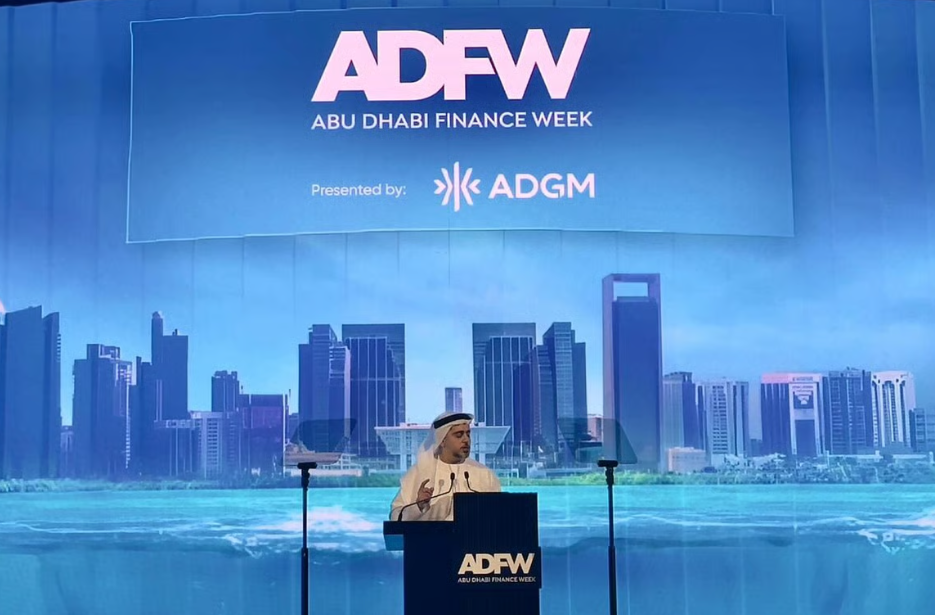

Abu Dhabi once again takes centre stage next week as global finance leaders converge on the Emirati capital for a packed series of discussions.
This year’s theme, Engineering the Capital Network, feels less like a vision and more like a description of what is already underway.
UBS’ 2025 Billionaire Report, released today, confirmed such suspicions. Financial capital is diffusing away from the Americas, instead surging across the EMEA.
Global Wealth Dispersal Accelerates
As ADFW gears up for another influx of capital, UBS’ newly released Billionaire Ambitions Report 2025 underscores the scale of the wealth transformation now in motion.
In 2025, a cohort of 196 self-made billionaires pushed global billionaire wealth to a record USD 15.8 trillion: a 13% increase year-on-year, the second-highest annual rise since 2021. But the real engine of capital movement is inheritance.
This year alone, 91 new billionaires emerged through inheritance. Over the next 15 years, an estimated USD 5.9 trillion will be transferred to the next generation—one of the largest intergenerational shifts of capital in modern history.
Polycentrism Takes Shape: Wealth Moves, Geography Shifts
Notably, this inheritance-driven dispersal is following bloodlines, not borders. Despite the U.S. retaining the largest share of wealth transfer, emerging markets are rapidly absorbing new inflows as the wealthy increasingly relocate.
According to UBS, 36% of surveyed billionaires have relocated at least once, while 9% are considering it.
Mobility, whether permanent or through temporary residences, is reshaping the geography of capital, with emerging markets benefiting from these migratory flows.
Figure 1: Growth in Average Wealth per Adult , EME Region (2020-2024)
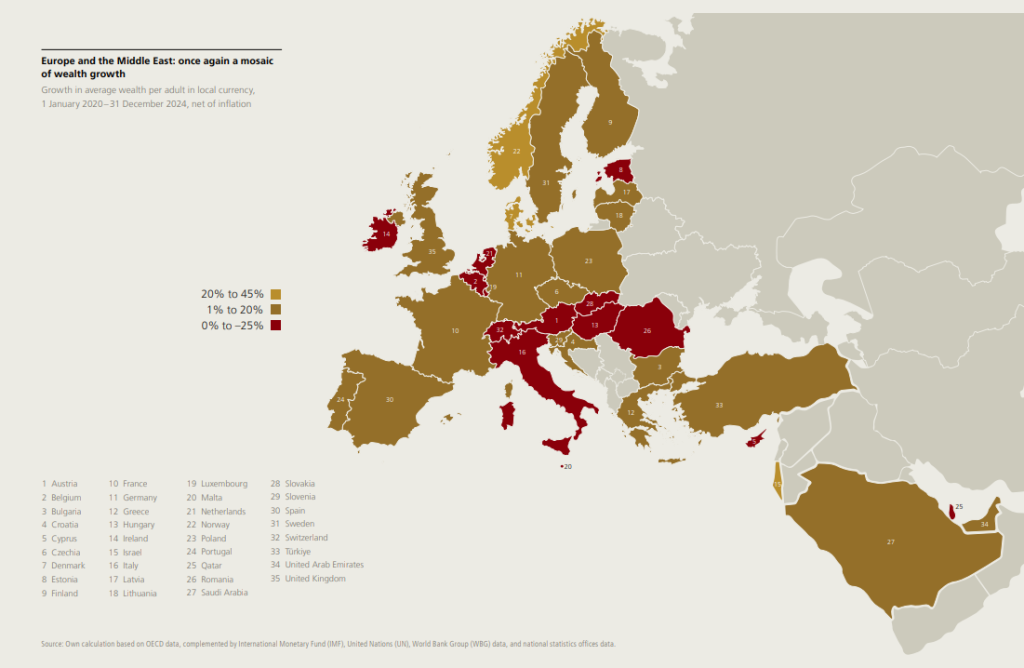
Emerging Markets in Focus: EMEA and Greater China
Outside the U.S., the EMEA region stands at the forefront of this wealth redistribution.
- Western Europe continues its long tradition of multi-generational wealth transfer, with Switzerland, the UK, France, Germany, and Spain remaining key centres.
- China’s billionaire class is set to inherit at least USD 315.7bn by 2040, with Shanghai, Beijing, and Hong Kong emerging as hotspots.
- The Middle East and Africa, though behind the Americas and Europe in absolute terms, are witnessing sharply rising capital inflows per capita, especially in Israel, the UAE, and Saudi Arabia.
Figure 2: Change in USD Millionaires (2023-2024)
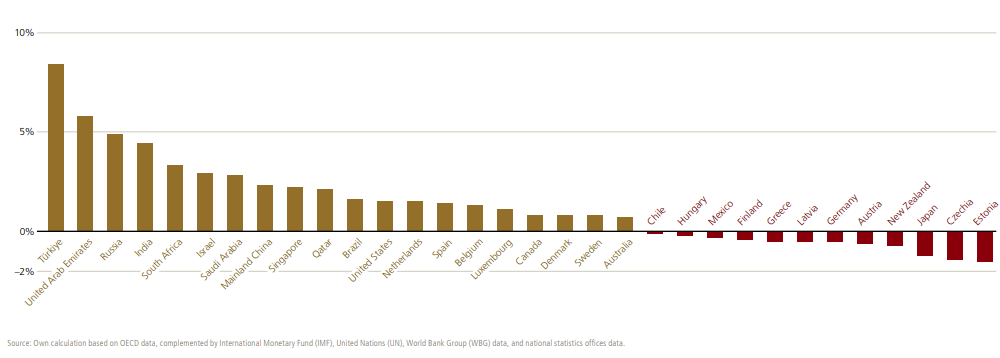
Why the Wealthy Move: Quality of Life, Geopolitics, Taxation
UBS’ survey shows 45% of billionaires are either contemplating relocation or have already moved abroad at least once. For many, geopolitical stability, taxation regimes, and quality of life play decisive roles.
According to UBS’ survey (figure 2), UAE topped the number of additional millionaires registered globally between 2023 and 2024.
The rise of investment opportunities in MENA, particularly in the UAE and KSA, aligns well with these motivations. As both countries scale up their financial hubs, they are increasingly seen as attractive bases for globally mobile capital.
Polycentrism in Action: New Wealth Hubs, New Power Dynamics
As ADFW approaches, UBS’ findings highlight a clear trend: global wealth is becoming more polycentric.
New urban and financial hubs, Abu Dhabi, Riyadh, and Dubai, are drawing the global elite and reshaping the architecture of global capital flows.
Yet with this opportunity comes a challenge: retaining capital in emerging markets where structural constraints persist. The U.S. dollar remains deeply embedded in GCC monetary systems, and American institutional influence still shapes aspects of GCC diversification strategies.
This limits the region’s financial sovereignty and its ability to independently steer capital formation.
The Path Forward: Sovereignty, Innovation, and Global Alliances
Still, new capital inflows create latitude for change. Emerging markets, particularly in the GCC, now have greater leverage to:
- Pursue financial sovereignty and expanded regulatory frameworks,
- Explore de-dollarisation initiatives where strategically viable,
- Deepen collaborations with Silicon Valley and global tech ecosystems,
- Accelerate domestic infrastructure, innovation, and technology transfer.
The polycentric world is no longer theoretical. It is unfolding in real time and the decisions made in hubs like Abu Dhabi and Riyadh will play an increasingly important role in determining the future contours of the global financial system.
Stay Up to Date with Latest Analysis on Finance ME!
Delaying the Inevitable: S&P Downgrades Bahrain, But Upgrades Kuwait
KKR Abu Dhabi Office Reopening Reaffirms Capital’s Private Equity Credentials