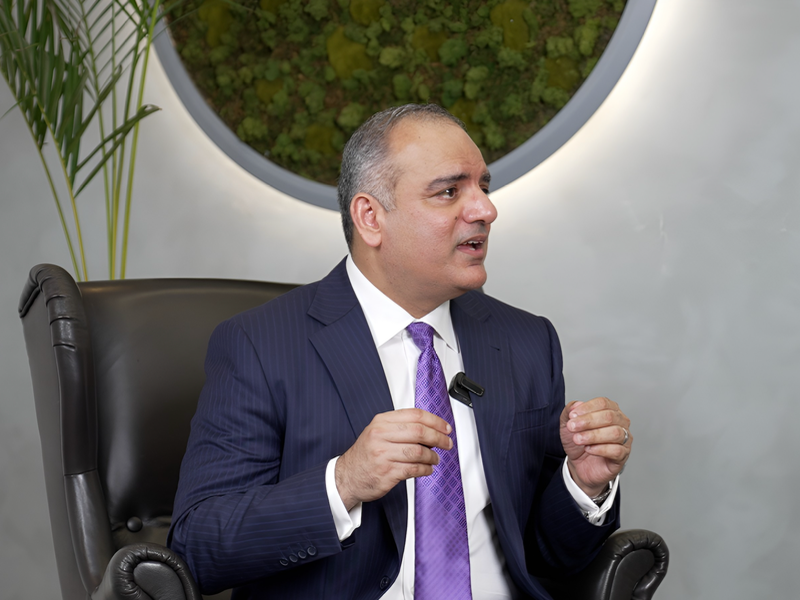
I sat down with Bateel International’s Group CFO, Asad Omar, for a wide-ranging interview as the premium brand enters its next phase of international growth, balancing global expansion with its luxury heritage, beyond the Gulf.
Select the area of the interview with Bateel’s Asad Omar that interests you.
Protecting Luxury While Scaling
Building Resilience Into Growth
Managing Geopolitical Uncertainty
The Next Phase of Growth
Angus Anderson: Bateel has built a strong position across the GCC. Which international markets represent the next phase of growth and what financial criteria determine where you invest next?
Asad Omar: I’d separate the question into ‘where there is demand?’ and ‘where can we make money?’ because they’re not the same list and confusing them is how brands destroy capital internationally. We look at four key things.
First, is there an existing addressable customer, either a gifting culture that already values what we do, or a community with genuine familiarity with premium dates? We’d rather enter a market where we’re introducing a brand than one where we’re introducing a category. Educating a market is expensive and slow.
Second, can we achieve density? A single door in a large city is a marketing expense, not a business. We think in terms of market-level break-even how many locations do we need before fixed costs of entry, logistics and management are covered? If the answer is a number we can’t credibly reach, that’s not a market, it’s a flag-planting exercise.
Third, landed cost. Our product travels from Saudi Arabia. Duty, freight, shelf life and cold chain requirements vary enormously, and in some markets the cost to serve simply doesn’t support the price architecture we need.
Fourth, capital at risk versus optionality. I want to know the maximum downside of a market entry before I want to know the upside case. We treat expansion as a portfolio of options rather than a set of commitments deliberately staged, with defined exit points.
As CFO, I would only support expansion where we can achieve attractive unit economics, sustainable gross margins and a clear path to profitability while protecting brand equity.
Asia, Europe & North America
Angus Anderson: As you evaluate Europe, Asia and North America – how does consumer demand, supply chain resilience and currency risk influence capital allocation?
Asad Omar: They pull in different directions, and the CFO’s job is to price the tension honestly. On demand, the three regions are genuinely different businesses. Parts of Asia have deeply established premium gifting cultures with high willingness to pay for provenance and presentation that’s structurally aligned with what we do. Europe tends to be a food and delicatessen conversation as much as a gifting one.
North America is the largest prize and the most expensive to build, with the highest marketing cost to establish awareness. Those differences show up directly in the payback period, so they should show up in the hurdle rate.
On supply chain, distance from origin is a real cost, not a footnote. Longer lead times mean more inventory in transit and in market, which means working capital and for a business with a single annual harvest, committing stock to a distant market is a decision you can’t easily reverse mid-year. I’d plan very carefully for a new market in year one than strand inventory there.
On currency, our cost base is effectively USD-linked through the riyal and dirham pegs. That means dollar-linked markets carry little transaction risk, while euro, sterling and yen revenues carry real exposure. My view is that you hedge transaction exposure with a rolling programme, and you don’t pretend to forecast FX.
What you do instead is build currency into the required return, if a market needs a wider margin of safety, price that into the hurdle rather than hoping the rate cooperates.
The Right Expansion Model
Angus Anderson: How are you balancing growth ambitions while maintaining Bateel’s premium Saudi identity as a luxury date provider?
Asad Omar: There’s no universally superior model. There’s a right model for a given market at a given stage, and the mistake is applying one template everywhere.
Wholly owned gives you complete control of the brand, the full retail margin and all the data. It also consumes the most capital, carries lease liabilities on the balance sheet and takes the longest to scale. Returns on capital are lower early and better over time, provided you achieve density. Franchising inverts that. Capital-light, fast, and the returns on capital employed look extremely attractive because the capital base is small.
Protecting Luxury While Scaling
Yet the absolute profit per market is lower, and you’re depending on a partner to protect a brand you’ve spent decades building. There’s an important nuance for a food business, though: even under a franchise model we continue supplying product, so we retain the wholesale margin. That makes franchising economically more interesting for us than it is for, say, a fashion brand earning a royalty alone.
Joint ventures sit between the two and are the most demanding to govern. They work where local knowledge and real estate access are genuinely decisive. My hard rule is that the exit and buyback mechanics get negotiated at the start, when everyone is optimistic never later.
If I were shaping the strategy, I would favour a portfolio approach: direct ownership in strategically important flagship markets, supported by selected franchise partnerships in markets where speed and local expertise provide an advantage.
Building Resilience Into Growth
Angus Anderson: How important is the UAE as Bateel’s launchpad for expansion and what advantages does the region provide compared with other international headquarters?
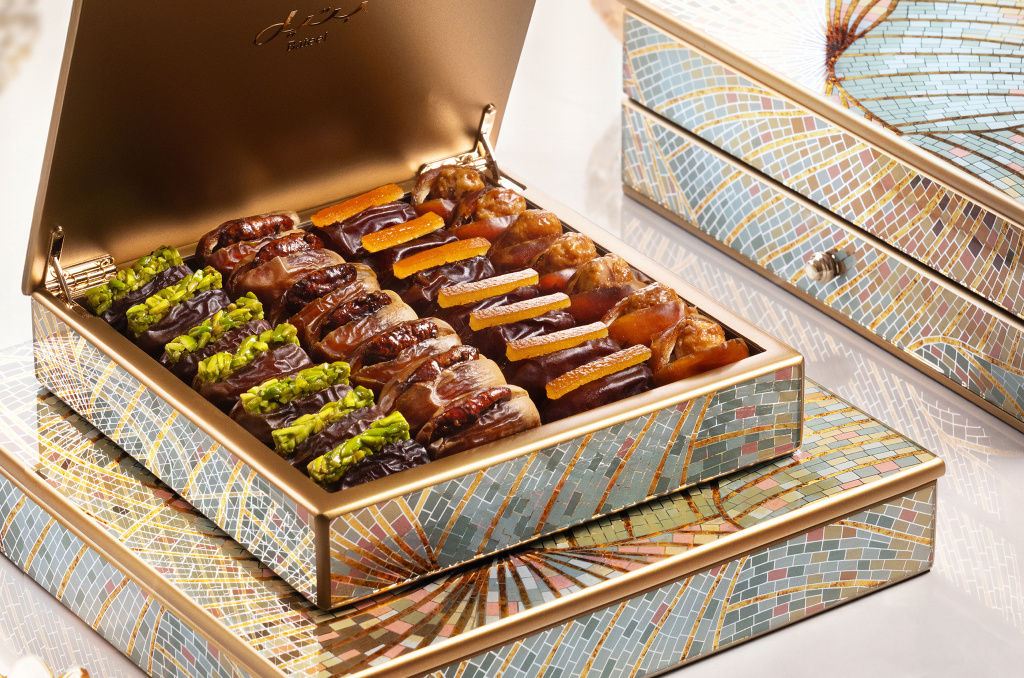
Asad Omar: I’d challenge the premise slightly. Exclusivity isn’t the same as being small, it’s about scarcity, standards and price integrity. Plenty of luxury houses are large and remain exclusive because they never compromise those three things. In our case scarcity isn’t a marketing construct, it’s physical. There’s a finite quantity of the highest grades from our farms each year.
That’s a genuine constraint, and it disciplines the growth conversation in a useful way.
Financially, the discipline shows up in three decisions:
1. First, we grow revenue per customer and per location before we grow the number of locations that’s a more valuable and more defensible form of growth.
2. Second, price integrity is non-negotiable; discounting is the fastest way to convert a luxury brand into a commodity one, and the damage is very hard to reverse.
3. Third, channel selection is a brand decision with financial consequences. There is distribution available to us that would add revenue and subtract brand equity, and we decline it. The one thing I’d say to fellow CFOs is that flagship locations need honest accounting.
Some doors exist to build the brand, not to return capital, and their four-wall economics will look mediocre. That’s fine but budget them as marketing investment with defined objectives, don’t pretend they’re stores that underperformed.
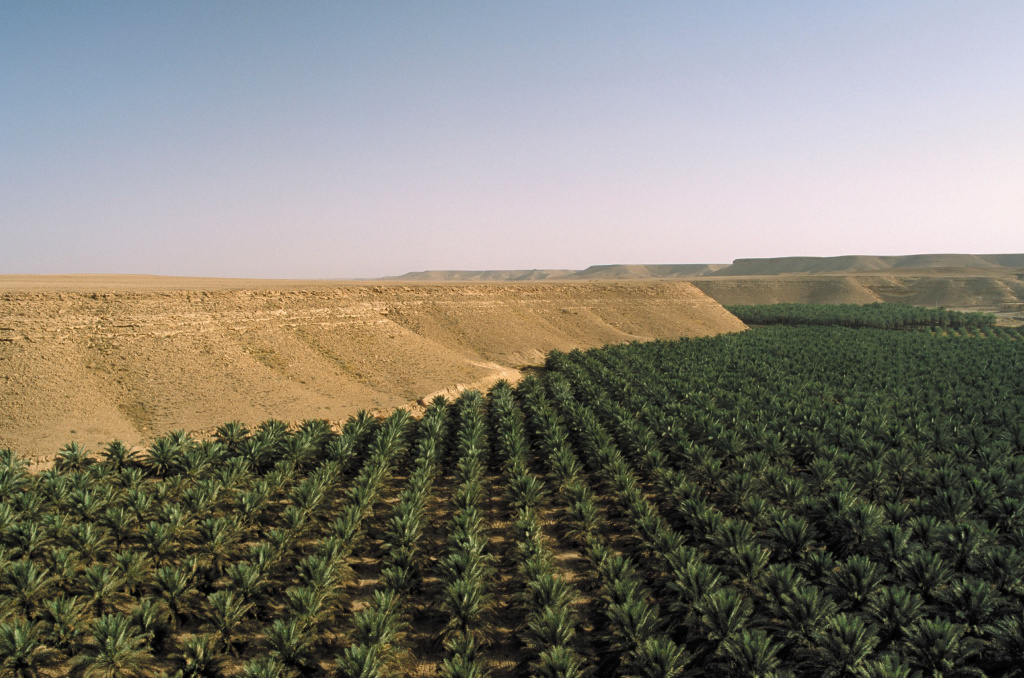
On identity: our GCC provenance isn’t something to manage around. It’s the asset.
Managing Geopolitical Uncertainty
Interest in the GCC has never been higher, and authenticity of origin is exactly what the premium consumer is buying. With geopolitical uncertainty affecting global trade, has the conflict changed or added pace to Bateel’s strategy and have you altered your diversified sourcing and logistics to reduce risk?
The events of recent years have reinforced the importance of resilience. From a finance perspective, geopolitical risk is now embedded into strategic planning.
We continuously evaluate logistics routes, inventory policies, supplier concentration and market exposure. For a company like Bateel, product authenticity remains essential, but we can still diversify supporting suppliers, logistics providers and distribution channels. I believe the focus is less about reacting to individual conflicts and more about building structural resilience into the supply chain.
Businesses that can continue serving customers reliably during periods of disruption gain a significant competitive advantage.
Dubai as the Global Launchpad
Angus Anderson: How important is the UAE as Bateel’s launchpad for global expansion, and what advantages does the region provide compared with other international headquarters?
Asad Omar: The UAE gives us the operating infrastructure of a global business in one location.
Connectivity first, and for us that’s a hard financial advantage. We move perishable premium product to multiple continents against tight seasonal deadlines. World-class air cargo and port access means shorter lead times, more routing options and better reliability and that is what protects a gifting business.
Missing the two weeks before Eid is a cost you never recover. Then the commercial ecosystem: free zone structures, regulatory clarity, a mature banking environment, and a deep pool of international retail, hospitality and logistics talent. When we need someone who has scaled a premium brand across Asia or Europe, that person is available here.
The most underrated advantage is that Dubai is one of the world’s great consumer test beds. We can see how visitors from Europe, Asia and North America respond to the brand, the product mix and the price architecture in a live retail environment before committing capital to a market thousands of miles away.
That’s real market intelligence at effectively no cost, and it de-risks every expansion decision we make.
Stay Up to Date with the Latest Updates at Finance ME
EDGE’s Rodrigo Torres on Risk, Sovereignty and Defence Finance in a Multipolar World
ADNOC Distribution’s Ali Siddiqi: “Growth, Growth and Growth”
Post-War Realities: Why Saudi Arabia Will Accelerate Localisation