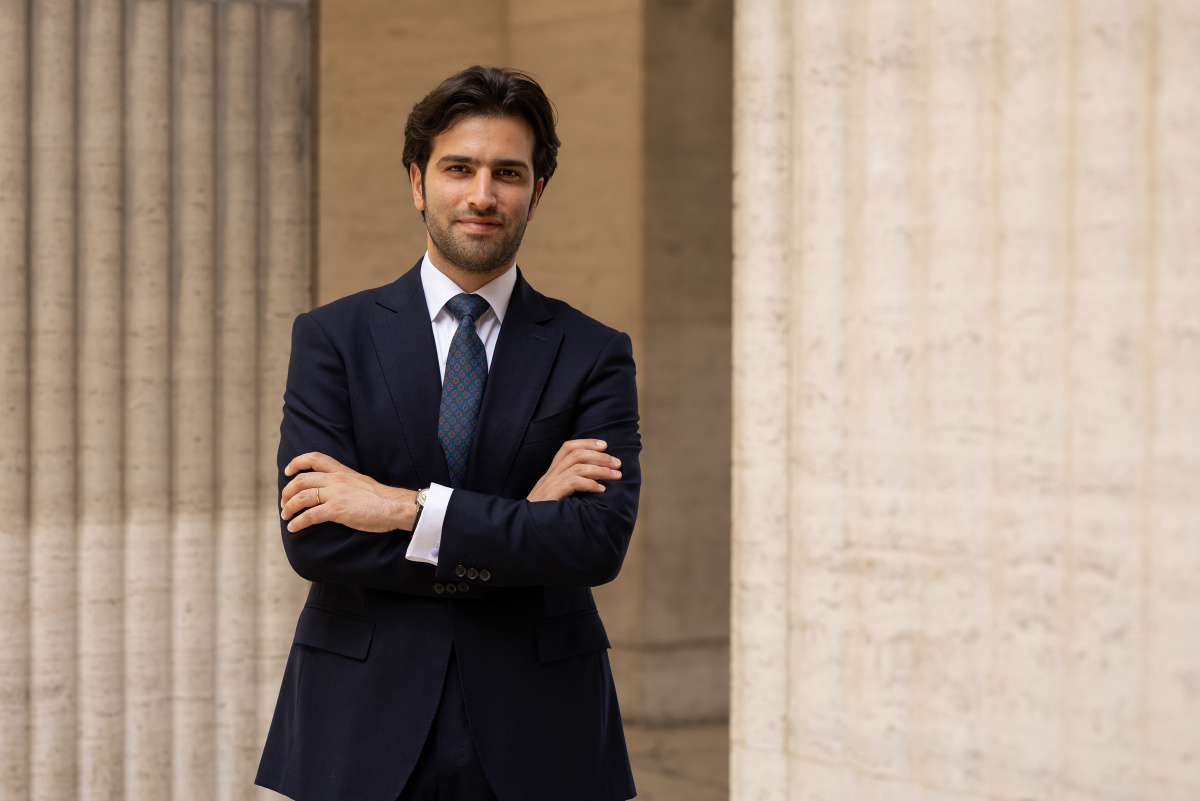

Carmignac’s move into the UAE reflects the country’s evolution from a distribution hub into a decision-making centre as investors reshape the region’s asset-management landscape.
I spoke to the Senior Executive Officer and Head of Middle East Office at Carmignac, Christophe Younes, on the macroeconomic factors shaping the move and future plans in the GCC.
Carmignac has chosen the UAE as its first physical base in the Middle East. What did you see in the market that made this the right moment to establish a presence?
The UAE was a natural choice for Carmignac’s next stage of international growth. It is a dynamic and increasingly important market for global asset managers, with a sophisticated and growing wealth and institutional investor base. We also see strong demand for active management and income-generating strategies – both areas where Carmignac has significant expertise.
Dubai’s growing influence as an international financial centre reinforces that opportunity. The ambition set out in the D33 agenda, including the goal of placing Dubai among the world’s top four global financial centres, reflects the direction of travel and helps explain why so many wealth and asset managers are expanding their presence here.
Within the UAE, DIFC was particularly attractive to us due to its robust regulatory framework, internationally recognised legal standards and established financial ecosystem – all important factors when making a long-term commitment to a market.
There has been a huge amount of capital and talent moving into the UAE. Are you seeing a structural shift in where wealth is managed, or is the UAE primarily becoming an important distribution and access point for wealth that remains globally invested?
The UAE, and Dubai in particular, is uniquely positioned at the crossroads of Europe, Asia, Africa and the Middle East, making it an increasingly important access point for global wealth. But we believe there is also a broader structural shift underway.
It has developed a highly sophisticated and rapidly evolving financial ecosystem that continues to attract significant amounts of capital, global talent and financial institutions.
We believe the UAE is rapidly evolving from a distribution hub into a decision-making centre where wealth is increasingly managed, allocated and structured.
How are the needs of UAE-based family offices and private investors changing? Are they becoming more sophisticated in how they think about global asset allocation, risk and portfolio construction?
What we are seeing is a highly sophisticated investor base with increasingly specific expectations around portfolio construction, diversification and income generation.
Active management remains dominant across the GCC, with recent Morningstar and Broadridge data showing around €47B invested in active strategies compared with €8B in passive products. This reflects an appetite for managers who can actively navigate different market environments and manage risk rather than simply provide market exposure.
Income generation is also an important priority, particularly through fixed income and multi-asset strategies. The product landscape reflects this: almost half of the funds passported into the UAE since 2024 have had an explicit income objective, including six of the eight most recently passported funds in July 2026.
We are also seeing growing interest in private market solutions, particularly evergreen structures that combine long-term investment opportunities with greater accessibility for investors.
These trends point to investors looking beyond individual products towards solutions that can play a clear role within a broader, globally diversified portfolio.
The Middle East is often spoken about as a single investment market, but Saudi Arabia, the UAE, Qatar and other markets have very different dynamics. How do you think about the region beyond Dubai?
We certainly don’t see the Middle East as a single, homogeneous market. Each country has its own investor base, regulatory environment and market dynamics. Being successful in markets such as Saudi Arabia, Qatar, Bahrain or Kuwait requires a deep understanding of local investor needs and a long-term approach to building relationships.
That is one of the reasons why establishing a presence on the ground in the UAE is so important to us. It allows us to be closer to clients across the region, understand how their priorities differ from market to market, and bring the most relevant parts of our investment expertise to each of them rather than applying a one-size-fits-all approach.
How important is the growth of Saudi Arabia to Carmignac’s broader Middle East strategy and how do you see the relationship between the UAE and Saudi markets evolving from an asset-management perspective?
Saudi Arabia is clearly a strategically important market for any long-term asset manager active in the GCC, given its scale, the growth of its capital markets and the broader economic transformation taking place under Vision 2030. As we build our presence in the Middle East, we will continue to follow these developments closely and assess opportunities across the GCC over time.
From an asset-management perspective, we see the UAE and Saudi Arabia as distinct but complementary markets rather than competing financial centres. The UAE has established itself as an international hub for global wealth and financial institutions, while Saudi Arabia has its own rapidly developing investment ecosystem and a significant domestic investor base.
Carmignac is a European asset manager entering a market where global and regional competitors are already well established. What do you believe European managers can offer Middle Eastern investors that is differentiated?
For us, differentiation starts with our independence. As a family-and employee-owned asset manager with $50B in assets under management, we are able to take a long-term view of both our investments and our client relationships, without the pressures that can come with external ownership.
That independence is also reflected in the way we invest. Carmignac has always been an active, high-conviction manager, unconstrained by short-term considerations and undeterred by sudden market swings. We believe that approach resonates particularly well in a region where active management is already strongly established.
Finally, our scale allows us to take a more tailored approach to clients. We have extensive experience working closely with private wealth and institutional investors across Europe, understanding their individual objectives and bringing them investment solutions that respond to those needs.
Our clients and partners are not looking for the biggest product catalogue; they are looking for long-standing partners with proven investment expertise. I believe that this approach and philosophy strongly set us apart from our competitors and will bring something genuinely valuable to the UAE’s financial scene.
Is the UAE’s rise as a wealth centre changing the competitive balance between traditional financial centres such as London, Geneva and Singapore or is it creating a complementary hub?
While a younger financial centre than New York or London, the UAE is rapidly developing into an important hub that complements, rather than rivals, established wealth markets.
Each of these markets has its own strengths: London remains a major global financial centre with a deep pool of talent and expertise, Geneva has a long-established wealth management ecosystem and an attractive tax environment, while Singapore plays a critical role in connecting global investors with Asia.
The UAE is developing its own distinct proposition, combining its strategic location, international connectivity, attractive business environment and growing concentration of capital and talent. As global wealth becomes increasingly mobile, we believe there is room for several strong financial centres to coexist.
The UAE has attracted not just capital but banks, asset managers, family offices and financial talent. What is the next piece of the ecosystem that needs to develop for the country to become a truly global asset-management centre?
The UAE has already made significant progress in building the foundations of a global asset-management centre: a strong regulatory framework, a business-friendly environment, a dynamic and continuously growing talent pool, global connectivity, and access to capital.
The next stage, in our view, is less about adding one missing piece and more about continuing to deepen the ecosystem that is already developing.
Stay Up to Date with the Latest Updates at Finance ME
EDGE’s Rodrigo Torres on Risk, Sovereignty and Defence Finance in a Multipolar World
ADNOC Distribution’s Ali Siddiqi: “Growth, Growth and Growth”