The race to digitise investing is largely over in the GCC yet maintaining and building investor confidence is the next challenge.
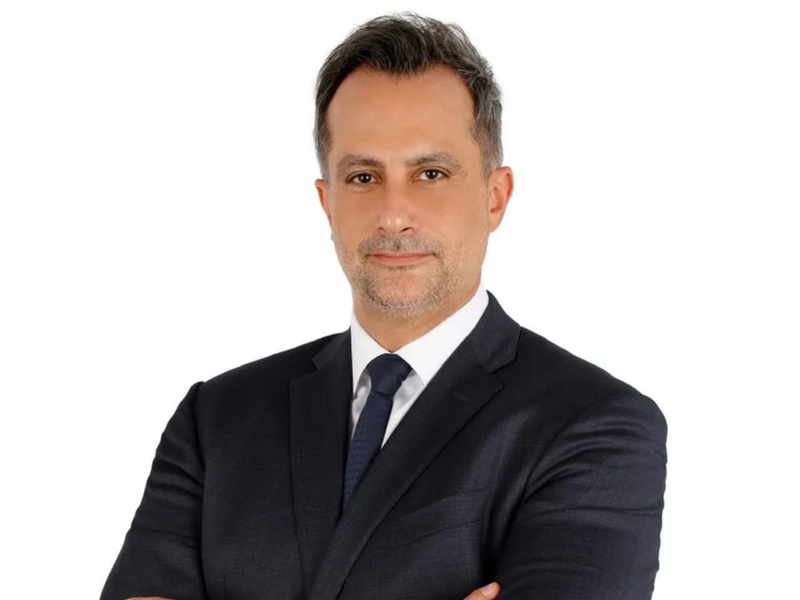
For August’s cover story, we spoke to CFI Financial Group’s Group CEO: Ziad Melhem.
Melhem argues that sustainable growth will come building institutions defined by trust, governance and informed investing than launching more features.
Defining the Next Phase of Digital Investing
I think one of the biggest changes in the GCC over the past few years is that the conversation has shifted.
A few years ago, much of the focus was on building markets. Today, those markets are deeper, the range of listed companies is broader, and regulatory frameworks have become much stronger. International investors are responding to that. We have seen sustained foreign participation and growing confidence in the region’s capital markets.
Access, for the most part, has been solved. Opening an account or accessing global markets is no longer the difficult part. The harder question is what happens once investors arrive. We see this on our own platforms. Most of the trading activity we processed during the first quarter came from the GCC and wider MENA region. The people behind those numbers are arriving better prepared than they were five years ago. They have already consumed financial content, compared platforms and formed opinions before opening an account.
That changes the role of companies like ours. Execution still matters, but it is no longer enough. Investors expect context.
They expect tools that help them understand markets rather than simply access them. I think that is the next stage of the industry’s development. The winners will not simply be those that offer access. They will be those that help build more informed investors.
Access, Speed and Convenience
Access, speed, and convenience have become the baseline for trading in the Gulf.
Nobody chooses a platform today because it lets them trade from their phone. That is simply expected. Fast execution, intuitive technology, and broad market access have become the minimum standard.
What investors notice now is everything behind the experience. The real differentiation sits behind the trading interface, not on it. They pay closer attention to who regulates the business, whether it operates consistently across markets and whether the technology genuinely helps them make better decisions. As the industry matters, trust becomes more important than features. Trust has become much more visible in the selection process.
For us, technology has never been about adding features for the sake of it. Every new capability should solve a real problem or make the client experience more useful. If it doesn’t, it probably doesn’t need to exist. That is where sustainable differentiation comes from.
Digitally Native Investors on Expectations
The digitalisation of trading is changing expectations more than behaviour. This generation is comfortable with technology. They expect information instantly and they are used to digital experiences that feel simple and personalized.
At the same time, easier access does not automatically lead to better decisions. Many younger investors arrive having watched hours of financial content on TikTok, YouTube or podcasts. Access to information has never been greater. The challenge is learning how to separate useful information from confident opinions. Easier access does not automatically lead to better decisions. And this creates a new responsibility for financial institutions.
Education cannot sit in a separate section of a website and hope people find it. It has to become part of the experience itself. The right explanation, at the right moment, is often more valuable than another feature on the platform. The firms that understand that will build much stronger relationships over time. They will also help build better investors. I think that is where the industry needs to go next.
AI Opportunities in Investing
The amount of information available to investors today has become impossible to process on your own. The value of AI is not that it produces more information. It is that it helps people identify what matters.
That could mean explaining a complex market event in simpler terms. It could mean highlighting information that is relevant to a particular investor. It could also mean helping traders recognise patterns in their own behaviour and decision-making that they may never have noticed on their own. Some of the most valuable AI applications won’t be about forecasting markets. They’ll be about helping people better understand themselves. That’s often where better decisions begin.
I see AI as beta in the relationship, while human judgement remains alpha. AI can process vast amounts of information, surface relevant insights and identify patterns at a scale humans simply cannot. But context, accountability and the final decision will always belong to the investor. Technology should strengthen judgement, not replace it.
That philosophy sits behind our investment in the CFI AI ecosystem, built into the CFI trading app. We have recently enhanced Kaiana, making it a smarter and more intuitive AI assistant. We have also introduced TradeWise, which helps traders better understand their own trading behaviours. Together with our wider AI capabilities, these tools are designed to help clients better understand markets, better understand themselves, and make more informed decisions over time.
The real value of AI will not come from predicting every market movement. It will come from helping people ask better questions.
Caution with AI-led Investing Tools
If someone starts believing an AI-generated answer is “the” answer instead of one input into their thinking, we’ve created a different problem by allowing AI to create a false sense of certainty. Markets have never been completely predictable, and AI does not change that. It can identify patterns, organize information and improve analysis. It cannot remove uncertainty.
There is also a risk that people become too dependent on automated recommendations. Financial decisions still require judgement, context and personal responsibility. That is why I believe AI should be positioned as an assistant rather than an autopilot. It should make investors more capable, not less engaged.
The industry also needs to be transparent. People should understand when AI is being used, what it is doing and where its limitations are. Trust depends on that level of openness.
Role of Regulation in Investor Confidence
Most investors will never read a rulebook. What they notice is whether they trust the institution they are dealing with. They want to know their money is held within a regulated framework with proper oversight and that the company will still be there years from now.
That is why regulation matters. It creates confidence before someone even places their first trade. It also raises the standard for the industry. Companies must invest in governance and compliance, as well as the systems that support long-term growth. Those investments are not always visible to clients, but they shape every part of the experience.
At CFI, regulation has never been something we add later. It is where every new market begins. If we cannot establish the right regulatory foundations, we do not enter the market. Today, we are one of the world’s most regulated online trading providers, operating through 15 regulated entities globally.
For us, every license represents a long-term commitment to client protection, accountability and building the right foundations for sustainable growth.
Regulation as Infrastructure
Absolutely. Some people still see regulation as something that slows businesses down. I see it differently.
The world’s strongest financial centers didn’t become trusted despite regulation. They became trusted because markets knew what the rules were. The strongest financial institutions are usually built in environments where expectations are clear. And this is what good regulation does; it creates certainty. It does so by giving companies the confidence to invest for the long term because everyone understands the standards they are expected to meet.
That has shaped the way we have expanded CFI. We follow a license-first approach. Before we think about products or growth plans, we think about regulation. Today we operate through 15 regulated entities because we believe sustainable growth starts with credibility, not speed. I truly believe that, in the long run, regulation does not hold good businesses back. On the contrary, it helps distinguish them.
Multi-Regulated International Financial Services Group
The biggest change has been learning that growth and scale are not the same thing. A business can grow quickly. Building an institution takes much longer.
When you’re operating in one country, decisions are relatively straightforward. When you’re operating across multiple regulated markets, consistency becomes much harder and every decision becomes more complex. You need stronger governance, better systems and leaders who can make decisions locally while operating to the same standards across the Group. Governance is the guardrail for scaling and institutionalisation is the blueprint – that’s how I look at it really. Without them, you have growth without structure.
That has been one of our biggest priorities over the past few years. Our ambition has never been to collect licenses or put flags on a map. The objective is to build an organisation that clients, regulators and partners trust wherever we operate. That takes patience. It also requires consistency. Those are qualities that become more important as a company grows.
Group CEO Priorities
When I became Group CEO, I did not feel the business needed a new direction.
CFI already had strong foundations built over more than twenty-five years. My responsibility was to help prepare the organization for its next chapter. That has meant strengthening the parts of the businesspeople rarely see. Governance. Leadership. Operating structures.
The discipline needed to support growth across multiple regulated markets. Technology has been another priority, but not for its own sake. Every investment must improve the experience for clients or make the organisation stronger. At the same time, none of that matters without the right people. Culture becomes even more important as organisations grow because it is what allows you to move quickly without lowering standards.
Ultimately, my role is to make sure CFI grows in a way that is scalable, earns trust and remains sustainable over the long term. Growth is important. Building an institution that lasts is more important.
GCC Competitive Edge
One of the biggest misconceptions about the GCC is that its success has been driven by capital alone. Capital matters, but it is only part of the story.
What has really changed over the past decade is the quality of the financial ecosystem. Markets are deeper, the investable universe is broader, regulatory frameworks have become stronger and investor confidence has grown alongside them. A few years ago, many international investors viewed the GCC as an opportunity. Today, they increasingly view it as a strategic allocation. The UAE is probably the clearest example. It has created an environment where regulators, government and the private sector are aligned around the same objective: building deeper, more competitive financial markets.
That has helped attract international firms, global talent and long-term investment. What I find particularly encouraging is that the conversation is rarely framed as innovation versus regulation. Instead, it is about how the two work together to strengthen investor confidence and support sustainable market development.
The region is no longer trying to catch up with established financial centres. It is building a model of its own, and that is a very different conversation.
Financial Literacy as Long-Term Investor Confidence
I think this has become one of the industry’s biggest responsibilities.
Making markets easier to access is a success story. Making sure people understand the decisions they are making is a different challenge. Access alone does not build investors. It opens the door to investing. Confidence, built through knowledge and understanding, is what helps people stay invested and make better decisions over time. In other words, it is confidence that turns participation into responsible, long-term investing.
We see that every day. An investor might believe they are well diversified because they own gold, oil and regional banking stocks. In reality, those investments can often move for the same underlying reasons. Diversification can look good on paper while still leaving someone exposed. That is why investor understanding matters just as much as investor access.
Education should not be treated as a marketing exercise or something people find after opening an account. It should become part of the investing experience itself, helping people make better decisions at the moments when those decisions matter most. Better-informed investors make better decisions. Better decisions build confidence.
Over time, that confidence creates healthier, more resilient financial markets. That benefits everyone, from individual investors and financial institutions to the wider economy.
Global Ambition with Local Knowledge
The easiest mistake an international company can make is assuming that success in one market automatically translates into another.
Financial markets do not work that way. Every country has its own regulatory framework, investor behaviour, business culture and competitive landscape. We do not believe in exporting a standard formula from one market to another. We believe in building locally because every market has its own characteristics, expectations and way of doing business.
We begin with regulation. Then we invest in local leadership and local teams who understand the market better than anyone at headquarters ever could. Our role at Group level is different. We provide the governance, technology and operating standards that create consistency across the Group, while our local teams ensure we remain relevant to the markets we serve. Local knowledge creates relevance. Global standards create consistency. You need both, and neither works as well without the other.
That approach has served us well. Whether we are expanding into Brazil, Colombia, South Africa, Azerbaijan or any other market for that matter, the principle remains the same: earn trust first, build the right foundations and then growth follows.
Success in the Next Decade
The answer won’t be technology since the pace of technology changes too quickly contrary to the importance of trust.
Five years from now, we will probably be talking about technologies that barely exist today. AI will continue to evolve, new asset classes will emerge, and client expectations will change. What will remain constant is expectations: investor wants and needs in times of uncertainty.
Investors will look for institutions they trust, institutions that explain markets honestly, institutions that help people invest with greater confidence, whilst encouraging investment in better tools without encouraging unrealistic expectations because it is commercially attractive. Investors will increasingly choose institutions rather than platforms or apps. The next generation of winners will be those that combine technology with trust, helping people invest with greater confidence over time.
In the end, it will not be about who launches the most features but about those who can earn the trust of their clients.
Stay Up to Date with the Latest Updates at Finance ME
EDGE’s Rodrigo Torres on Risk, Sovereignty and Defence Finance in a Multipolar World
ADNOC Distribution’s Ali Siddiqi: “Growth, Growth and Growth”