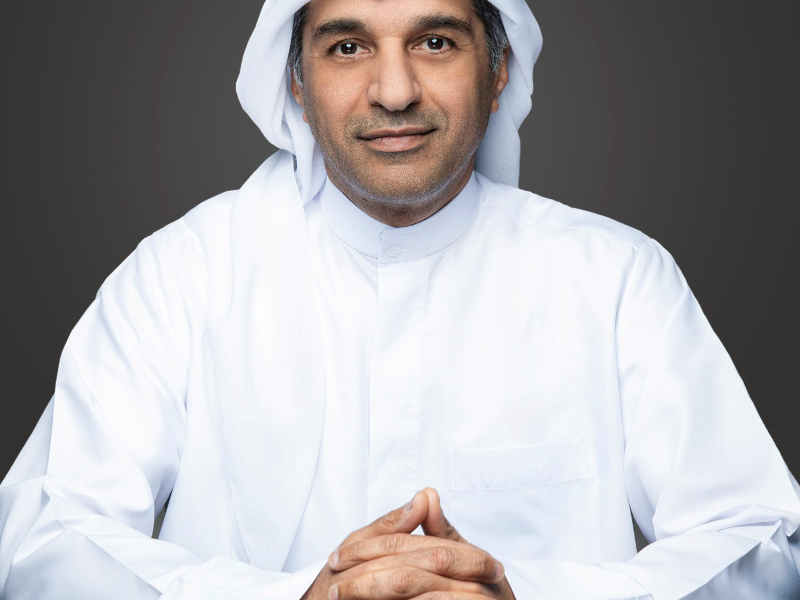


Ahead of Sharjah’s Investment Forum this October, I spoke with Invest in Sharjah’s CEO H.E. Mohamed Al Musharrkh about the emirate’s position as the UAE repositions itself ahead of the final quarter.
Following our conversation earlier this year at The Briefing, I caught up with H.E. as Sharjah and the wider northern emirates look to capture new opportunities from the expansion of trade routes through Khorfakkan and the opening of Etihad Rail.
“Building Adaptive Economies” is the theme of SIF 2026. What does economic adaptability mean in practice for Sharjah, and what has the changing global environment forced the emirate to rethink?
For us, economic adaptability is an economy’s ability to anticipate change, absorb disruption and evolve without losing sight of its long-term priorities. In Sharjah, this means strengthening the emirate’s economic foundations while ensuring its policies, infrastructure, skills and business environment continue to respond to emerging opportunities and changing investor needs.
Slower global growth, geopolitical uncertainty and more selective capital allocation make that increasingly important. UNCTAD reported that more than 80% of global FDI in 2025 went to the top 20 recipient economies. That concentration raises the competitive bar for investment destinations.
Sharjah starts from a diversified economic base. Nominal GDP reached AED 161.5B in 2024, with manufacturing accounting for 18.1%. We are now looking at how to build greater scale and specialisation in areas such as advanced manufacturing, logistics, technology, food, healthcare, education and sustainability.
The changing environment has also required us to focus more closely on the quality of investment we attract, including its contribution to technology, local supply chains and skilled employment. That thinking is central to the theme of SIF 2026. We want the Forum to examine how investors, businesses and governments can respond to changing economic conditions while continuing to identify viable opportunities for long-term growth.
Global capital is becoming more selective amid geopolitical and economic uncertainty. What are you seeing change in investor priorities and capital flows, and how is Sharjah adapting its proposition accordingly?
We are seeing much greater scrutiny over where and how capital is deployed. Investors are looking closely at regulatory predictability, market access, infrastructure, operating costs, supply chain resilience, and specialised talent. They also want greater clarity on how an investment can scale and how efficiently they can serve regional and international markets.
The UAE continues to attract capital in this more selective environment. It received $48.3 billion in FDI in 2025 and ranked ninth globally for inflows. It also recorded 1,562 greenfield projects, ranking second globally for the third consecutive year. That tells us investors are still willing to commit capital to new operating capacity when the fundamentals are right.
Sharjah is seeing that momentum as well. The emirate attracted AED 7.74B in FDI across 142 projects in 2025, with the number of projects up 45% and associated job creation up 25.7% to 5,673.
Our response is to make Sharjah’s proposition increasingly specific. We need to show investors where the commercial opportunities are, what is required to establish and operate successfully, and how those investments can scale.
Where do you see the biggest gaps between global investor demand and Sharjah’s current investment opportunities, and which sectors are best positioned to close those gaps?
One of the clearest opportunities for Sharjah is to connect growing global demand for technology-intensive investment with our established industrial base.
Investment in digital and advanced infrastructure is accelerating. Data centres attracted more than $270B in announced FDI in 2025, accounting for more than one-fifth of the value of global greenfield projects. For Sharjah, the opportunity is to apply this investment and technology across sectors where we already have scale.
The emirate has more than 2,800 factories across 21 industrial zones and accounts for around 40% of the UAE’s industrial establishments. Industrial investment reached AED 1.6 billion across 31 projects in 2025, while industrial real estate transactions rose 88.7% to AED 9.24B.
We see opportunities in advanced manufacturing, industrial automation, robotics, specialised components, food technology and supply-chain solutions, as well as healthcare technology, education technology and applied AI.
Our priority is to convert these capabilities into more investable projects at scale, with clearly defined commercial opportunities that can attract international capital and bring new technology into Sharjah’s industrial economy.
AI is increasingly influencing both investment decisions and the competitiveness of entire economies. Where can Sharjah gain an edge through AI, digital transformation and advanced industrial capabilities?
For Sharjah, the opportunity lies in applied AI to using the technology to raise productivity in industries where we already have scale and to create new opportunities around those industries.
The economic case is becoming clearer. The World Bank estimates that AI could meaningfully increase productivity in 16.2% of jobs in developing economies. For investors, that makes an economy’s ability to adopt and commercialise AI increasingly relevant to competitiveness.
Sharjah’s industrial base gives us an immediate area for deployment, with opportunities to apply AI in predictive maintenance, industrial automation, computer vision, energy management and supply chain planning. We also see applications across logistics, healthcare and food production.
The other part of the equation is talent and research. Within Sharjah University City, the ecosystem provides access to more than 47,000 students, 2,000 PhDs and over 10 R&D centres and institutes. Our focus is on strengthening the links between this knowledge base and industry, so companies can develop, test and commercialise solutions in Sharjah and scale them into regional markets.
As governments increasingly look to private capital to fund growth, what role do you see public-private partnerships playing in Sharjah’s next phase of infrastructure and economic development?
Public-private partnerships will play an increasingly important role in helping Sharjah build the capacity required for its next phase of growth. By combining public-sector direction with private capital, technology and operating expertise, they can accelerate infrastructure delivery and strengthen the long-term management of major assets.
This approach complements Sharjah’s continued public investment. The emirate’s 2026 budget totals AED 44.5B, with 35% allocated to infrastructure. Partnerships can extend the impact of that investment by bringing additional financing and specialist capabilities into projects that support future demand.
We can already see this model across several sectors. Sharjah’s first Independent Water Project, being developed by SEWA and ACWA Power, is expected to produce 410,000 cubic metres of water per day by the third quarter of 2028. In logistics, Sharjah has extended its port concession agreements with Gulftainer for a further 35 years, while the planned Al Dhaid Multi-Modal Trade Corridor will connect inland logistics with Khorfakkan Port and, eventually, Etihad Rail.
The planned expansion of the Sharjah Waste-to-Energy facility will also double its annual processing capacity from 300,000 to 600,000 tonnes. The project is being delivered through Emirates Waste to Energy, a joint venture between BEEAH and Tadweer Group, combining public infrastructure goals with specialist operating expertise.
These projects show how partnerships can expand essential services, strengthen connectivity and advance sustainability. With transparent procurement, viable revenue models and an appropriate allocation of risk, PPPs can support Sharjah’s next growth cycle—an important part of the SIF 2026 conversation on building adaptive economies.
Supply-chain resilience and shifting trade routes are reshaping investment strategies. How is Sharjah leveraging its industrial base, connectivity and geographic position to capture new regional and global trade flows, with Khorfakkan and plans to upgrade terrestrial and maritime capacity?
Supply-chain resilience is increasingly influencing where companies invest. Businesses are reassessing where they manufacture, how they hold inventory and the routes available to reach their markets.
More than 80% of world trade by volume moves by sea, while geopolitical disruption and rerouting increased shipping ton-miles by 5.9% in 2024, almost three times the growth in maritime trade volumes. That makes access to alternative routes and integrated logistics infrastructure increasingly important.
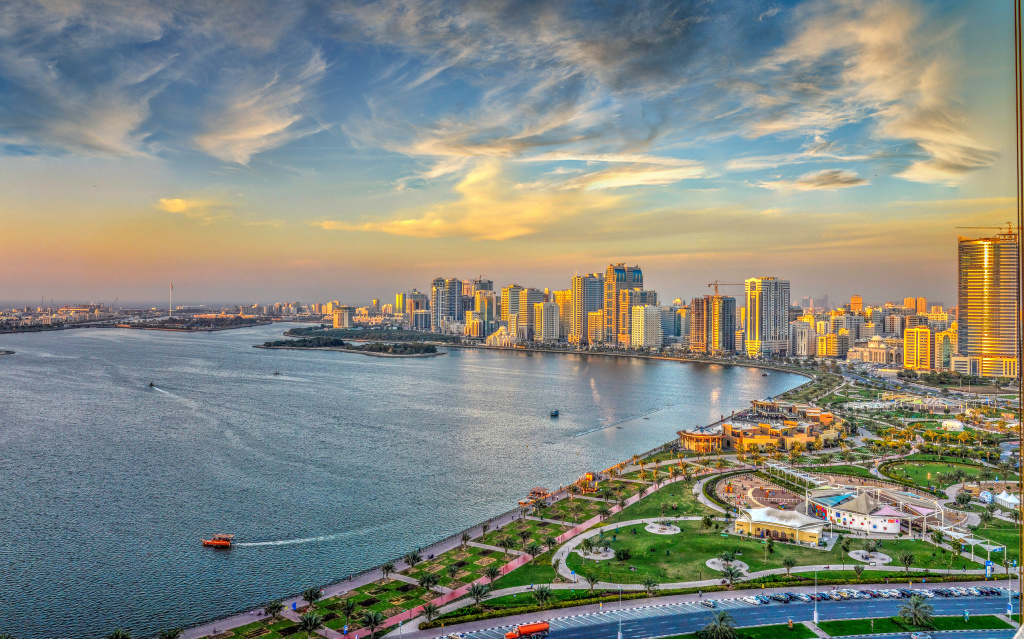
Sharjah has a particular geographic advantage because its maritime network spans the Arabian Gulf and the Gulf of Oman. Khorfakkan Container Terminal, located on the Indian Ocean outside the Strait of Hormuz, is listed by Gulftainer as having an annual capacity of 5M TEUs. The longer-term expansion strategy targets more than 10 million TEUs at Khorfakkan and 2.3M TEUs of combined inland logistics capacity across Al Dhaid and Sajaa.
The opportunity for Sharjah is to connect this maritime capacity more closely with our industrial areas and inland logistics network. Future integration with Etihad Rail is also planned, adding rail to existing sea and road connectivity. Air freight adds another dimension, with Sharjah Airport handling more than 204,000 tonnes of cargo in 2025.
For manufacturers and logistics operators, this gives Sharjah greater flexibility in how goods are produced, stored and moved. That flexibility is becoming increasingly valuable as companies reassess the resilience of their supply chains.
What does Sharjah need to do to compete for investment against increasingly sophisticated propositions across the UAE and wider GCC, particularly when it comes to talent, entrepreneurship and the ease of doing business?
The competitive bar across the UAE and GCC is high, and investor expectations continue to rise. The UAE ranked fifth globally in the IMD World Competitiveness Ranking 2025, so Sharjah is competing for capital within an already highly developed national business environment.
Our priority is to keep making it easier for companies to establish, operate and expand. That includes efficient licensing and approvals, access to finance and specialised talent, and stronger connections between businesses, universities and entrepreneurs.
Entrepreneurship is an important part of that proposition. Ventures supported by Sheraa have generated more than $248 million in revenue, raised more than $171 million in investment and created over 1,900 jobs. The next phase is to help more startups scale, connect them with larger companies and investors, and create more opportunities for SMEs to participate in industrial and export supply chains.
Our task is to make these capabilities easier for investors and businesses to access, while continuing to reduce friction as companies establish, operate and expand in Sharjah.
Looking five years ahead, what could ultimately become the emirate’s most significant investment advantage?
We already have considerable industrial depth. Sharjah has more than 2,800 factories across 21 industrial zones and accounts for around 40% of the UAE’s industrial establishments. Demand for industrial capacity is also growing, with industrial real estate transactions rising 88.7% to AED 9.24 billion in 2025.
Over the next five years, the opportunity is to connect that industrial base more closely with Sharjah’s research and talent, technology companies, specialised economic zones and expanding logistics infrastructure. A company should be able to develop an idea, access the expertise and infrastructure needed to commercialise it, manufacture at scale and reach international markets efficiently.
That integration could become one of Sharjah’s strongest investment advantages, and it is a proposition we want to bring into focus at SIF 2026. The Forum allows us to connect international investors with opportunities and demonstrate how Sharjah’s industrial capacity, innovation, talent and market connectivity can support companies looking to build and expand operations over the long term.
Stay Up to Date with the Latest Updates at Finance ME
How Al Masraf Is Building Islamic Trade Finance Corridors
EDGE’s Rodrigo Torres on Risk, Sovereignty and Defence Finance in a Multipolar World
ADNOC Distribution’s Ali Siddiqi: “Growth, Growth and Growth”