
Middle East sovereign wealth funds (SWFs) are forecast to deploy less capital in 2026 than at their 2025 peak as the Iran war impacts Gulf government finances although investment is expected to remain close to historic highs.
Gulf sovereign investors are on track to remain more active than their five-year average, led by Abu Dhabi’s Mubadala according to New York-based data and research platform Global SWF.
Withdrawals by regional governments from funds including the Kuwait Investment Authority (KIA) and Qatar Investment Authority (QIA) to help cover the costs of the Iran conflict could trigger the first year-on-year decline in their combined assets under management (AUM) in more than a decade, Global SWF said in its latest MENA Playbook.
“This will likely have a short-term impact on liquidity and global dealmaking, and also a long-term effect, as sovereign investors continue to evolve and build resilience against future shocks,” Global SWF said.
The firm expects a recovery by the end of the decade.
Gulf Sovereign Investment Remains Near Record Levels
Middle Eastern sovereign investors deployed more than $100B across nearly 250 transactions in the first nine months of 2026.
Global SWF measures the MENA region as the Gulf states, Iran, Iraq and Maghreb countries including Egypt.
The total represented about 40 percent of global sovereign dealmaking, but marked a three-year low for the region “in both absolute and relative terms”, according to Global SWF.
At the current pace, MENA sovereign wealth funds are forecast to end the year having invested $136B across 327 transactions. That would be down from $176B in 2025 but still makes 2026 the second most active year on record.
By contrast, sovereign and pension funds in other regions have already deployed more capital than they did throughout 2025.
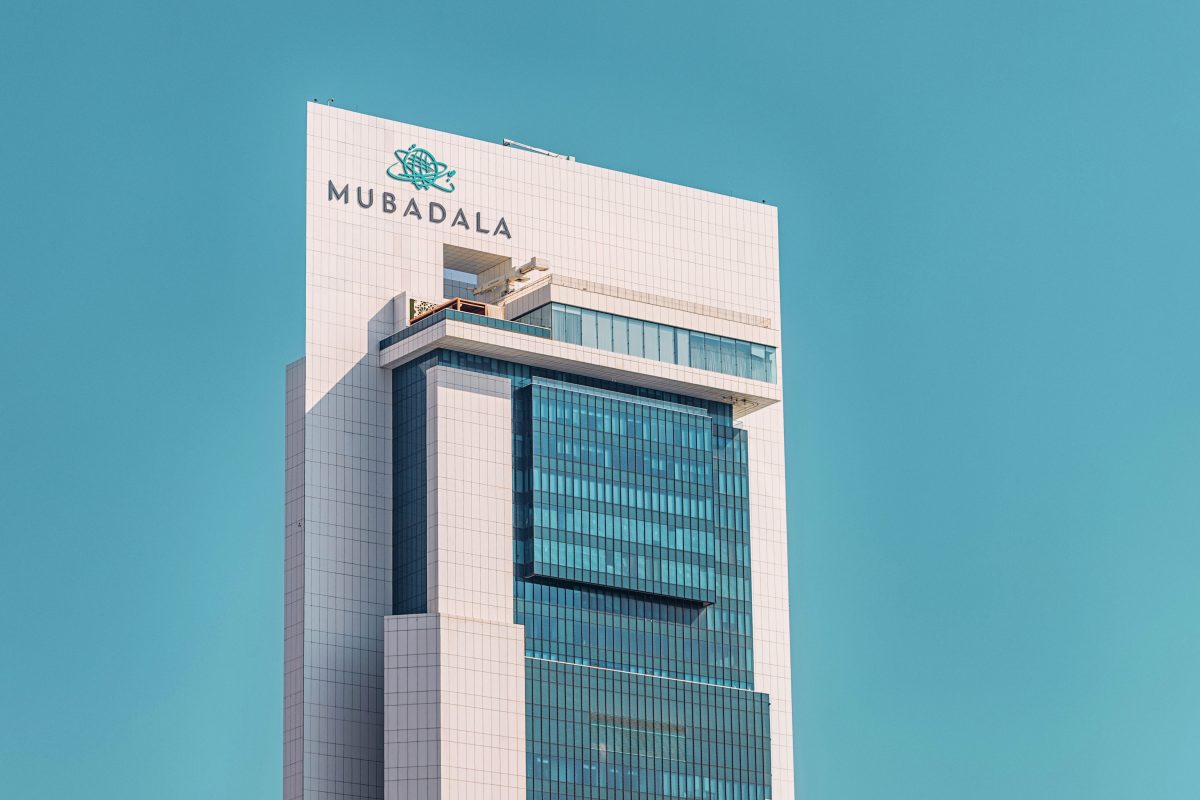
Abu Dhabi’s Mubadala is the region’s most active sovereign wealth fund in 2026, with $26.2B invested. It is followed by Saudi Arabia’s Public Investment Fund (PIF), the UAE’s Abu Dhabi Investment Authority, L’imad and the QIA.
Around 20 percent of sovereign investments through the end of September targeted domestic economies. The US remained the leading destination, accounting for nearly half of capital deployed, followed by China, the UK and Singapore.
“This is not just a 2026 story, but the continuation of a trend in which we will see Gulf sovereigns investing more at home,” said Rachel Ziemba, a macro-strategy adviser in New York.
Ziemba pointed to the region’s economic diversification needs, alongside new infrastructure and defence requirements arising from the Iran conflict.
It comes as Qatar launched ‘Doha Investment’: a local platform to manage the QIA’s domestic portfolio while Abu Dhabi’s L’IMAD recently acquired AD Ports.
PIF Shifts to Concentrated International Bets
Saudi Arabia’s PIF has also slowed and concentrated its investments outside the kingdom this year.
Almost half of the fund’s international investments are expected to be concentrated in three companies – Electronic Arts, SpaceX and Warner Bros – if Paramount’s pending Gulf-backed acquisition goes through, according to Global SWF.
The report described the resulting exposure as a “concentration never seen among other SWFs”.
“If we go back to 2020, you had the PIF opportunistically buying small stakes in a lot of companies,” said Ziemba. “So you’ve had this pullback from a diversified international portfolio into a more concentrated one.”
Technology was the sector most targeted by Gulf sovereign investors, followed by infrastructure and financial services.
Stay Up to Date with the Latest Updates at Finance ME
Julius Baer Appoints Roy Zaatar as Managing Director
EDGE’s Rodrigo Torres on Risk, Sovereignty and Defence Finance in a Multipolar World
ADNOC Distribution’s Ali Siddiqi: “Growth, Growth and Growth”