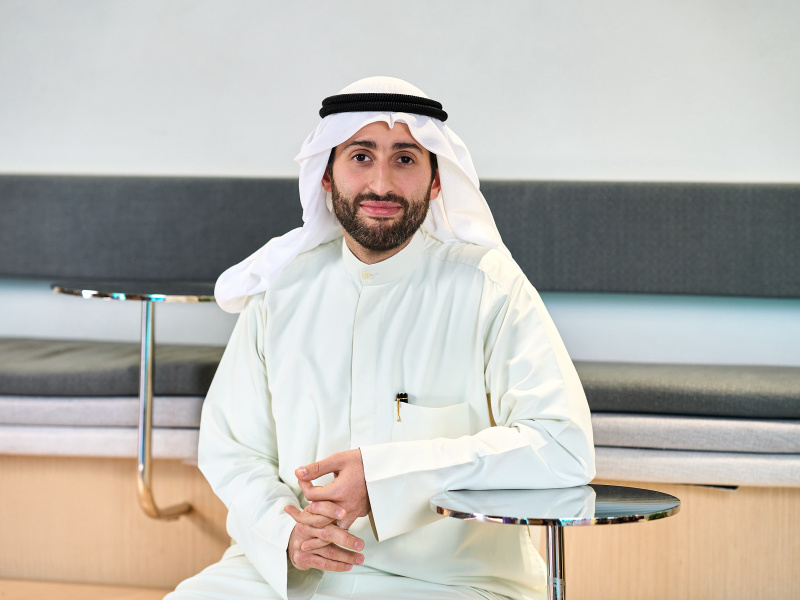



The next phase of growth across EMEA will be defined less by expansion for its own sake and more by the strategic combination of organic growth, M&A, technology and access to capital according to Zaid Aboobaker, Founder and CEO of CompassPoint.
Speaking with Finance Middle East, Aboobaker argues that fragmentation across EMEA markets is creating opportunities for consolidation while the rising importance of AI, digital infrastructure and supply chain resilience is making it increasingly difficult for companies to build every capability organically.
What is driving the new growth playbook across EMEA and how are companies balancing organic expansion with M&A as they look to scale?
Two things.
The first is fragmentation. Across EMEA, and Europe in particular, too many good businesses are still subscale in markets that increasingly reward scale. The second is capability. AI, digital infrastructure and supply chain resilience have become competitive necessities and building them organically is too slow.
That is changing the role of M&A. Rather than being treated as an opportunistic addition to organic expansion, acquisitions are increasingly becoming part of a deliberate growth strategy.
“The old instinct was to grow the core and treat acquisitions as opportunistic. The new playbook has to be more deliberate. You build organically where you are already strong, and you acquire where speed and capability are needed” says the Founder and CEO.
The balance, however, remains one of risk and timing. Organic growth can be cheaper and less risky but takes longer, while acquisitions offer faster access to markets and capabilities but introduce integration challenges.
The balance comes down to time and risk. Organic growth is cheaper and lower risk, but slow. M&A buys time and capability but carries integration risk that is easy to underestimate.
The result is a more selective deal environment, with fewer transactions attracting greater conviction from buyers.
Fewer deals, bigger conviction.
Where are you seeing the strongest consolidation trends today and what is making certain sectors and businesses particularly attractive to acquirers?
Financial services, technology and infrastructure are among the sectors seeing the clearest consolidation trends.
The clearest consolidation is in financial services, technology and infrastructure. In Europe, banking and insurance consolidation has finally arrived after years of being talked about, and financial services was one of the largest sources of deal value in the region this year.
Across the Middle East, the pattern is somewhat different, with infrastructure and utilities, healthcare, logistics, consumer businesses and technology platforms attracting significant activity.
For acquirers, the investment case often comes down to a familiar combination of fragmented markets, scale economics and resilient revenues.
What makes a sector attractive is usually the same short list. Fragmentation, so there is something to consolidate. Scale economics, so that combining actually lowers cost or deepens a network. Recurring, sticky revenue that survives a downturn. And a regulatory or structural tailwind that supports the business model.
That is placing a premium on mid-market companies that have strong operational foundations but remain capable of being scaled.
A well-run, well-reported mid-market business in a consolidating sector is one of the most valuable things you can own right now.
How have changing financing conditions affected the way companies approach acquisitions, particularly when weighing debt against equity?
The financing backdrop is also influencing how companies structure acquisitions.
Rates came down through 2025 and into 2026 but have recently gone the other way again. Borrowing is meaningfully cheaper than it was at the peak. But geopolitical volatility, and the pressure it puts on oil and inflation, has kept a “higher for longer” caution in the market. Cheaper than the peak is not the same as cheap.
One of the biggest structural changes has been the rise of private credit as a source of acquisition financing.
The bigger structural change is where the debt now comes from. Private credit has moved to the centre of deal financing. Non-bank lenders can underwrite tailored structures quickly and with certainty, which matters enormously when you are trying to close. For mid-market deals in particular, that is now often the first port of call.
For buyers, the choice between debt and equity should ultimately reflect the underlying transaction rather than financing conditions alone.
The capital structure should follow the deal thesis and the cash flows, not the other way round.
That means balancing the cost of equity against leverage and interest-rate risk, particularly when valuations remain elevated and borrowing costs are volatile.
What separates an acquisition that genuinely creates value from one that simply adds scale and where do businesses most often get the integration process wrong?
Buying scale is not necessarily the same as creating value. The difference is often determined after the transaction closes.
Scale and value are not the same thing. Adding revenue is easy. Adding value means the combined business is genuinely worth more than the two parts, and that only happens if they actually integrate.
That requires a clearly defined acquisition thesis and realistic assumptions about synergies.
A value creating deal starts with a clear thesis and honest synergy assumptions. It knows precisely why the two businesses are worth more together, and it has a realistic plan to capture that. A scale deal just buys the top line and hopes for the best.
Integration failures frequently arise from underestimating the practical difficulties of combining systems, data, cultures and finance functions.
“The first 100 days can be particularly important, with management teams needing to establish operational momentum while ensuring they have a clear view of the combined business” says Aboobaker.
The businesses that integrate well treat financial visibility as the first priority. You cannot manage what you cannot see, and you certainly cannot integrate it.
What role is Dubai playing in this new EMEA growth model, particularly for companies using the UAE as a base for expansion into the Middle East, Africa and India?
For companies looking beyond Europe, the UAE is increasingly central to the EMEA growth model.
“Dubai has become the natural centre for this whole model. The UAE now accounts for roughly 80% of GCC deal value, and it is the largest recipient of foreign direct investment in the Arab world” the CEO says.
Aboobaker points to the combination of capital, connectivity and financial infrastructure as key factors behind the UAE’s position, alongside the regulatory frameworks offered by the DIFC and ADGM.
For a company expanding into the Middle East, Africa and India, the UAE solves a specific problem. It gives you one base from which to reach three very different high-growth regions, with the legal infrastructure, banking access and talent to run them properly.
That is increasingly visible in the behaviour of regional serial acquirers using the UAE as a base for repeated cross-border investments.
They are not just doing deals. They are building platforms from here.
For founders, that makes the location of finance, governance and corporate infrastructure an increasingly strategic decision.
The UAE lets you run a regional business to an institutional standard, which is exactly what investors and acquirers want to see.
Looking ahead, how do you expect AI, changing capital markets and continued consolidation to reshape the EMEA growth and M&A landscape over the next three to five years?
Looking ahead, AI is likely to influence both the assets companies acquire and the way transactions are executed.
AI will reshape both what people buy and how they buy it. Deals are increasingly built around acquiring AI capability, data and the infrastructure behind it.
The technology is also beginning to reshape due diligence, integration and post-deal reporting, potentially giving sophisticated acquirers a speed advantage.
“Meanwhile, the return of capital to markets could support a new phase of deal activity as interest rates settle, private credit becomes a more established part of the financing landscape and IPO markets reopen.”
Expect more activity, but more selective activity. The era of growth at any cost is over.
For Zaid, however, the fundamental logic behind consolidation remains unchanged: fragmented markets create opportunities for businesses capable of building scale.
Consolidation will continue because the underlying logic has not changed. Too many subscale businesses in fragmented markets. The mid-market is where most of it will happen.
At the centre of that next phase will be data.
The thread running through everything is data. As AI raises the bar, the businesses that win, whether they are buying, being bought, or simply scaling, will be the ones with clean data, clear reporting and financial visibility.
Stay Up to Date with the Latest Updates at Finance ME
How Al Masraf Is Building Islamic Trade Finance Corridors
EDGE’s Rodrigo Torres on Risk, Sovereignty and Defence Finance in a Multipolar World
Presight AI to Expand Kazakhstan AI Hub, Open Azerbaijan Office