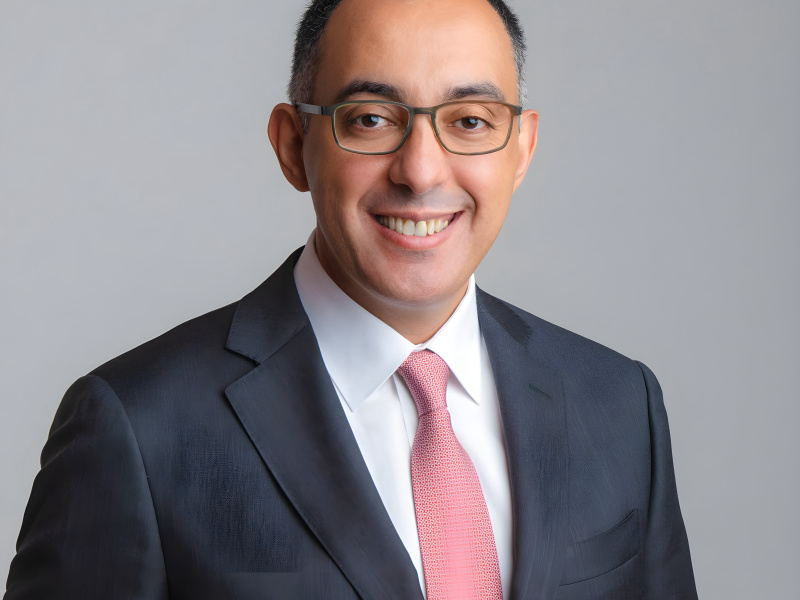
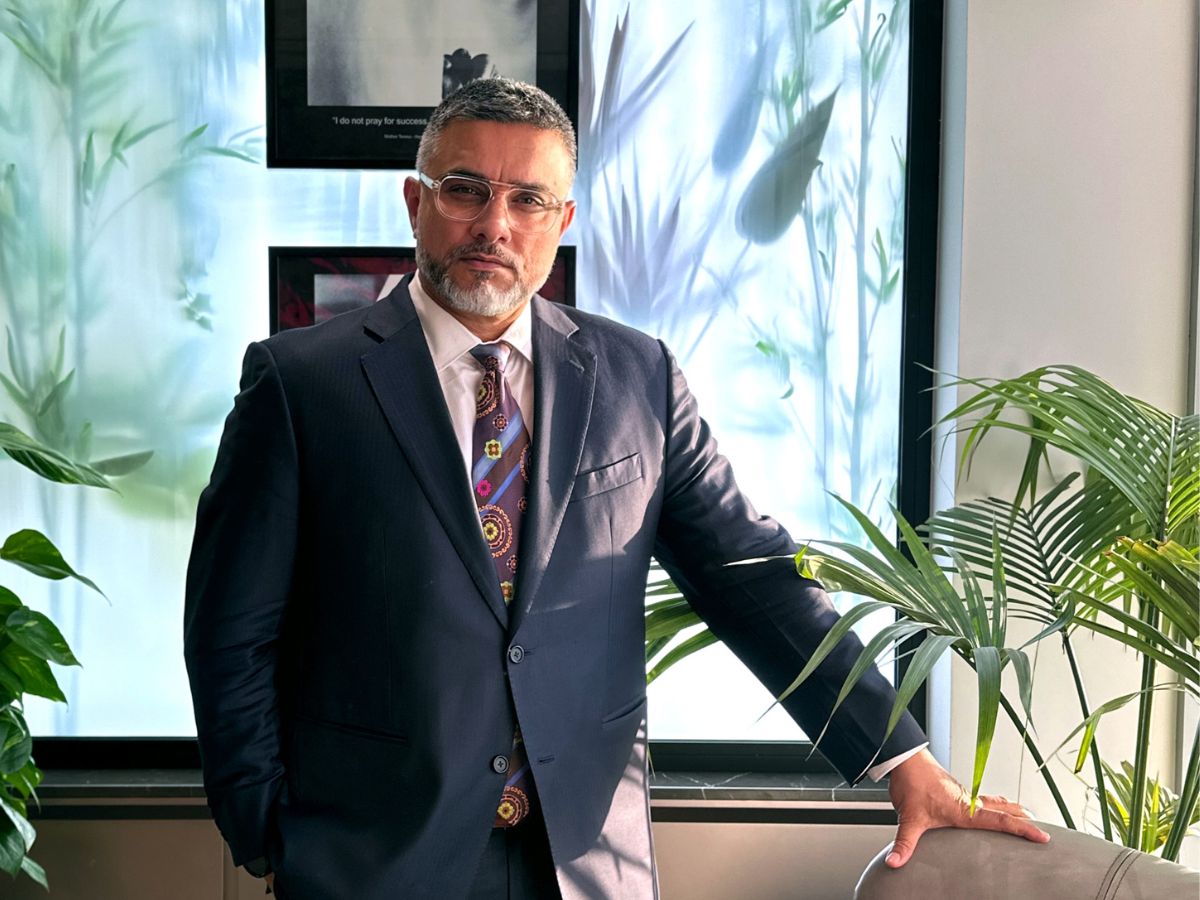
Raza Beig has embarked on a new business venture, this time in the art world. Following a two-year media hiatus, the CEO of Splash joined his son, Aly Raza Beig, on his first-ever podcast interview in Cheque Point by Finance Middle East. The two discuss starting a new business, learning about blockchain and the future of fine art investments.
Founded by Asif Kamal, Artfi aims to leverage the transformative power of blockchain technology to democratise the $1.7 trillion fine art market. The company allows collectors to own a stake in valuable works of art. Artfi has already partnered with several renowned artists and celebrities, including Sacha Jafri and Salman Khan, as part of its journey towards disrupting the way people engage with art.
The following transcript has been edited for length and clarity. Listen to the full interview here.
Q: What brings us here is the launch of a new company, Artfi. Can you tell me a little bit about how that came about?
Raza: I have been an art collector for over three decades, and it came out of sheer passion to decorate my walls, my chipped walls when we were growing up. It got a lot of interest from family and friends, and that’s how my love for art came about.
And then, one fine day, Aly comes and says, “There’s a friend of mine. His name is Asif, and he wants to talk to you about a tech company, and he wants you to be an advisor”. I said, “Listen, technology and I don’t go hand in hand, but I’m happy to hear him.” And the rest is history. They sat with me for about two hours. They gave me the whole brief of what Artfi is all about. I said, “Sounds like a plan”, and that’s how I got into Artfi.
Q: What about you, Aly? What got you interested in NFTs and wanting to create a business around art?
Aly: I think it was Covid. I graduated from Point Blank Music School in Shoreditch, London. A pretty useless degree, because I studied Sound Engineering and Music Production, so I couldn’t really get a job. There was no money in that. So, that’s when earning from my bedroom came alive. And you know, my father calls us the “underwear businessmen”, because we just sat in our room, and we started trading crypto and started learning everything from YouTube. Then, Covid came, so we were just confined to our room, and that just accelerated the learning process.
I started connecting with all my friends and started doing NFT projects together. We’ve had some great successes, but my father said to kind of “get a real job” because I was also doing a lot of extreme sports. I was milking his bank balance, and he was not happy with that. So, this fine opportunity came when a man named Asif Kamal, who’s the actual founder, asked me to listen to him, and I found that concept so brilliant I had to bring it to my father because, finally, he would be proud of me.
Combining his three decades’ worth of collecting and my expertise in blockchain, it was a match made in heaven. It came out at the perfect time.
Q: How has it been, working together?
Raza: We do get along. I mentor them more on the business side, of course. The tech side I don’t understand, but they clearly understand the value systems. I helped them build it up, and I think, overall, both of them have been extremely well together.
Q: With regard to NFTs, there was a huge boom around 2021. Everyone was talking about it. Do you see that continuing? Has the hype died down?
Aly: My father predicted this very well at the boom of me buying monkeys and trading a lot of these, maybe $50,000 digital artworks, which my father said was baseless value. And he was right.
Post 2021-22 the correction happened, and we saw a massive downfall for a lot of these projects, including ours, but what remained was the community. The community is still very much involved in the crypto space. Those who started early are relaunching brand-new, mature projects. They are now benefiting because they’ve already had thousands, hundreds of thousands of people who already worked with them and purchased their products. Now, they’ve already had these two years of experience, they’re able to develop it even more. So, in terms of the NFT market, it’s a lot more mature and stable. It’s corrected from its peak.
Q: Do you see interest in the market in the Middle East?
Raza: Middle Eastern customers, they’re very receptive to new ideas and concepts, and the government supports new industries and young talent. So I do believe that they’ll adapt faster. They don’t come with baggage. They are very tech-savvy.
Q: So are the investors interested in blockchain very different from those that have traditionally invested in art?
Aly: The blockchain consumer is always looking for the next big thing. We are based on real-world assets and the price, the historical context of each artwork and their provenance; all that matters.
What we do is we make a million dollars affordable. If we take a million-dollar painting, and you’re taking 10,000 fractions, that’s $100 a share. Now, young people like me, are able to invest, along with the big investors. When it gets sold, we all reap the benefits, based on how much we’ve invested.
Q: So it is making investing in art a lot more accessible.
Raza: I have a lot of friends who share a common liking to art, and I know a few who also have art galleries. They all seem to be very inclined or interested in understanding what this all is about. Clearly, there’s an opportunity there, and they believe it needs to be tapped.
Q: Apart from fine art, are you looking to expand to digital art?
Aly: Now, we’re just focusing on high-valued fine art, which has a historical context of transactional value. We want to be different. We want to make fine art accessible; that’s our main goal. But, in the future, we do have plans to onboard all sorts of fine art.
Raza: I’m not sure the digital art space is where we would like to go. The concept is about fine art and real assets, which have value. So it is not a monkey or a graphic that becomes of certain value. I really don’t see that that long-term. Digital art manages to get a lot of play on the creative side. But does it have the same value as a brush stroke? No, people put years and years to perfect their strokes, and digital art will never be able to do that.
Q: Can you tell me about some of the artists you’ve worked with?
Aly: Just very recently, my father’s friend, Salman Khan. It was the first time his artworks had been sold. Unity 1 is a very thought-provoking piece. It is completely sold out for now. My father’s friendship made that happen for us.
Raza: Oh, I collect a lot. When I’m walking in New York, if there’s an art gallery I drop in and buy some modern art. I bought art in Greece. I bought art in Iran. I buy a lot of Indian masters. Every art tells you a story.
Q: Where would you like Artfi to be in the next couple of years?
Raza: Artfi is on the blockchain, and it will be available for global audiences. Just now, it’s not restricted to a market and, hopefully, the audiences will be art lovers everywhere in the world.
Aly: The adoption is a slow process, but once it snowballs in and becomes large enough, the growth is very much compounded. We already have over 100,000 followers and community members. In terms of our sales, our first offering is completely gone and people are choosing their fractions. They’re very happy, they’re able to showcase it on their phones. Someone has put it on their TV, showing which fraction they own.
I think the technology we’ve created is very interactive. It makes investing very accessible and, in the future, we want to change with this ever-changing world of technology.
Q: And, just before we go, what advice would you give to people who are just starting their business now?
Aly: That’s one for my father.
Raza: If you answer, right, I’ll get you a coffee after.
Aly: I’ve made my fair share of mistakes. I am two years into the business of blockchain. It’s a very fresh industry and I’m still very young. We’ve had a lot of successes. We’ve had a lot of downfalls, too. But everything was a lesson.
what I learned from my father, which is so valuable, is to always keep the consumer in mind. Without them, you are nothing. Your product is nothing. Your business is nothing. If you think that you’re creating something that is revolutionary, but without understanding what your customer really wants, it’s not going to work. I failed many times because of my own ego.
The second most important thing is, obviously, the team. When Artfi came in as an opportunity, the real founder, Asif Kamal, created a full book for me about a car, which got my interest. Then I said, “Okay, I need to reply to this guy”. The founder, he’s a go-getter, which is why I had to bring it to my father. It worked out so beautifully.
Raza: I’ll just add to this. I think so for a young businessman, it is very, very important, especially in today’s day and age, to be very innovative in what you’re doing. There has to be a point of difference to get customers’ attention. He already touched upon a great team. You know, you have to put a very good team together. You have to motivate them, inspire them, and empower them to be able to bring the best to the table.
Finally, I think your product has to be good. It has to be different. The last thing is the customer. If you are focused on your customer, and you’re constantly giving them what they want and keeping their interest, your business will grow. If you give it for once, and then you don’t innovate, you don’t add any value to them. It will fail. So it’s customer, customer, customer.