The Central Bank of the UAE (CBUAE) board recently approved a new system for overseeing and licensing stablecoins. This move aims to enhance digital transactions, advance the digital economy, and foster innovation in the UAE. It marks a significant step in the country’s efforts to establish itself as a leader in stablecoins.
While much attention has been given to the Digital Dirham, the UAE’s Central Bank Digital Currency (CBDC), the progress being made in stablecoin regulation has yet to be reported. This is partly due to the UAE’s complex and diverse regulatory landscape, with various entities such as VARA, ADGM, DFSA, and CBUAE developing their own frameworks. The rapid evolution of this space adds to the challenge of tracking these developments. However, the potential impact of stablecoins on finance, both at a macro and individual level, makes this a crucial trend to follow.
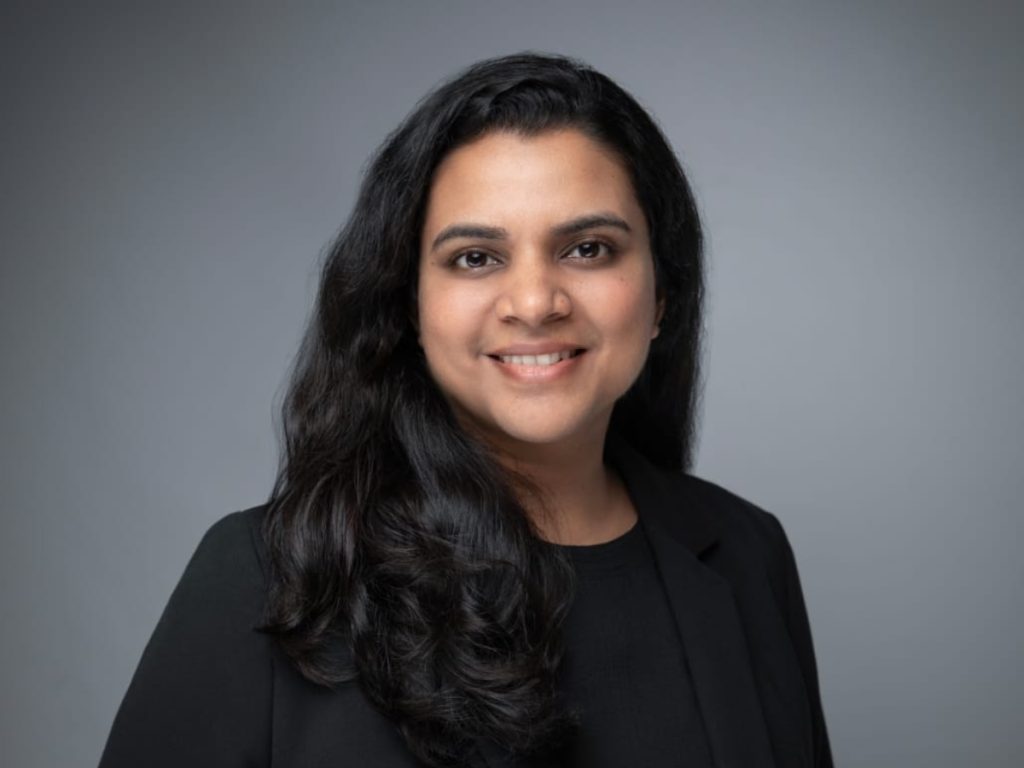
In a recent podcast interview with Cheque Point by Finance Middle East, Arushi Goel, Policy Lead for MEA at Chainalysis, discussed the Central Bank of the UAE’s latest regulations on Payment Token Services. The podcast highlighted the progress made by UAE regulators in defining and implementing stablecoin regulatory schemes.
The following transcript has been edited for length and clarity. Listen to the full interview here.
How will the latest regulations announced by the CBUAE advance the regulated stablecoin ecosystem in the country and have implications beyond its borders?
So, to set a baseline, stablecoins are a very special category of crypto assets that are essentially maintaining, or at least expected to maintain, a stable value in reference to an underlying asset. So, the benefit they provide is that they’re not as volatile, and they do not experience the price swings we see sometimes in other crypto assets. The other thing I want to highlight before we delve into CBUAE’s Payment Token Services Regulations is that, increasingly, we’ve seen stablecoins form a very important part of the blockchain and the crypto ecosystem.
If we look at the Chainalysis data, in 2023, stablecoins accounted for about 10% of all crypto asset market cap. However, if we look at the on-chain transaction volumes, they account for more than 50% of all on-chain transaction volumes. So they’re pretty widespread, and that’s where the central bank’s Payment Token Services Regulations are quite timely and in time to understand that stablecoins have now become a very important part of the crypto ecosystem.
What do these regulations mean? The central bank, within its mandate to regulate payment services within the UAE, has released this regulatory regime for payment token services. You could be an issuer, a custody provider or a conversion service provider. In terms of its implications for the domestic ecosystem and the wider global or international ecosystem, I would say
- The regulations paved the way for a very high-quality Dirham-backed stablecoin, or a payment token, as the language used in the regulation would complement existing, traditional payment methods.
- Secondly, the regulatory regime is like a dual regime. It provides for licensing of Dirham-backed stablecoin issuers, but it also provides for a registration regime for stablecoins or payment tokens that are backed by a foreign currency, such as that of a US dollar. This opens the market to global players, especially the ones who want to operate in a regulated environment and can now come in and operate confidently. At the same time, the central bank maintains a level of oversight over these players to ensure that any concerns around financial stability or consumer protection can be taken care of.
What’s also interesting is the ability, or the potential for these regulations to bridge the gap between the crypto world and the traditional finance world because, with this kind of regulatory clarity, it does make it easier for the likes of the financial institutions, be it banks or even merchants for that matter, to start to accept and integrate stable coins as a part of their payment systems. Overall, the regulations provide a good mix of innovation but, at the same time, maintain a robust oversight with some of these players.
But where do the stablecoin frameworks of VARA, DFSA, ADGM, and CBUAE stand, and what does this mean for companies and investors?
That’s a very interesting question and something we keep hearing a lot.
As you mentioned, all these regulatory authorities. The UAE is home to a diverse landscape of regulators when it comes to crypto and stablecoins. To give you an example in terms of where we stand, what is the lay of the land—the two financial free zones, ADGM and DIFC, both of the regulators within those free zones do have their existing regimes for stablecoin, the FSRA and ADGM regulates single currency backed stablecoins. Similarly, the DFSA, the regulator in DIFC, also regulates single currency-backed stablecoins. In fact, the DFSA very recently amended its framework to allow the reserve assets of the stablecoins to be held in high-quality liquid assets instead of the reserve assets requirement to be held in 80% of cash, which was fairly onerous.
Similarly, if I look at the emirate level, the VARA also provides for a regime for stablecoins. Interestingly, it permits both single-currency and multi-currency tokens, and now, with the central bank’s regulations around payment token services, we have all these different regimes. But what does it mean? I would put it this way: the Central Bank of UAE regulations cast a much wider net, especially when it comes to the geographical perimeter, because the central bank’s mandate extends to the entire UAE, especially the mainland, except the two financial free zones, where their existing regimes will continue to operate, as is.
The second effect is that if you are already licensed by a local licensing authority, such as VARA, you do not need to start from scratch. If you are, let’s say, a custody provider licensed by VARA. But if you also now want to custody a foreign currency-backed stablecoin or a payment token, you would ideally go down the no objection registration regime with the central bank, so it’s somewhat easier and simpler to get the no objection registration instead of having to apply for a full license.
Similarly, if you are a foreign stablecoin issuer and you’re incorporated outside of UAE, and when I say outside of UAE, that also means if you’re incorporated within ADGM or DIFC, which are the two financial free zones. Once again, you would have the option to apply through the registration regime for which the requirements are accordingly tiered. So, the overarching theme when we talk about all these different regulatory authorities is really regulatory coordination. The good thing is that the central bank’s framework acknowledges that there are these different landscapes and tries to bring about some sort of balance between appropriate oversight and operational ease. Having said that, I would say we are still in very early stages, not just of that of the ecosystem, but these regulations were released less than a month back. So, as with any major regulatory shift, it takes time for the market to adapt and the approach to be fine-tuned. As we see, what are the first and second-order effects with time?
You mentioned it’s just been a month since these regulations were introduced. What do you think about the markets? How are they reacting? How are the investors reacting? What’s the pulse like?
There’s a lot of discussion happening to understand what these regulations mean. I’ve been spending a lot of time talking to whether it be policy makers or industry stakeholders, not just in UAE, by the way, everyone across the globe. We’ve been speaking with stakeholders across the country who are interested in understanding what this would mean for the existing regulated players. Does it have an impact on them? As we discussed, it may or may not have an impact, depending upon where they want to play, but also for other players who want to enter the market because they finally see well, there is a sense of regulatory clarity and that something we want to be a part of? And then there’s the TradFi side of things, the banks and the financial institutions. Whereas the clarity is increasing from the central bank side, there is an interest in understanding how that convergence will happen within TradFi and the crypto world. So overall, there’s a lot of curiosity and a need to know where this will eventually land.
So why, although the regulatory landscape might seem fragmented, does it provide a variety of testing grounds for stable solutions that are beneficial in the long term? What do you think?
That’s an interesting viewpoint. As we discussed, these different regulators—The central bank, VARA, FSRA, and DFSA—all operate within their own regulatory pyramid, geographically and functionally. So I think what’s important is that there is, in fact, some regulatory coordination that goes on behind the scenes. So it’s not, you know, there is some method to what’s happening there. While it may seem fragmented, I think, like you mentioned, there is a perspective that, could this lead to more innovation? Or could this be beneficial in the longer term? We’ve also found that each of these regulatory frameworks sometimes serves varying purposes, and they’re tailored for different business needs.
Take the FSRA, for instance, the financial regulator in ADGM; just this year, they announced that they’d permitted a yield-bearing stablecoin, a stablecoin which could yield an interest that’s pretty cutting edge. In Dubai, VARA offers the flexibility to have a stablecoin backed, not just by a single currency but by multiple currencies, which is not something you can do elsewhere in the UAE. Similarly, all these regulators do have the requirement that when you issue a stablecoin, you have to ensure that it’s fully backed by its fiat equivalent or whatever the underlying asset is. Still, there are distinctions in the composition of that reserve asset or where those reserve assets could be held in custody. It could be within the UAE. It could also be overseas, as long as they have a certain level of oversight that they’re required to maintain.
As we discussed, all of these distinctions provide some level of flexibility to different players who want to do different things and, in many ways, provide testing grounds for stablecoin solutions to thrive, which I believe could be beneficial in the long term.
Talk to me about the yield-bearing stablecoins.
So, usually, stablecoins are used. For example, if someone is dealing with stablecoins, they usually do not earn any interest on top of the stablecoin. They might be using it for retail activity like payments, or they might just be using stablecoins to store value, especially in countries where fiat currency fluctuations could be very high. Stablecoins could also be used to transfer liquidity between exchanges. So there are a whole host of use cases for stablecoins, but till now, we haven’t seen a regulated stablecoin, at least not to my knowledge—I’d be very happy to be corrected if it’s there—which provides for interest payments for the holder. This is something that the FSRA and ADGM very recently permitted. It has certain restrictions in terms of where it can be made available and to whom it can be made available. However, it’s still a significant development within the crypto ecosystem because we are seeing newer business models emerge. We will have a better sense of where the ecosystem is headed only when we can see these solutions. That’s where I would say jurisdictions like the UAE, which has so many regulatory authorities, could have their benefits in the long term.
How could stablecoin issuers and regulators benefit from the ability to monitor the secondary market to understand how stablecoins are being utilised—this is from a market intelligence standpoint—and also whether they are interacting with any illicit addresses to take action accordingly?
To be clear, when I say primary market, these are the markets where the stablecoin issuers, for the very first time, mint and issue their stablecoin. But then there’s a secondary market, some might even call the Wild West, right where your stablecoin can land up through a horde of market participants. These market participants could be authorised, but they could also be unauthorised, so the ability to monitor not just the primary market but also the secondary market. We believe it would be quite important for both the public and the private sector, especially when it comes to stablecoins and tokens for other asset issuers. So, for stablecoin issuers, for example, if they’re able to monitor both primary and secondary markets, it could be very useful to understand how their token is being used and reused. Who is holding these tokens? For how long are they being held? On which blockchains are these tokens being used? Is there a concentration of volume in a certain blockchain? All these questions, if answered, can really help issuers spot trends. It can help them make their product better and more usable, and even more importantly, to detect any sort of misuse or, you know, fraudulent activity that may be happening, and this token may facilitate that.
Similarly, suppose I look at regulators and supervisors. In that case, the ability to monitor the broader ecosystem using on-chain data can be a really powerful tool for supervisors, not just to be able to monitor a specific entity but to understand the broader market size and the key players so that they can then adapt their risk-based approach to oversight. What’s again, what’s interesting is that this way, the regulators are able to understand any emerging risks, especially if any systemic risks emerge; it becomes easier to gage them and take proactive action, especially when they’re dealing with private sector players who are rather large in size. Who may be really scaled out in terms of their operations or who may have some very complex business models.
So having this kind of oversight could be very helpful, and even more importantly, understanding whether the tokens are interacting with illicit addresses and being able to proactively take action instead of waiting for law enforcement to come and knock on your door and be like, now you need to freeze up on the token. However, being able to do it proactively could be a huge plus for the ecosystem. So it’s not just compliance; it’s about a much broader approach to ensuring that the ecosystem is much more responsible and robust for all of us.