How do you find “the next Big Thing”? Should you look for it at all? In an increasingly changing world, technology is unmistakably the most attractive sector in terms of attracting funding. Yet, it also encompasses a wide variety of ventures, from healthcare to transport and financial services. Thus, investors have to be particularly selective when looking at which companies and entrepreneurs to back.
In the Middle East, the startup scene continues to thrive, with a total of $328.3 million raised across 60 startups in September 2024, according to the latest report by Rasmal. Saudi Arabia alone attracted $165.34 million, comprising more than half of the total capital raised across 13 startups in MENA. Meanwhile, the UAE brought in $114.32 million in total funding, with 28 UAE-based startups securing funding in September, mostly in the technology, e-commerce and proptech industries.
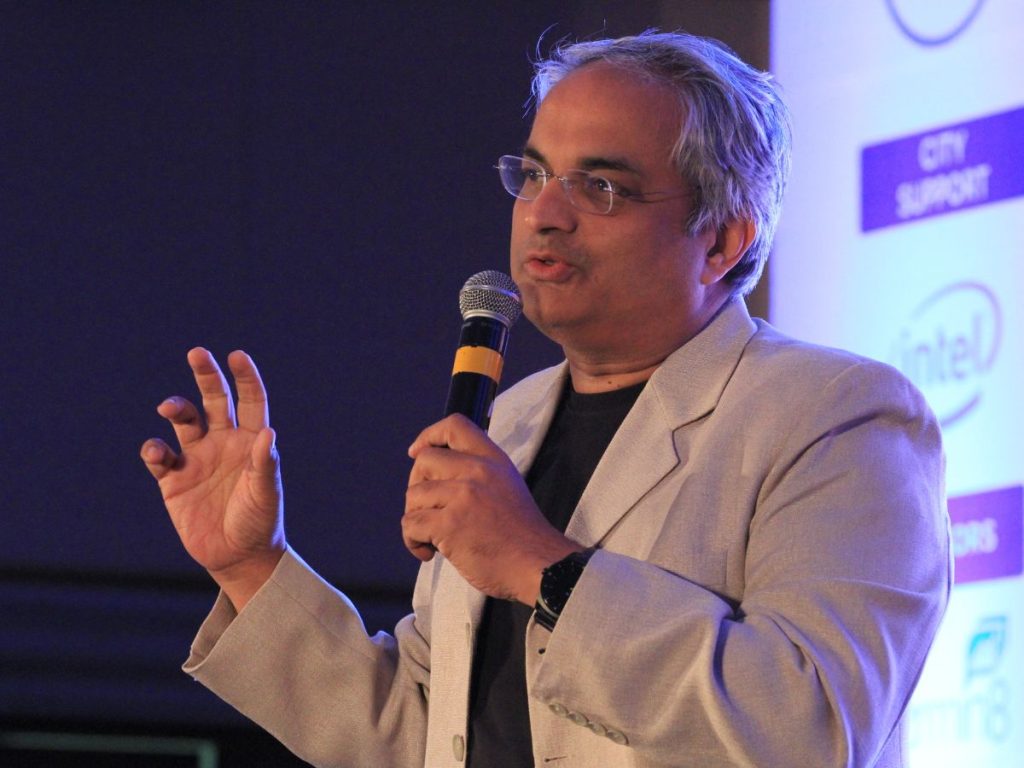
During a panel discussion hosted by GITEX 2024, Mahesh Murthy, CEO at Pinstorm, Yev Bebnev, Founder and CIO of Alaris Capital and Anirudh Singh, General Partner at Avataar Venture Partners discussed the key aspects investors take into account when searching for their next venture.
Liquid vs non-liquid investments
The technology sector is ever-changing and volatile by nature. Companies that once rose to the top of the industry can just as quickly become obsolete. Think MySpace, Polaroid or Compaq.
Moreover, in the tech space, the large players constitute a large share of the market. Google has an estimated 90% market share, something that would be unthinkable for companies in other industries such as retail, automotive, food and beverage or pharmaceuticals. All of this makes the jobs of tech VCs, private equity firms and investors much more difficult.
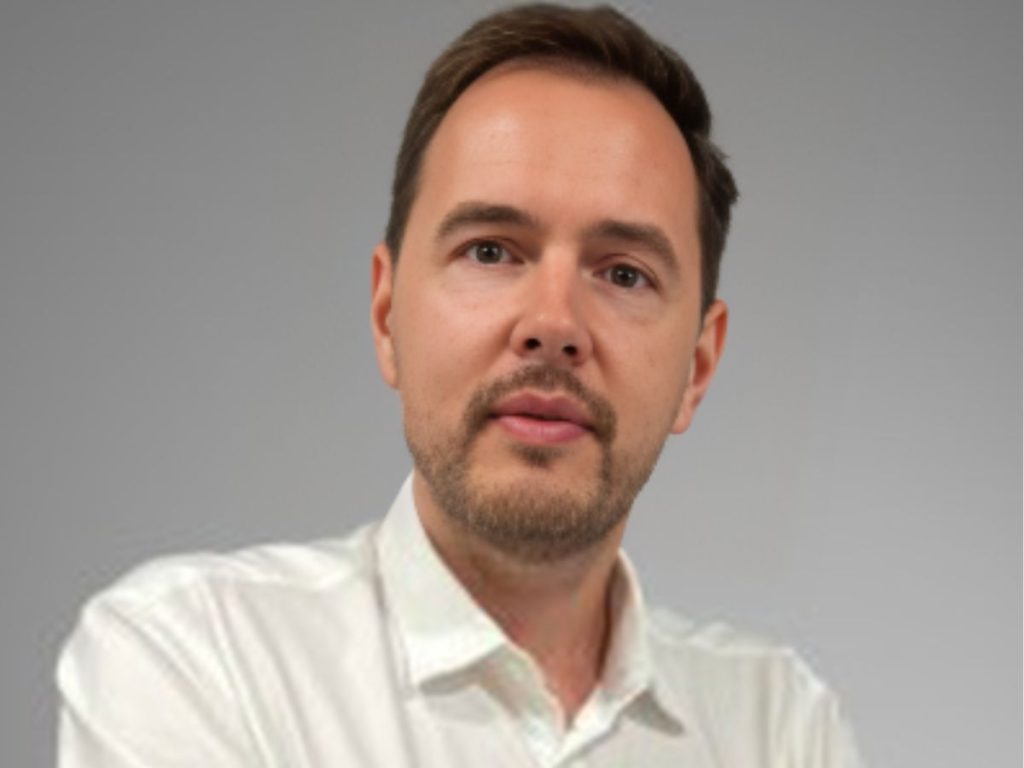
The technology investment space can be a tricky one to navigate and one that can result in great losses, as well as great returns. Investors have different approaches to the sector. Bebnev highlighted his more risk-averse attitude, as well as his preference for a wide pool of diversified, more liquid investments, managed by expert teams.
“Like anyone else, I make mistakes,” Bebnev said. “Why I like liquid funds is that, when you realise you’ve made a mistake with your investment, you have the opportunity to salvage whatever cash you have left and reinvest it into a different opportunity.”
“We’re in a world where, increasingly, the winner takes it all. The role of the VC is to find that winner.”
Mahesh Murthy
Nonetheless, not everyone thinks the same way. Murthy’s investment strategy, for instance, is the opposite of Bebnev, as a result of his extensive experience as a venture capitalist in the technology sector. “We’re in a world where, increasingly, the winner takes it all,” Murthy explained. “The role of the VC is to find that winner. You have to be far more selective in terms of what you pick.”
Discussing the condensed nature of the technology sector, Murthy stressed how, while a VC that invests in the top 10 pharma company is likely to make a high profit, the same cannot be said for the top 10 chatbot firm, whose backers “will probably be dead”, as it is unlikely to have any market share at all. However, Murthy also directed attention to the certainty of failure—and how it can lead to eventual returns. “Companies might die, but entrepreneurs don’t”, he claimed.
Understanding market rhythms
A common saying—often attributed to Mark Twain, but whose origin cannot be ascertained— stresses that “History does not repeat itself, but it often rhymes”. The world of entrepreneurship often follows this same pattern.
“Everything is cyclical, and there are two things you need to look for in any investment opportunity: cashflow and the regulatory headwind or tailwind,” Murthy noted.
Using sustainability as an example, regulators drove business interest, leading companies to boost the development of cheaper solar panels and electric vehicles. In contrast, with products like cryptocurrencies or generative artificial intelligence (genAI), investor and customer interest came first. It was only once there was widespread adoption that governments started to regulate these sectors.

“Investing in tech means understanding its cycles and being prepared for swings,” Singh said, pointing out how, while venture capital often demands long-term commitments, diversification across sectors like generative AI, blockchain, and sustainable tech can help mitigate risks.
Murthy, who worked with Jeff Bezos during Amazon’s early days, shared the importance of understanding the sector and being committed to the customer from the start. “Jeff taught me that if you don’t understand something, read everything about it until you do,” he said. Bebnev agreed, recalling how his experimentation with 3D-printing and crypto mining helped him understand what lies behind different sectors and which ones he is more likely to invest in.
However, often the team—and the way an idea is implemented— is as important as the sector or the business proposition. “In venture capital, it’s not enough to have a great idea; execution is everything. The teams that can pivot effectively when faced with new challenges are the ones that thrive,” Singh explained, stressing that aligning investment strategies with emerging trends in AI, deep tech, and enterprise SaaS is key to staying ahead in a dynamic market.
Investing in emerging markets
It is often believed that emerging markets imitate developed ones. They follow, rather than innovate. In an increasingly connected and globalised world, this is no longer a reality. “Copying and pasting” as a business model is not as successful anymore, because customers will prefer the original company.
“There’s a common thought that someone is building ‘the Google of India’ or ‘the Facebook of Bangladesh’. ‘This guy is building the Twitter of Sri Lanka’,” Murthy noted. “One thing I always come back is that you know, the Google of India is Google, the Facebook of Bangladesh is Facebook, and the Twitter of Sri Lanka is Twitter.”
“The Google of India is Google, the Facebook of Bangladesh is Facebook, and the Twitter of Sri Lanka is Twitter.”
Mahesh Murthy
Instead, investors’ advice is to look at the specific characteristics of a particular sector, country or region. What do the customers there want? What makes the country different? An example would be India’s bus services. One of Murthy’s successful ventures was a bus ticketing company based in the South Asian nation. At the time, India had 20,000 bus operators, which did not “speak to each other”. If a person wanted to buy a ticket, they would have to check all the services separately. This is a reality that is not true in the US, where Greyhound has a monopoly in the sector.
“My American investor, said, ‘What do you mean bus? There’s no business in bus’,” Murthy recalled, remembering how he had stressed bus was “a huge opportunity” and defended the decision to invest in a company that would unify the service. He was right, and that investment provided him with a 10 to 15x exit. “You need to be able to find the things that are unique to that particular geography, and those can become big,” he said.
Looking at the UAE, Bebnev noted the country’s potential as an investment hub and its welcoming of business ventures and investors, offering a combination of global reach and regulatory support that few markets can compete with. “The UAE may not be a large market but it is a significant marketplace,” he claimed. “Decision-makers here influence investments globally, making it an ideal launchpad for internationally scalable projects.”

In addition to its booming startup ecosystem, Murthy also highlighted the benefits of doing business with a currency that is pegged to the US dollar, which limits the pressure that inflation and currency devaluation can have on investments. He recalled his first VC fund investment, which he did when one rupee was $40. “I got a 4.2x on my fund, record-breaking,” he said. “But when I had to return the money, one dollar was 64 rupees”, almost decreasing by half the return on investment. “If you have to overcome the rupee depreciation, the inflation and the tax, you have to earn 14% to 15% to break even the next year. And that really pushed me to take really risky decisions.”
The UAE has none of those challenges “It’s a lot easier right now,” Murthy said. “I breathe easier.”
“From here, I invest around the world. From here, my neighbours run companies around the world, and so on,” he added. “This is a great place to make the connections, it’s a great marketplace to find the links that get you to other markets. I think this is changing how I invest. When I was in India, I would not even think about investing in a company from Ecuador. But today, we are looking into it. I think this makes it a lot more global. It makes it easier. I am loving it.”
The next “Big Thing”
When encountering an investor, the question on everyone’s mind is how to find the next “Big Thing”—or whether this is something investors should aspire to do at all.
“To me, it’s essential to be able to get out in time,” Bebnev said. “You invest it. Maybe the investment was wrong. Get out. Get on board on the next thing. You don’t need to be the first person in, you just need to get on the trend.”

This is often the attitude of Alaris Capital’s Fund of Funds. Instead of spending large amounts of time looking for the company that will lead the next wave of innovation, the fund focuses on identifying market trends and types of assets that are set to perform well in the medium term. For example, Bebnev talked about how the fund had increased its focus on blockchain and crypto projects. “We know that blockchain is here to stay,” he said. “What we look for is capable teams that will take advantage of the infrastructure building or something that is essential. We’re not even betting on Bitcoin being around in the next 10 years. We’re just betting on blockchain.”
The time to invest in AI was “three years ago”. The time to jump on Nvidia was “four years” back.
Murthy, however, disagrees, stressing that this approach does not work for technology-focused VCs. “Our belief has been that the first guy takes away 70-80% of the market share, the second guy takes away 20% of the market, the third guy takes away 10% of the market and everyone else,” he explained. As a result, if you have not found the first, second or third company leading a trend—if it’s popular enough to even be named as a trend—“you’re too late”.
Murthy emphasised the importance of being amongst the first on a trend. “If you’re doing longer-term investments, you cannot do trend-following,” he claimed. “You have to do trend-leading.” In his view, the time to invest in AI was “three years ago”. The time to jump on Nvidia was “four years” back.
Whose time is it now? Thinking of today’s next “Big Thing”, Bebnev suggested space mining. “With AI-driven autonomy and cheaper rockets, space mining could soon become a reality—not just for precious metals but also for extracting water to fuel future missions,” he said. Murthy, nonetheless, adviced caution on the industry. “Scarcity drives value and abundance can crash markets”. Instead, he pointed towards climate technologies as a market with great potential and further suggested that “the real opportunity lies in AI and robotics, which will redefine everyday life”. He added; “I think the next 30 years are going to be a lot more fun than the past 30 years, and I’m excited about that.”
Who is right? Only the future will tell.