From real estate and art to commodities and infrastructure, financial assets are being broken into programmable pieces and traded across borders in near real time. Tokenisation—a blockchain-based model that converts ownership rights into digital tokens—is gaining ground as institutions search for new ways to unlock liquidity, lower transaction costs and expand access to private markets.
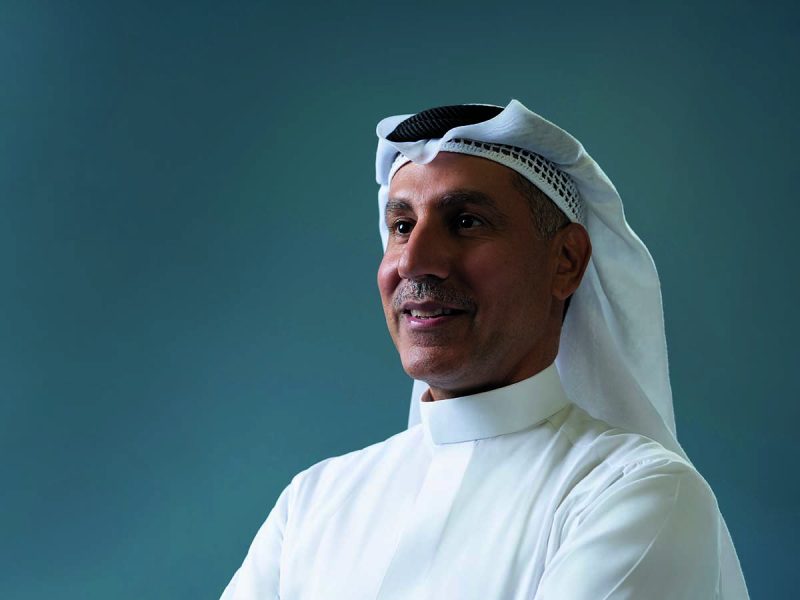
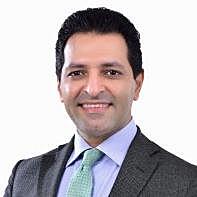
In this wide-ranging conversation, Dr Ahmed Allam, Senior Financial Expert, HH Ruler’s Court of Dubai, explains the structural shift underway: how tokenisation differs from traditional securitisation, why real estate and precious metals are leading the trend and what’s holding back broader adoption. He also explores how institutions navigate regulatory ambiguity, build infrastructure through fintech partnerships and prepare for the next wave of digital asset integration.
With major financial players like JPMorgan, BlackRock and UBS actively experimenting, tokenisation is becoming part of the core capital markets conversation.
Could you explain the concept of tokenisation and how it differs from traditional securitisation methods?
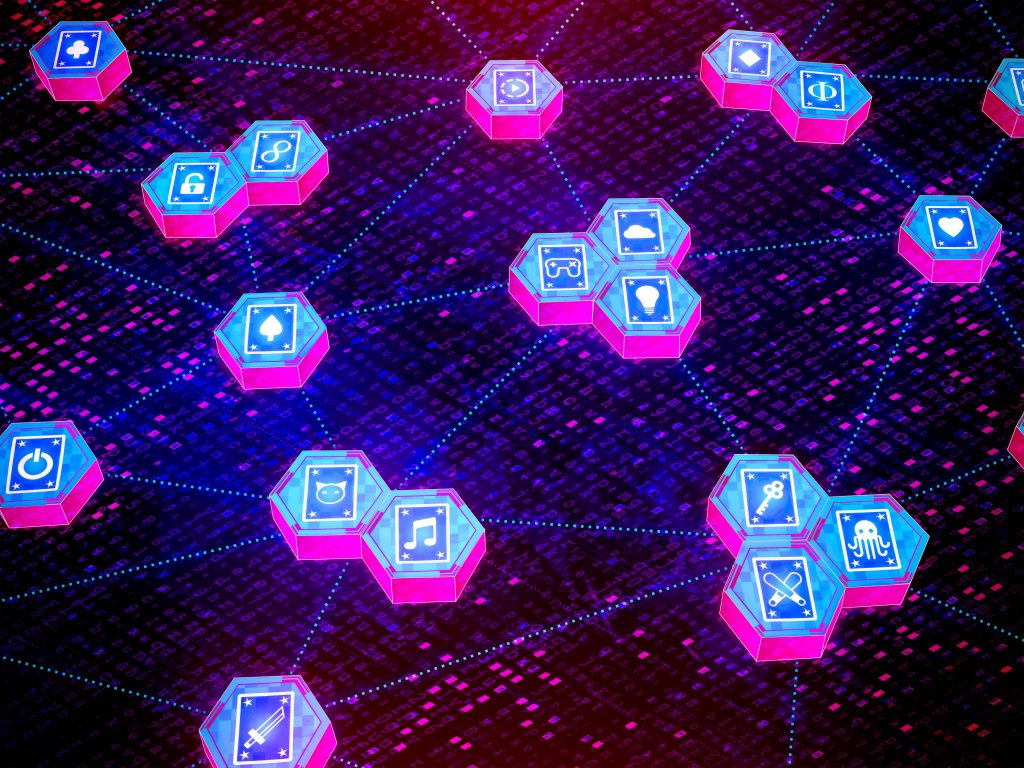
Before we talk about tokenisation, I think it’s important to give a brief overview of its backbone—blockchain. Simply put, blockchain is a type of database that stores information in a digital format. Unlike traditional databases that organise data in tables, blockchain stores data in blocks. Each block contains a number of transactions, and every time a new transaction occurs, a record is added to every participant’s ledger.
When a block reaches its storage capacity, it is closed and linked to the previous block, forming a chain—hence the term “blockchain”. What makes this system unique is that altering information on the blockchain would require changing all subsequent blocks and coordinating across the entire network. This makes tampering extremely difficult and helps ensure the security of data and transactions.
Blockchain not only secures transactions, but it also ensures transparency and resistance to modification. That’s the foundation. Now, when it comes to tokenisation, it’s the process of converting the ownership of an asset, whether tangible or intangible, into a digital token recorded on the blockchain.
The blockchain serves as the host for this token, which effectively acts as a digital certificate of ownership. What’s important here is that the tokens are stored on a decentralised and distributed network. No single entity has full control, which is one of the key differences between blockchain-based tokenisation and traditional securitisation.
Great — continuing in the same sentence-by-sentence style, here is the next section of the transcript, cleaned up for clarity and grammar:
So you’re saying I can own a piece of, let’s say, an aircraft, if it’s tokenised?
Yes, that’s the idea of fractional tokenisation. We can explain it in more detail later in the podcast, but essentially, anyone can own a part of almost any asset. That’s the value proposition of tokenisation.
What is the current state of tokenisation adoption in the finance industry, and which asset class is leading this transformation in your opinion?
Tokenisation is still in its early stages compared to traditional financial mechanisms. However, it has made significant progress in recent years. It’s gradually gaining traction among individuals and financial institutions. Various jurisdictions are beginning to develop regulatory frameworks to govern tokenisation, and financial institutions are increasingly forming partnerships with blockchain and fintech companies.
So yes, tokenisation is evolving. It’s expanding, and we’re seeing a growing ecosystem around it. In terms of asset classes, real estate is currently leading. It has become one of the most prominent use cases in tokenisation. High-value art and collectibles are also gaining popularity, since tokenisation allows individuals to own fractions of expensive pieces that they otherwise couldn’t afford.
Commodities—especially precious metals—are also attracting attention. They’re considered a key asset class in the tokenisation space right now.
How is tokenisation enhancing liquidity, transparency and accessibility compared to conventional financial instruments?
Tokenisation significantly enhances liquidity by breaking down large assets into small, tradable digital tokens. Regardless of an asset’s overall value, it can be fractionalised—so each token might represent a small portion, say 0.01, of the entire asset. Each token holder would then own a part of that asset.
This makes it easier to trade previously illiquid assets. It also lowers the entry barrier, allowing individuals with varying levels of savings to participate in asset ownership.
Each token can be tracked from its origin, and its ownership history is transparent. This gives investors confidence, because they can verify who owned the asset previously and when it was purchased.
Tokenisation also offers global reach. Investors can buy assets from anywhere in the world via token platforms. Transactions are simplified—you can transfer ownership with just a few clicks on a mobile app or platform. All of this offers a clear advantage over conventional financial instruments.
How are major financial institutions integrating this into their services, and what impact does it have on the broader market?
Tokenisation is now a reality. Financial institutions have recognised its potential. They see opportunities to increase operational efficiency, create new revenue streams and reduce costs.
Some institutions are developing their own tokenisation platforms. Others are partnering with blockchain startups to build cooperative blockchain infrastructures. Major players are also working with regulators to ensure that the path forward is stable, secure and investor-friendly.
What trends do you foresee in the tokenisation landscape over the next five to ten years, and how should investors prepare?
Five to ten years is a long time—especially given how fast the technology is evolving. But over that period, I expect tokenisation to expand significantly. We’ll likely see a wider range of asset classes included, such as intellectual property or natural resources.
Regulators around the world will probably establish clearer and more comprehensive frameworks. Tokenisation will become more integrated with traditional financial institutions, and that collaboration will pave the way for its growth.
As for investors, first, they need to educate themselves about tokenisation and blockchain. That’s the most important step—understanding the technology and its implications.
Second, assess the risks—regulatory, technological, or otherwise. New technologies are emerging rapidly, and you need to be prepared.
Finally, diversify. Don’t concentrate all your investments in one type of asset. Spread your exposure across various tokenised asset classes. Diversification is key.