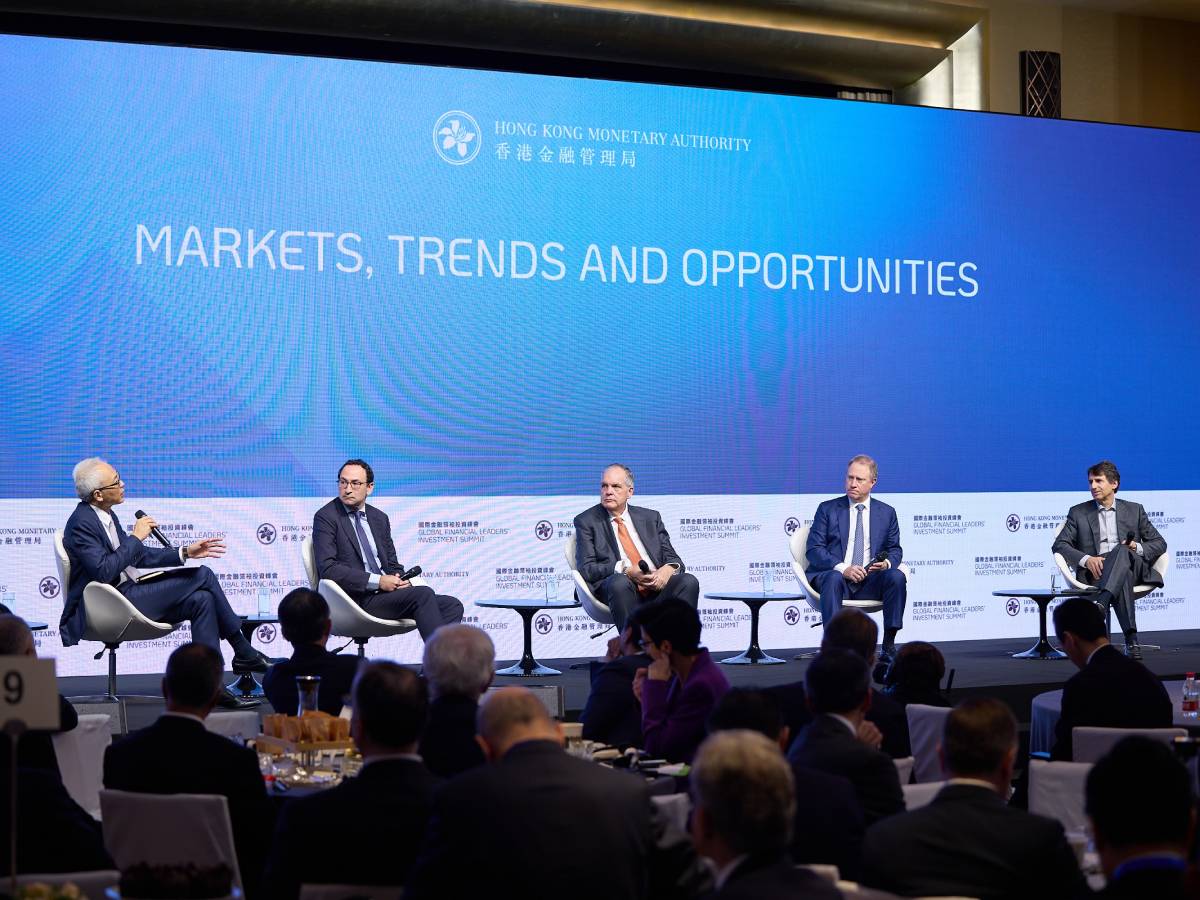
As 2024 winds down, the global economy remains a patchwork of contrasts. Diverging growth paths, persistent inflation, and shifting monetary policies have left investors grappling with new realities. While some regions surged ahead, others faltered under tightening financial conditions and geopolitical tensions. Against this backdrop, five financial heavyweights—Jonathan Gray, President and COO, Blackstone; Ronald P. O’Hanley, Chairman and CEO, State Street Corporation; Ted Pick, CEO, Morgan Stanley; Marc Rowan, CEO, Apollo Global Management; David Solomon, Chairman and CEO, Goldman Sachs—sat down at the Global Financial Leaders’ Summit in Hong Kong to dissect the year’s defining themes and chart a path forward.
Diverging economies shape investment decisions
Throughout 2024, the divergence in regional economic growth became more pronounced. While emerging markets, particularly in Asia, maintained strong momentum, developed economies slowed under tepid consumer demand and tighter financial conditions.
Jonathan Gray of Blackstone pointed to Asia as a standout region, driven by its expanding middle class and growing appetite for technology. “We continue to see compelling opportunities in Asia, particularly in sectors driven by the expanding middle class and technological adoption,” Gray said. Data from the Asian Development Bank backs this up: the region is projected to grow by 4.5% this year, led by India and the ASEAN economies. Meanwhile, China’s recovery struggled due to weak domestic demand and a protracted property market crisis.
On the other side of the globe, the US energy transition offered fertile ground for investments. Rowan highlighted the structural shifts reshaping the sector. “The US energy sector is in the midst of a significant transition towards sustainability, creating investment opportunities in renewable energy infrastructure,” he said. With $150 billion invested in renewables this year—thanks in part to the Inflation Reduction Act—the US is becoming a global leader in clean energy.
These opportunities underscore a broader need for investors to adopt a tailored, market-specific approach. “Each market presents unique challenges and opportunities, and success lies in navigating those nuances effectively,” said Goldman Sachs’ David Solomon.
The balancing act
Inflation dominated the agenda for much of 2024. While the US Federal Reserve eased its stance after a series of aggressive rate hikes, Europe and parts of Asia continued to grapple with stubbornly high prices. This divergence in monetary policy created ripple effects across markets.
Solomon stressed the importance of focusing on assets that can hold their value in an inflationary environment. “In an environment where inflation is moderating but still present, investors need to focus on assets that offer real returns, such as equities with strong pricing power and infrastructure investments,” he explained. Infrastructure, in particular, proved resilient, with Preqin reporting a 12% increase in infrastructure-focused investments this year.
However, global investors faced added complexity from currency fluctuations, exacerbated by disparate monetary policies. Ted Pick of Morgan Stanley noted, “As central banks adopt differing stances based on their domestic economic conditions, investors must navigate increased currency volatility and its impact on international investments.” The dollar, for instance, swung wildly against major currencies in 2024, making hedging a critical tool for cross-border investors.
The year’s inflation battle also underscored the need for agility. “The interplay between inflation, interest rates, and growth makes it imperative for investors to stay agile and diversified,” said O’Hanley, advocating for multi-asset strategies that could weather the volatile landscape.

Technology drives transformation
If there was one bright spot in 2024, it was the continued advancement of technology. Artificial intelligence, biotechnology and renewable technologies dominated headlines—and portfolios—as they reshaped industries and unlocked new investment opportunities.
“The integration of artificial intelligence and machine learning into financial services is enhancing efficiency and creating new product offerings, presenting investment opportunities in fintech companies,” O’Hanley explained. Fintech, already a $200 billion industry in 2023, expanded another 10% this year as banks and asset managers doubled down on AI-driven solutions.
Biotechnology also gained momentum, with significant advancements in gene editing and personalised medicine. Rowan called the sector a long-term investment play: “Biotechnological advancements are leading to significant improvements in healthcare outcomes, making the sector attractive for long-term investments.” The Nasdaq Biotech Index’s 18% gain in 2024 highlights investor enthusiasm for this field.
Gray, meanwhile, tied technology to sustainability in real estate. “There is a significant opportunity to invest in sustainable real estate projects that meet the growing demand for environmentally friendly and energy-efficient buildings,” he said. Green-certified buildings now account for 40% of new developments globally, according to CBRE, reflecting the confluence of technology and ESG priorities.
Geopolitical risks loom large
Geopolitics remained unpredictable in 2024, disrupting markets and heightening investor anxiety. Global trade and supply chains felt the strain from the prolonged Russia-Ukraine war to US-China tensions.
“In a world of geopolitical uncertainty, diversification becomes more critical than ever,” said Solomon. Diversification helped investors mitigate the impact of supply chain disruptions in critical sectors like semiconductors and rare earth metals.
Evolving regulations also added complexity. Pick pointed to Europe’s Digital Markets Act as a case study. “Evolving regulatory landscapes, particularly in technology and finance, require investors to stay informed and adaptable to ensure compliance and identify opportunities arising from new regulations,” he said. The act, aimed at curbing big tech dominance, is reshaping competition policies and creating space for smaller innovators to thrive.
Despite the risks, Rowan offered a note of optimism. “Geopolitical risks often lead to short-term volatility but can also create long-term opportunities for those who can navigate them effectively,” he said, emphasising that disciplined investors can turn crises into opportunities.
Sustainability
Sustainability has moved from being a buzzword to a critical investment theme. In 2024, ESG-focused funds saw record inflows, and regulators around the world tightened their frameworks for sustainable practices.
“Investors are recognising that companies with robust ESG practices are better positioned for long-term success,” said O’Hanley. He is right, Morningstar data showed $140 billion in inflows to ESG funds this year, a 15% jump from 2023.
Gray echoed this sentiment, highlighting the intersection of ESG and real estate. “Investing in sustainable real estate projects aligns with both market demand and the broader push for environmental responsibility,” he said. According to Deloitte, real estate developers are increasingly adopting energy-efficient designs, with 65% of projects now prioritising sustainability.
Rowan emphasised the broader economic impact of ESG. “Sustainable infrastructure not only addresses climate challenges but also creates economic opportunities, making it a key area for long-term investment,” he said, pointing to sectors like renewable energy and green logistics as ripe for capital deployment.
Adapting to market volatility
Market volatility was a defining feature of 2024, driven by a mix of inflation, geopolitical tensions, and regulatory changes. For investors, resilience became the mantra.
“Resilience comes from diversification and a focus on quality assets,” said Pick. This approach helped investors weather turbulent markets, with the CFA Institute reporting that diversified portfolios outperformed concentrated ones this year.
Solomon emphasised the need for discipline. “Short-term market fluctuations should not deter investors from pursuing strategies that align with their long-term objectives,” he said, a sentiment echoed by asset managers across the board.
O’Hanley reinforced the importance of having a clear plan. “In times of volatility, having a clear strategy and sticking to it is often the best course of action,” he said, emphasising the value of consistency in uncertain times.
As the year concludes, the lessons are clear: success in global markets requires adaptability, informed decision-making and a willingness to embrace both challenges and opportunities. Investors must navigate an intricate web of economic, geopolitical and technological shifts while maintaining a long-term perspective.