The fintech industry is experiencing exponential growth, valued at over $226 billion in 2023 and projected to reach a staggering $917 billion by 2032. This rapid expansion, led by approximately 30,000 fintech startups globally, underscores the sector’s dynamism and highlights the crucial role of data and analytics in shaping its future. Leading companies such as Visa, valued at almost $550 billion, and China’s 90% fintech adoption rate exemplify the potential for data to drive innovation and efficiency in fintech.
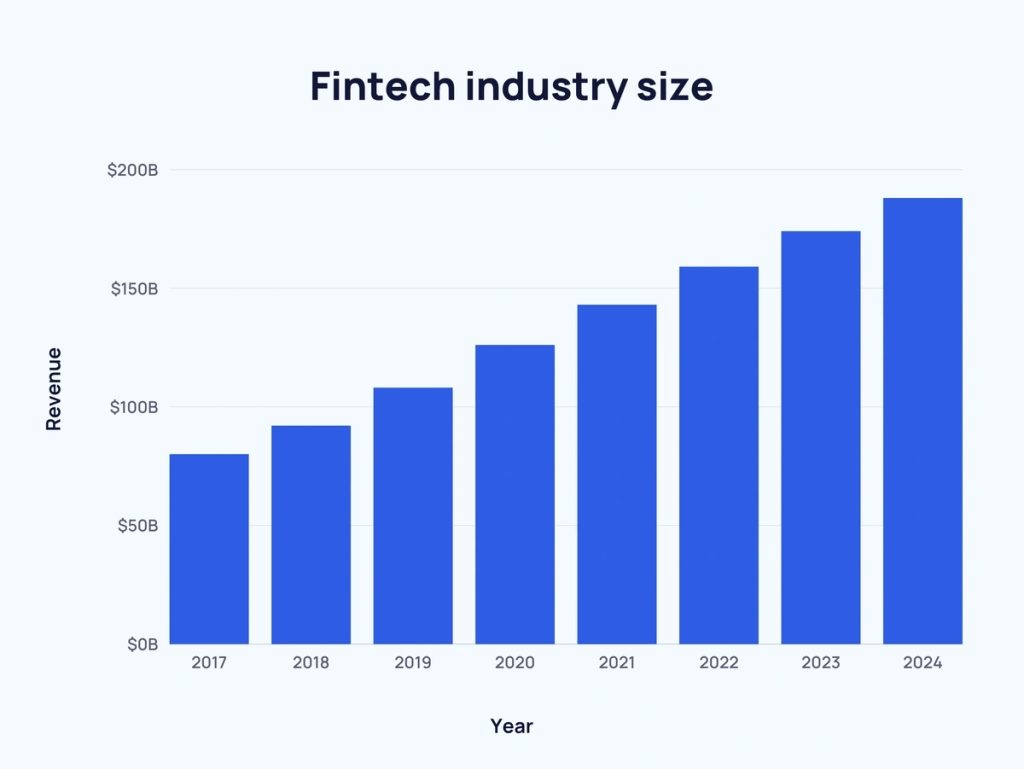
Source: FinTech Industry Size (Exploding Topics, 2024)
Transforming customer experience through data
In the fintech industry, data is a byproduct of transactions and a vital resource that drives innovation and enhances customer experiences. By leveraging vast data, fintech companies can offer personalised and intuitive financial services that cater to each customer’s unique needs. This capability is largely powered by AI-driven analytics, which analyse diverse data points to provide precise credit scoring and risk assessments that go beyond traditional credit histories.
For instance, rapid loan adjudication systems utilise data analytics to evaluate creditworthiness quickly and accurately, significantly speeding up the lending process. This improves operational efficiency and sets new standards for customer service in financial services, similar to those set by major technology firms like Apple and Google.
Driving innovation with AI and emerging technologies
AI enhances customer experiences by predicting needs and preferences through advanced data analysis. For example, AI-driven chatbots can provide personalised financial advice based on a user’s spending habits and financial goals. Blockchain technology further secures transactions and data, ensuring transparency and reducing the risk of fraud. The market for blockchain in fintech was valued at $3.17 billion in 2023 and is projected to reach $21.67 billion by 2028, demonstrating a compound annual growth rate (CAGR) of 46.92%.
Investment trends and market growth
Investment activity in the fintech sector reflects the growing importance of data and analytics. Thanks to its ability to leverage data, fintech has been able to attract investments. Venture capital investment in fintech consistently surpasses $40 billion annually, with significant capital invested in later-stage deals. This trend indicates a maturing market with substantial growth potential, particularly in the Americas and APAC regions.
Europe’s fintech ecosystem is also thriving. Notable clusters include payments, accounting and invoicing, and cryptocurrencies, reflecting the evolving landscape and increasing importance of technological innovation in financial services. The rapid growth of these segments highlights the critical role of data in driving fintech innovation and market expansion.
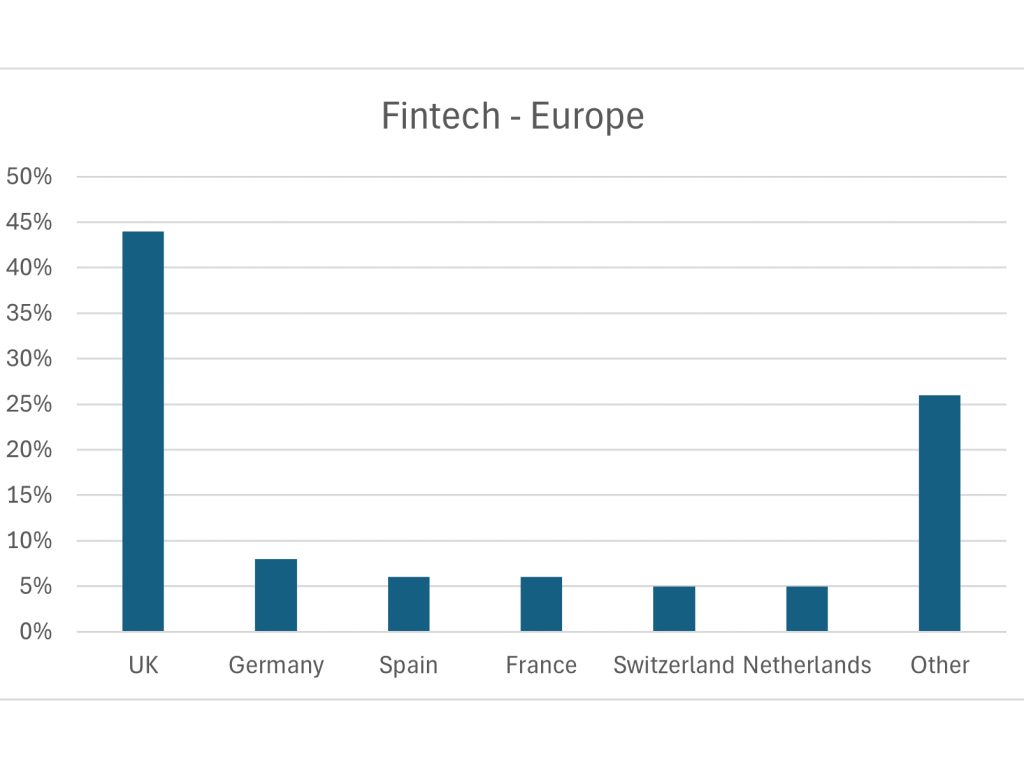
Source: FinTech | On the brink of further disruption (Deloitte, 2020)
In 2020, the number of fintech deals in Europe decreased due to Covid-19, but there was an increase in late-stage VC deals, particularly in APAC and the Americas. The fintech market in these regions commands the highest market share globally, with APAC projected to be the fastest-growing region. Digital payments alone account for over 80% of global fintech revenues.
Financing and growth with data-driven insights
Since 2016, over $480 billion in venture capital has been invested in fintech startups. In 2022, global fintech investments reached $164.1 billion across 6,006 transactions, despite a decline from the previous year’s $238.9 billion. In Q1 2023, fintech companies secured $14 billion in VC funding, albeit a 60% decrease from Q1 2022.

Payments received approximately $2.15 billion, leading the investment sectors, mortgages and lending with $2.04 billion, and financial management solutions at $1.71 billion. The Americas dominated fintech funding in 2022, attracting $68.6 billion through 2,786 deals, with $61.6 billion in the US alone.
This sustained investment highlights fintech’s ability to leverage data analytics for innovation, improving credit scoring, risk assessment and personalised services. Data-driven insights enable fintechs to identify profitable segments, enhance financial inclusion and attract significant capital, particularly in later-stage deals. This trend indicates a maturing market with substantial growth potential, especially in the Americas and APAC regions.
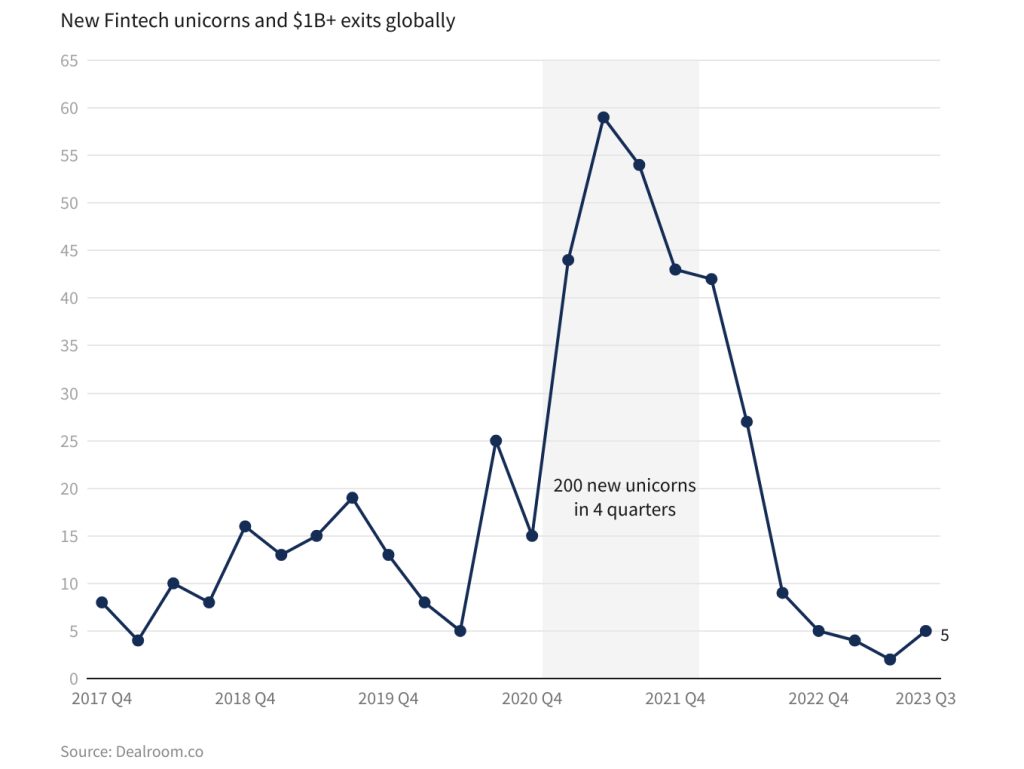
The creation of fintech unicorns has also dramatically declined from over 40 unicorns per quarter in 2021 to just five new unicorns in Q3 2023. Nonetheless, fintech remains the leading sector in cumulative unicorns, demonstrating its resilience and ongoing appeal to investors.
The future of data-driven fintech
As fintech continues to grow and evolve, the power of data will remain a driving force behind its success. Data enables the delivery of highly efficient, secure, and innovative solutions. Integrating AI and blockchain technologies will further enhance these capabilities, ensuring transparency, security, and improved customer experiences.
The fintech sector’s resilience and strong appeal to investors are evident despite recent fluctuations in funding and the creation of new unicorns. The consistent investment in fintech reflects the sector’s potential for substantial growth and innovation. The European fintech ecosystem’s rapid development highlights the importance of technological advancements in financial services.
In the future, fintech firms that exploit the power of data effectively will be in charge of reshaping the financial landscape. By continuing to innovate and optimise their operations through data-driven strategies, these companies will democratise access to financial services, enhance customer experiences, and drive the industry into a new era of financial technology.