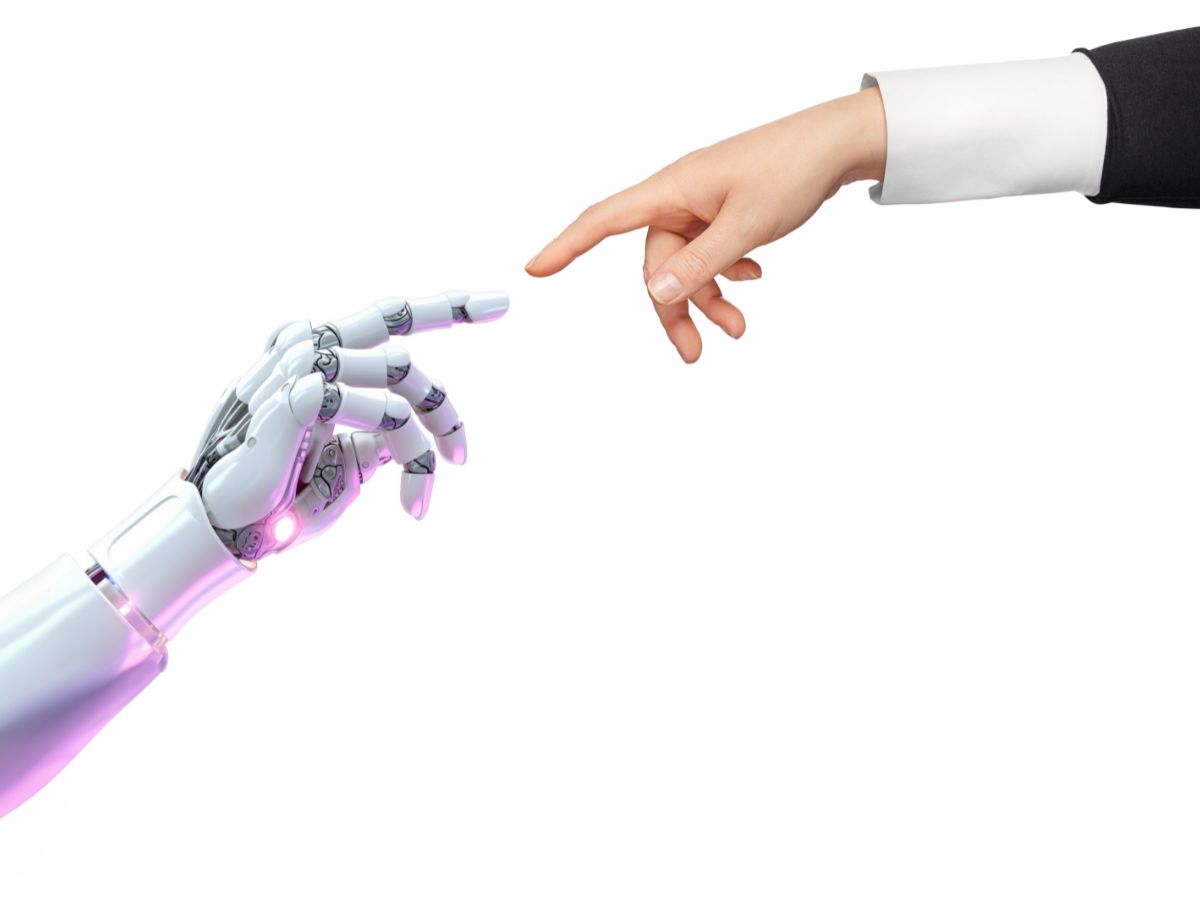
The rapid rise of artificial intelligence (AI) indirectly forces us to confront a deeper, more unsettling question: What is human intelligence, and what does it really mean to be human?
For so long, we’ve defined being human by our intellectual capacity, problem-solving abilities, creativity and communication skills. But now, AI-powered machines, with access to limitless data, can analyse and act on it faster than we ever could. They can think through complexity, generate art, write poetry and create images in mere seconds—tasks we once believed were exclusively human. As AI continues surpassing us in these areas, it’s not just our skills being questioned—it’s our very identity. What remains for us in a world where AI is taking over so much?
In the business world, this shift is impossible to ignore. Unlike previous waves of technology automation that mainly affected routine tasks, AI is also transforming high-skilled jobs. According to a recent IMF report, AI will impact nearly 40% of jobs globally, with some being replaced and others complemented by this AI technology. We may also witness a widening gap in income brackets: those who can harness AI will likely see gains in productivity and wages, while those who cannot may be left behind.
For companies embracing AI, this surge in efficiency and performance will likely translate into increased capital returns. The companies that will survive this AI cataclysmic extinction and thrive aren’t just using AI to support their human talent; they are reengineering entire processes around AI. What role will humans play when AI dominates speed, accuracy and efficiency?
Banking on AI: How machines are rewriting financial services
AI is already transforming industries, and our banking sector is no exception. Partnering with fintechs, banks are disrupting critical areas like cybersecurity, fraud detection, document processing, compliance and KYC checks. AI handles these large-scale and time-consuming tasks with speed and precision that humans cannot match. AI’s data-crunching power can instantly analyse vast amounts of client data, delivering instant credit scoring, deep customer insights and predictive analytics. AI’s ability to anticipate customer needs and deliver personalised financial solutions in real-time is not just an advantage—it’s becoming the foundation of modern banking.
From back office to front office: AI’s complete takeover?
AI is rapidly automating routine back and middle-office tasks like transaction processing, settlement, reconciliation, reporting, performance analysis and stress testing. With these duties offloaded to machines, you’d expect human talent to move into more front-office, client-facing roles. Yet even here, AI is gaining ground. While not perfect yet, automated client communication, AI-driven chatbots and virtual assistants are catching up fast. AI is redefining the boundaries, and what we once believed was too human for machines is quickly becoming the next AI frontier. The entire banking workforce is on the brink of a major transformation as AI redefines what’s possible—and what’s human.
AI brings private banking to the masses
Financial services that integrate AI to enhance their human talent will thrive. To illustrate, let’s consider wealth and asset management. It is not any more about exclusive Discretionary Portfolio Management (DPM) for high-net-worth individuals or about massive funds aggregating thousands of undifferentiated small investors. Instead, AI empowers wealth, asset managers and CIOs to oversee and rebalance thousands of distinct micro-portfolios. By analysing market conditions and customers’ behaviours, AI tactically tailors each micro-portfolio to the needs and to the risk-suitable appetite of each mass affluent client within the asset manager guidelines. AI democratises wealth management once reserved for the elite.
How humans and AI will manage portfolios
Humans are always in control, adjusting AI’s level of autonomy as they see fit, letting portfolios fly on AI autopilot in clear skies but stepping in to take charge during market turbulence. This dynamic partnership between human judgment and AI’s computation speed and precision will act similarly to the human pilot/ auto-pilot relationship, lifting asset and wealth management to new heights.

Human accountability will always matters
Accountability, however, will always lie with humans. Regulators and investors will always hold asset managers responsible for unsuitable investments, bad decisions, or poor performance—not the AI. While AI can optimise processes at scale and enhance decision-making, the ultimate responsibility and legal liability will always rest with the people in charge. In the end, no matter how advanced AI becomes, the weight of judgment and accountability will never shift from human hands.
As we move deeper into an AI-driven world, businesses no longer resist; they adopt the change. Human expertise is being redefined, and it’s no longer about handling routine —or even complex— tasks that AI can master. Our true worth lies in what AI cannot replicate. Those are the uniquely human skills where we still excel and that we have to teach the next generation of talent: leadership, sense of accountability, strategic thinking, creativity, storytelling, ethical judgment, compassion, intuition, emotional intelligence— and yes, the ability to prompt, program and shape AI itself. Our value won’t be measured by outperforming machines but by mastering what only humans can do.
The human-AI partnership
The future isn’t about trying to control AI’s power or spread. That genie is already out of the bottle, and AI is here to stay. It won’t replace us, but it pushes us to redefine what it means to work, create, thrive, and lead as human beings alongside AI. Our challenge is to embrace this human-AI partnership—a long-lasting marriage in which our unique qualities will continue to shape our future.