Launched in 2023, Hub71+ Digital Assets is playing a key role in advancing disruptive Web3 and digital asset technologies as Abu Dhabi continues to focus on the potential of these innovations in fintech and strengthening its favourable regulatory environment. Since its launch, Hub71+ Digital Assets has received over 2,000 applications and onboarded 16 startups following a stringent selection process. The platform has also doubled down on its partnerships and facilitates greater investment and market opportunities for founders through its programmes and mentorship opportunities.
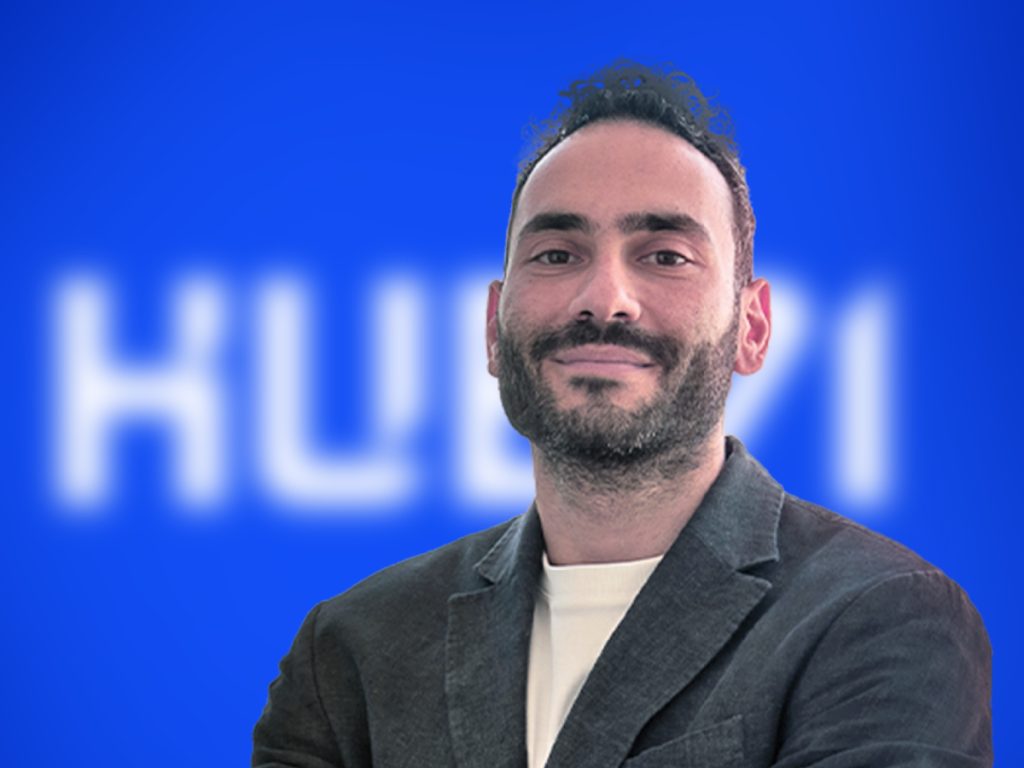
In an exclusive podcast interview with Cheque Point by Finance Middle East, Peter Abou Hachem, Head of Growth and Strategy at Hub71, discusses the key trends shaping the Web3 and digital assets space locally and globally, the growth of Abu Dhabi’s digital asset landscape and how innovative regulations are fostering a supportive environment for startups.
The following transcript has been edited for length and clarity. Listen to the full interview here.
Q: The Web3 and digital asset space is rapidly evolving. What are the key trends shaping this landscape locally and globally, and how are they influencing the future of digital finance?
Peter: The Web3 concept is a new technology built on the blockchain; it’s all about decentralisation, it’s all about transparency, and allowing people to have ownership of their money, data and projects, just like any new technology that’s out there. When the internet came out, when AI came out, new technologies required the right regulations, the right tech and the right ecosystems around them, and Web3 is going through this. It’s a new technology that’s 10-15 years old and requires an ecosystem to be built around it.
What we’re contributing to in Web3 is ensuring that we build the right ecosystem around it, not just us, as Hub71 and Abu Dhabi, but globally. Everyone in the Web3 space is very focused on the concept of community. When you look at the new projects, exchanges and tokens coming out, they all are assessed based on the community that they have. What is community? It’s people. People are developers, investors, bankers, etc. Bringing these communities together is always helpful in creating new technologies. And that’s why, as Hub71, we decided to jump into this technology; we decided to embrace it early on because we’re ecosystem builders by DNA, we’re community builders, and we decided we want to help shape up this new technology and this new trend coming up.
Not every technology in the US or Singapore will work in Abu Dhabi because it’s a different dynamic.
Q: How’s it going for Hub71?
Peter: We are also new [in this space] as well. We’re a startup wearing a government hat. Back in 2019, the Abu Dhabi government, part of a wider economic strategy that aims at diversifying the economy from oil and gas, created this new concept of Hub71, which is—how can I build a tech ecosystem from Abu Dhabi that serves the world while contributing to my non-oil GDP? That’s the idea behind creating Hub71. We started because tech ecosystems are built around people, founders and startups, and these people are at the centre of the ecosystem. And then, you need to create an ecosystem around that. So, how can I help these startups and founders access the right market partners and the right customers? How can I help them get the right capital access through funds, investors and VCs? How can I regulate their products? How can I get them the right talent, upskill the existing talent, and give them access to new talent? We’ve created an ecosystem around the startups.

Step one was to bring startups into the country and into Abu Dhabi; we put a set of incentives in place that aimed to support startups expanding globally. Step two was: How can I create an ecosystem that supports their growth? Because you can spend all the money in the world as a government to attract people. But, if you don’t have the right value proposition, they won’t stay, they won’t excel. And they’ll just jump between different cities to take these incentives. We started creating an ecosystem around them, focusing on the four pillars I discussed—on the market, how do I bring all the big corporates, the banks, and the telecoms to come in and innovate using technologies from startups, not build everything themselves. On capital—how do I bring the VCs to leverage our offering for their portfolio company and get them deal flow and vetted deal flow from our side? On regulation—It depends on the sector. We have more than 22 different sectors in Hub71. So, how can we lobby different regulators? I don’t want to portray the regulator as a bad guy. We don’t need to always lobby the regulator. The regulators are open to understanding how my industry is being disrupted. How can we give them the kind of voice of these people in the centre, the startups and the founders, and tell them what regulations need to be done for specific sectors?
Finally, talent—how do we work to upskill the talent that comes in the founders and their employees through our acceleration programs and mentorships? How do we get them access to the best pool of talent in the UAE and globally through partnerships with universities, etc.?
Step one is to bring the startups, step two is to create an ecosystem, and step three is all about focus. And that’s how we shifted into Web3. The focus is—can I put an agritech startup with a Web3 startup? They will learn a few things from each other but have different needs. An agritech company needs land to test out their produce versus Web3, you need access to data, you need access to banking, you need to create a community, you need regulation. Phase three was focused on how we could replicate the model of Hub71, which was successful. And that’s where we created the concept of Hub71+. The first one we launched was digital assets, all about Web3. We saw that need in the market. We saw that gap in the market where these founders and startups worldwide were looking for someone to host them, regulate them, listen to them and help them build their technologies. We saw that gap in the market and decided almost a year and a half ago to launch Hub71+ Digital Asset.
Q: How is Hub71 fostering a supportive environment for startups in this sector? And what unique opportunities does the emirate offer companies operating in this digital asset space?
Peter: The beauty of Abu Dhabi and the UAE is that entities talk to each other. There’s one vision and one direction, and all the entities are headed in the same direction. Back in 2018, before any government even looked at the Web3 space, ADGM had a very structured framework to regulate crypto, crypto assets, and digital assets; where you could come into ADGM and have the right framework to build your project, have the right infrastructure to launch new tokens into the market. Web3 is obviously a risky business, a risky industry, because it’s a new technology, just like the internet was a risky business before it got regulated. We’re in the same stage now. ADGM has had that infrastructure and framework since 2018.
Our role is ecosystem building. What we did around Hub71+ Digital Assets in that specialised ecosystem is coupled with strong regulation that doesn’t exist anywhere in the world. The whole world was looking at Web3 in crypto as something risky and needed to stop that. We were looking at how we can get the actual projects that are building real technologies that will eventually change the world, change the way we make payments and change the way we track data and identity. How can we get the best deals out there while leveraging those regulation? One. Two, how can we keep improving those regulations? So, what we did with ADGM was the funnel of startups that we launched to come into Abu Dhabi through Hub71+ Digital Assets as the main channel of technology getting regulated in Abu Dhabi. What does that allow us? One, it allows us to test the frameworks that were put in place to regulate more and more companies coming in. Two, it allows us to understand what the market needs; we cannot say that we have everything. We don’t know everything, no one knows everything. There are a lot of new regulations that need to be built, and there’s a sandbox in ADGM that allows companies to come in and test out new technologies and financial and non-financial projects in a safe environment and eventually allow the regulator to build new frameworks around this.
We’ve categorised projects in general. When we launched, we got 700 startups interested in applying. So far, we have more than 2,000 companies that applied, and we only selected 22 of those in the last months; it’s still a big number 22. Out of the 2,000+, we’ve been very selective and categorised them into: Can I regulate this company? Is this something that I’m willing to look at, but I don’t know if I can regulate it; it’s easy: ADGM has the regulations, and you go through the process. If the regulation doesn’t exist, we plug it into the sandbox and allow ADGM to build the right regulation around it. And that’s how the initial framework was built back in 2018. The third one is certain projects we think are too risky and cannot be regulated, and we automatically don’t look into those.
In summary, we want to be a big part, not just in the UAE but globally, of building that new sector to build that new space while ensuring it’s under ADGM jurisdiction of Abu Dhabi government oversight and everything is risk-free from a regulatory standpoint. With this, a community and the right ecosystem can be created. We hope that Abu Dhabi and the UAE will be the capital of Web3 in the coming years.
Q: Partnerships and collaborations are important in attracting leading global Web3 and digital assets entities, especially in Abu Dhabi. Talk to me about the strategic partnerships and collaborations forged to create a thriving ecosystem for digital innovations and what benefits these partnerships bring to local and international stakeholders.
Peter: I’ll start with a fun fact. Five years ago, when we started, we were a team of around 20 people. Today, we’re not more than 30. When we started, we had zero startups. Today, we have 300+ startups and 120+ partners, and startups have raised almost $2 billion and generated $1 billion in revenue. This huge shift and scale of the ecosystem. Why did I start with the fun fact that 20-30 employees did not change how many people we need to support this? Why? Because of partnerships. The way you build ecosystems is relying on partnerships and orchestrating it anyway. I always go back to these four pillars I mentioned: market, capital, talent and regulators—more than 120 partners in these four elements. We have a value creation team that sits with these corporations, sits with these funds, sits with these family offices, and understands your strategy. What are you trying to achieve? What are the budgets that you have? How do you want to do it? Who is the right decision maker in that entity to take the call to contract with the startup? We onboard them as well into our selection committee. When we select startups, for example, digital assets, 2,000 applications, and 22 companies, we have 1,000s across the funnels and around 220 something in our programs that are selected and getting the incentive.
Back in 2018, before any government even looked at the Web3 space, ADGM had a very structured framework to regulate crypto, crypto assets, and digital assets.
How do we go through this? We go through a very rigorous selection process. In the last process alone, we had 90 partners involved. If it’s a healthtech company, we get the Department of Health of Abu Dhabi, for example, to allow us to understand: Is that something I can regulate? We get someone from Mubadala Health to say: Is this a product I want to bring? And it becomes a cycle where I bring in these partners and say: What are you looking for? At the same time, as I’m bringing companies into Abu Dhabi and the UAE, they support us in selecting these companies. And then, we’re not bringing companies into a black box.
Typically, you see a lot of incubators, accelerators and ecosystems around the world that accept companies based on unit economics that this company perform well; yes or no, let’s accelerate them. They graduate and then sit in that city waiting for a customer ticket, which fails. And then they say: “Okay, I’m jumping to another city”. Why does this happen? Because there was a lack of this holistic view, does the market require this? Not every technology in the US or Singapore will work in Abu Dhabi because it’s a different dynamic. So, being humble enough to say, what are we good at? What are we not good at? And us is not us. It’s the whole 100+ partners that are involved in creating that closed ecosystem where everyone knows what they’re doing, and everyone’s headed in one direction. As I said in the beginning, UAE and Abu Dhabi had one target, and everyone had in the same direction; we’ve replicated this in the Hub71 ecosystem; the funds know what direction they’re heading towards, and the corporates know what direction they’re heading towards.

A nice example is Hub71+ Digital Assets. When we launched that specialised ecosystem, the main two anchor partners were the largest bank, First Abu Dhabi Bank (FAB), and ADGM, the regulator. We said, “It’s not Hub71”, it’s not an accelerator program. It’s the whole ecosystem, the largest financial institution in the country, the main regulator for crypto assets, as well as multiple exchanges, layer one foundation, VCs, and family offices that look into the space, and we launch that sub-ecosystem with around 15 to 20 partners at the start. Fast forward to today, we work with hundreds of partners in the space; we have 22 startups, and their combined valuation alone, just looking at digital assets, is around $650 million, specifically, these 22 companies. It shows you the strength of not doing everything yourself but rather orchestrating and having this big vision and bringing in partners to help you do what you need.
Q: Very interesting. If you want to leave us with one note, if you want to tell another tech ecosystem, or give them one takeaway that they can learn from Hub71 What would that be?
Peter: Another fun fact, before I leave you with the last word, is the way we’ve built Hub71. My role in growth and strategy has always been defining who we are, what we need to do, and what initiatives we have. We’re always mentioned as Hub71 as an accelerator and incubator tech ecosystem; we define ourselves as a tech ecosystem. The way we built the strategy and the way we built that ecosystem was not looking at benchmarks. We did something that everyone does when you build a strategy: look at the benchmark—What did other cities do? Let me do the same. What we did was build the ecosystem like a startup. What is the problem that I’m trying to solve? And how can I solve it? What are the initiatives and reiterate build your MVP? If it doesn’t work, break it and build another MVP.
We’ve done many initiatives where we pilot them, and they don’t work; we move on, learn from them, and build a better initiative. To answer your question, I would say think outside the box and break the barriers of “I’m an accelerator. I’m a VC” VCs don’t have to invest in one way, and accelerators don’t have to follow a program in one way. It all depends on the city or in the country and your strengths and your weaknesses. What’s your value proposition? We engage in a lot of cross-border engagement. We talk to the governments in Portugal, Korea, the US and France; we understand what they do. And I think one mistake we’ve seen other cities make is that’s the typical acceleration model, typical fund, typical incubation model. I’ll bring in companies and just play a numbers game for us. It’s more of we are co-founders, with these people, again, at the centre, the startups, the founders that are coming in, we’re understanding what the problem is, and customising a solution for all and that’s how we’ve built everything we’ve done in Hub71.