
A new report by the International Labour Organization (ILO) and Poland’s National Research Institute (NASK) estimates that 25% of jobs worldwide are potentially exposed to generative artificial intelligence (GenAI), with high-income economies facing the highest exposure rates.
The report titled “Generative AI and Jobs: A Refined Global Index of Occupational Exposure” is the most detailed global assessment to date of how GenAI may affect the labour market. It maps occupational exposure across countries using a combination of nearly 30,000 job tasks, expert input, and AI-assisted analysis supported by ILO harmonised data.
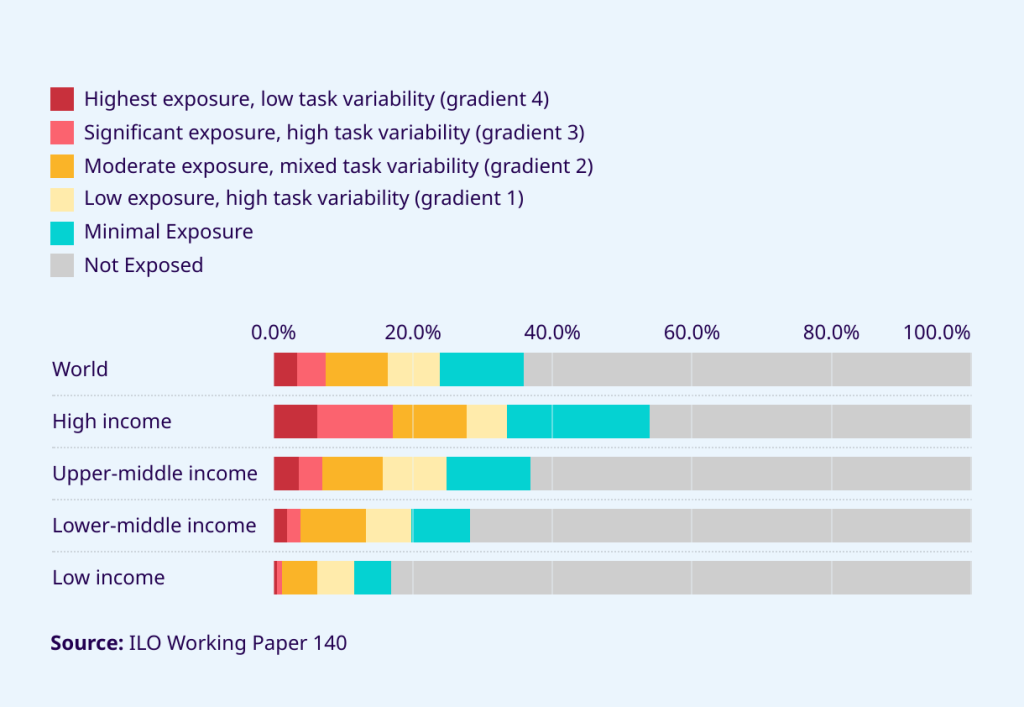
The index introduces a model of “exposure gradients” that categorises occupations by their level of potential GenAI impact, distinguishing roles at high risk of full automation from those more likely to undergo task transformation.
According to the findings, 34% of jobs in high-income countries fall into exposure categories. Clerical roles are most exposed, followed by highly digitised cognitive occupations in the media, software, and finance sectors. While women are more likely than men to work in highly exposed roles, the study notes that transformation—not displacement—is the more probable outcome in most cases.
In high-income economies, 9.6% of women are employed in occupations considered at high risk of automation, compared to 3.5% of men. The report attributes the disparity to the concentration of women in clerical positions.
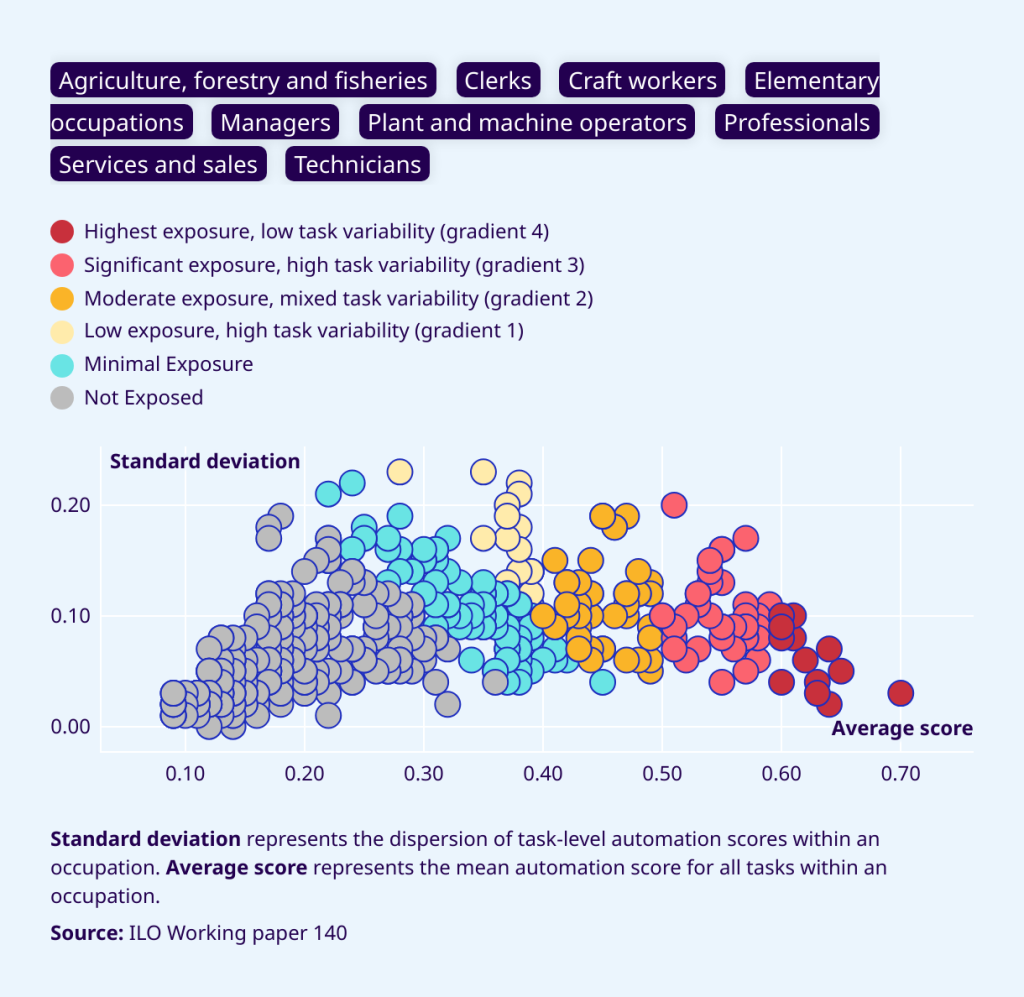
Full automation remains unlikely for most jobs, the report said, as many tasks still require human oversight or decision-making despite improvements in AI capabilities. Occupations with prior exposure to digital workflows—such as software development—are more likely to adapt, while others could face disruption due to digital skill gaps.
Policy responses, infrastructure readiness, and skill development will shape how sectors experience GenAI-related transitions. The ILO urged governments, employers, and workers to engage in structured dialogue and adopt coordinated policies to manage workforce transitions and protect job quality.
The index will next be applied to Poland’s labour market data to assess national-level exposure, NASK said.