In an era marked by rapid technological advancements and evolving market dynamics, the investment landscape is shifting at an unprecedented pace. With the rise of AI, cryptocurrency, and emerging markets, investors face many opportunities and challenges.
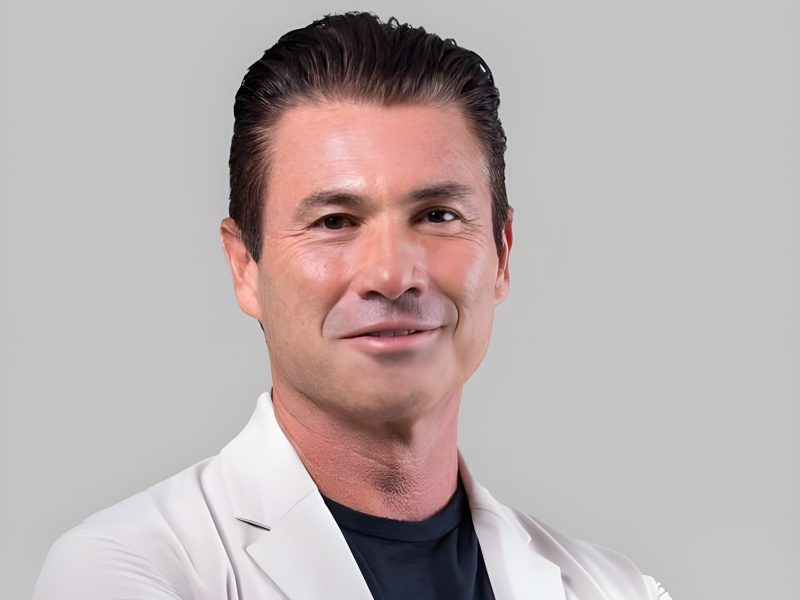
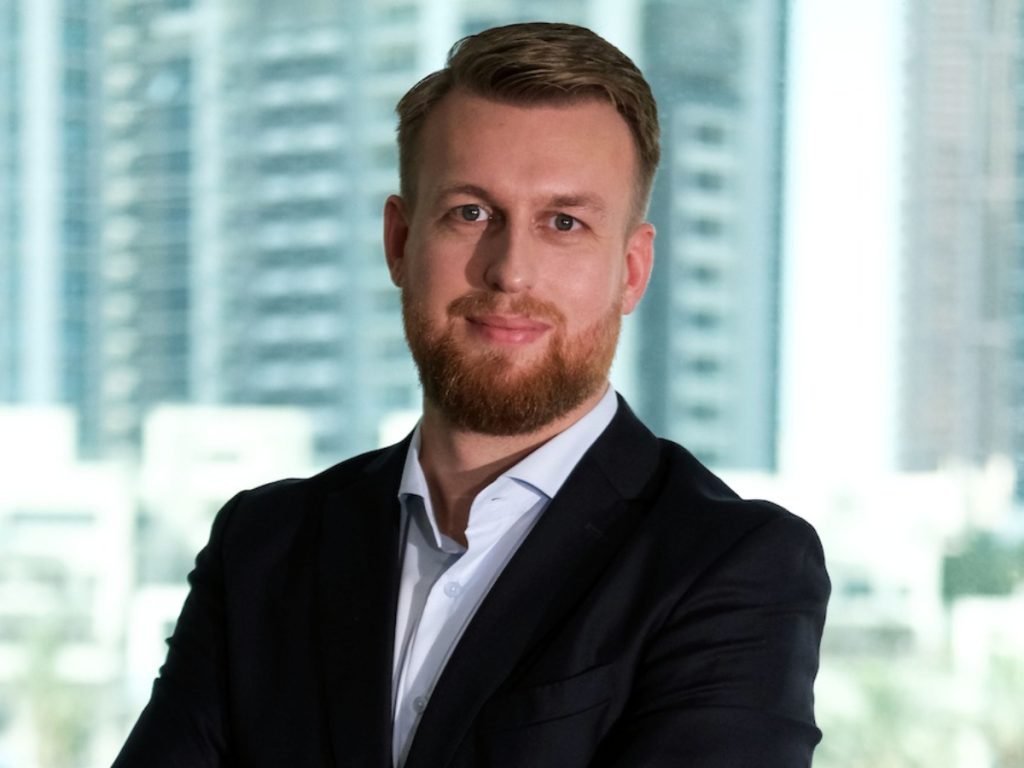
In a recent podcast interview with Cheque Point by Finance Middle East, Bas Kooijman, Financial Asset Manager and CEO of DHF Capital S.A., discussed key topics such as the role of AI in asset management, the performance of various asset classes, and the increasing reliance on technology in finance. As AI gains traction in trading and investment decision-making, the dialogue highlights the balance between human intervention and algorithmic precision, offering insights into the future of wealth management and financial markets.
The following transcript has been edited for length and clarity. Listen to the full interview here.
With gold stocks, Bitcoin and emerging markets all booming, where should investors look to get the best returns this year? And do you buy into the whole Japan, India hype?
So, it’s an interesting year. We had a very interesting start, especially in the gold markets. We see that the diversified portfolio always wins versus betting on one asset class at the same time. So we are making diversified portfolios for our clients, which, for example, contain 5% of physical gold, having a stock portfolio in Europe, the US and Asia. So, you want to have that geographically diversified as well because we learned over the last eight to 10 years a lot when things like COVID happened, that it doesn’t all happen at the same location at the same time. It starts somewhere. And then, in this case, it was Asia. Then it moved to Europe, and then moved to America. It was a very easy trading time for us to make sure that you took the opportunities you could in the countries where the market was going up or down.
So, out of AI, tech, healthcare, and agriculture, which sector do you think will be the juiciest for investors in 2024, and where is the smart money headed?
AI was the topic of last year. I think every single meeting we do at the end came out of AI and giving people the opportunity to use AI. Artificial intelligence and algorithmic trading have been with us for ten years. It’s not something new. Just because ChatGPT brought it to the public, it became a bit of a buzzword, and it was more active for people to start using artificial intelligence for trading. We have been working with AI algorithms for a long time. It really helps traders to analyse data very quickly. It really allows traders to see opportunities get alerts, or be in the known before you can see it with the human eye.
I do believe a bit in the combination of using AI for the best or having a robot entering a financial trade, but then a human verifying it, checking it, a loud alarm going off that the AI made this decision and that you quickly want to check if it’s the decision that you really like. It is a combination of the AI sphere continuing into the finance markets and into the asset managers that we work with.
That’s true because last year, when I attended almost every event, we were talking about AI, right? There was a point where we all thought AI would take over the world, and it slowly is. But human intervention is just as important as AI in decision-making.
Especially in finance, because it’s nice to make a blog post with ChatGPT and then post it unedited. It’s better when you still put your personal flavour over it or use two or three versions to make it better. In the end, if you do, it doesn’t harm anyone, but if you do it in the finance market, it can seriously impact you if you are a large asset manager and your bot goes haywire. So I think it’s very important that there’s manual intervention, that there are limits, that there’s maybe even regulation at some point looking into how far can you take it with AI in the trading and financial markets,
So AI is like a Swiss Army knife of technology, right? But when it comes to investing, what are the hurdles and opportunities when integrating AI into the process?
There’s both. There are hurdles in capacity and data centre sizes, and if you don’t do it, are you missing out on those kinds of hurdles? Because we have many asset managers that we follow, and some choose not to use it at all. They say we will continue. We’ve been doing this for ten years and are not going on the trend. But in my opinion, if you don’t use it, you might miss a boat, or you’re just getting outperformed by the ones who do use it for the right reasons, but then with the right manual intervention, with the right verification steps that AI does what you want it to do. And I think it’s very important to understand the difference between algorithmic trading and AI trading. So algorithmic trading is when a programmer sets certain bots with a certain amount of tools, and it lets it do that. This is exactly what it was made to do. You can let that bot run. It needs modification because the markets are changing. Markets can be more volatile, but an AI would all change this by itself. So, it would basically modify its script and become a black box, and the original programmer might not even know where it will end up. And that’s real AI, and that is very hard to control. And I think that’s a very big difference because algorithmic trading we do already for maybe 20, 30, 40 years, that is really something that is just a program that knows what, what it needs to do, but when it starts to modify itself, you don’t know where the end is. So, it’s getting better and better, and therefore, it’s better than the person who made it, who can still recognise his own code.
So, how can companies strike the right balance when it comes to this?
The balance is in the modification of the human touch. So as long as you’re in control of what you’re making, what you’re creating, what you’re editing, in all kinds of factors, it’s most important. So we have a good example of AI trying to replace photographers by uploading 20 selfies, and you get a whole nice deck of photos of yourself. But if no one looks at that, one of them, you might have six fingers on the hand, right? This is where it’s again, that combination of a photographer makes this into their business by saying, Okay, I don’t have to rent a studio anymore. Just send me 20 or 30 selfies, and I’m going to make you a great photo shoot. But put it as a service, with that manual intervention, with that personal touch, to ensure that every picture that’s delivered looks good.
So imagine a world where AI makes asset management decisions. How close are we to that reality?
A survey by a large brokerage house asked people under 30 if they would let AI run their investment portfolio. And over 90% answered, yeah, no problem. I will let AI just run my trading for me or my investments for me. So, with this younger generation coming up saying that I trust an AI, maybe even more than the older fashion asset managers or hedge fund houses. Seeing where we might be heading is a good trend. Suppose you see a survey like that. On the other side, it might also be a little bit naive to think that it can be fully hands-free. So, are we getting there? Yeah, there are funds that are full quant trading, as we call them, in the last couple of years, that are basically close to AI supercomputer style trading, where three people manage $4 billion instead of having a full office building with 200 people doing the same, but without technology. It’s very interesting to see the difference; in the end, most of our clients choose results. Ultimately, it doesn’t matter how they are made as long as they are made and as long as they are made consistently. So if you are able to manage $4 billion with three people, but you do a good job for 5-10 years, you will grow. If you do it all manually but underperform, you are not growing.
So, when we’re talking about the market here, how are you convincing the older generation to adapt to these changes?
Might be difficult. I think that more and more tools are being used in the background. I don’t believe you or even investors would see how the asset managers manage their funds. For us, it started with just alerts. So we would hear an alert from the computer. Just a sound telling us, Hey, look at Tesla. Look at Apple, Amazon, and a certain stock because it will do something. Alerts before earnings come out. Alerts before Fed speeches come out. So that was a very, let’s say, early stage, 10 years ago, if you just want to be in the known before the market moves. You want to sit at your desk. You want to make decisions, human decisions. Now it’s switching to we are having an alert. We need to sit here because the bot will make decisions, and there will be action in the market. We want to double-check if that does it within the right risk management tools that we have and the risk management metrics that we have for this client’s portfolio,
So, beyond individual asset classes, will AI-powered robo-advisors become the dominant force in wealth management, or will human expertise always be a crucial factor?
There is a good chance some firms will choose that way, and some investors will choose those firms to manage their wealth. So yeah, I think it is definitely a possibility that people are choosing to run investment portfolios using only AI or algorithmic trading rather than manual trading and fundamentalists.
While traditional metrics are important, AI can analyse alternative data sources like social media sentiments or satellite imagery. How will these new data streams change how we value companies in investment opportunities?
Yeah, it’s a beautiful extra amount of information that you can grasp. One of the things that we did was already a couple of years ago by simply checking the style of the smiley used on Twitter behind a certain stock. So if people talking about Tesla were having mostly happy smileys or negative smileys in their tweets to get a market sentiment of the general public, I think more and more this will be that was a very light version, but now it becomes way more advanced for actually being able to analyse what people write, how they write. For example, if you have a Fireflies AI join your Zoom call at the end, you get a mood report of people. They analyse the video, they analyse the speech, and they say, oh, this person had a good time during the Zoom call, and this person didn’t, and this person was positive when you spoke about a certain topic, and the other person was neutral or moderately enthusiastic. So it becomes more and more in the analysing style that we can use this for investment valuation and definitely company valuation. It has become the modern way of measuring goodwill. How is this company actually perceived in the market by the people in their region? In other areas, are they actually popular all over the world? Geographical distance can be very easily measured now.
That’s very interesting, but at the same time, we are constantly under scrutiny. Don’t you think so? Even if you’re doing something out of interest or hobby, something is constantly tracking you, and that’s very scary. So, I think my last question would be, do you think AI is a boon or a curse?
I have an IT background, running first IT firms, then telecom firms, then international wholesale firms. So, I’ve seen many countries and ended up in finance because of the currency markets. It’s interesting; I think that tech has come back into finance now, so it’s a good time to be here. But I have, personally, had this 50-50 mode, where sometimes I want to buy the oldest phone, without GPS, without anything, and drop all the tech while on the other side. Of course, we are very tech-minded, where everything is possible and expanding. So, there probably needs to be a perfect answer. The question is, it would be very good to know what’s real and what’s not real, or what’s real and made by humans and what’s automated, and that will be harder and harder to identify. Therefore, there are no pros and cons. It is at the end. It’s here. It’s a little bit the same as crypto, cryptocurrency, Bitcoin. A few years ago, I always got the question: is it here to be to stay? And at some point, it reaches a point of no return. There’s too much money, too many large companies, and too many large entrepreneurs invested in something that will not go away anymore. And AI passed that point last year. It’s here to stay, and we must deal with it positively.