A recent International Monetary Fund (IMF) analysis indicates that nearly 40% of global employment is exposed to the potential impact of artificial intelligence (AI). This comes amidst a technological revolution that promises to boost productivity, drive global growth, and increase incomes worldwide. However, the transformative power of AI also raises concerns about job displacement and deepening inequality.
“In most scenarios, AI will likely worsen overall inequality, a troubling trend that policymakers must proactively address to prevent the technology from further stoking social tensions,” IMF Managing Director Kristalina Georgieva said in a blog post.
The IMF study assesses the influence of AI on the global labour market, acknowledging predictions about job replacement while emphasising the potential for AI to complement human work. The analysis reveals that approximately 60% of jobs in advanced economies may be affected by AI, presenting both risks and opportunities.
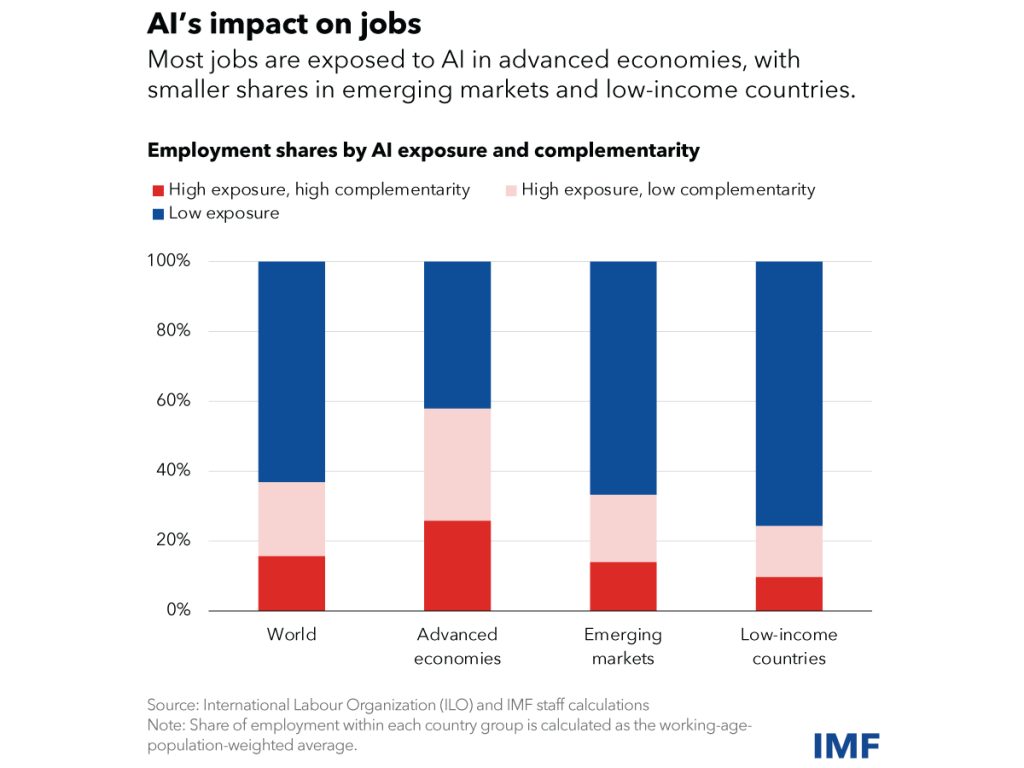
Roughly half the exposed jobs may benefit from AI integration, enhancing productivity. For the other half, AI applications may execute key tasks currently performed by humans, which could lower labour demand, leading to lower wages and reduced hiring. In the most extreme cases, some of these jobs may disappear.
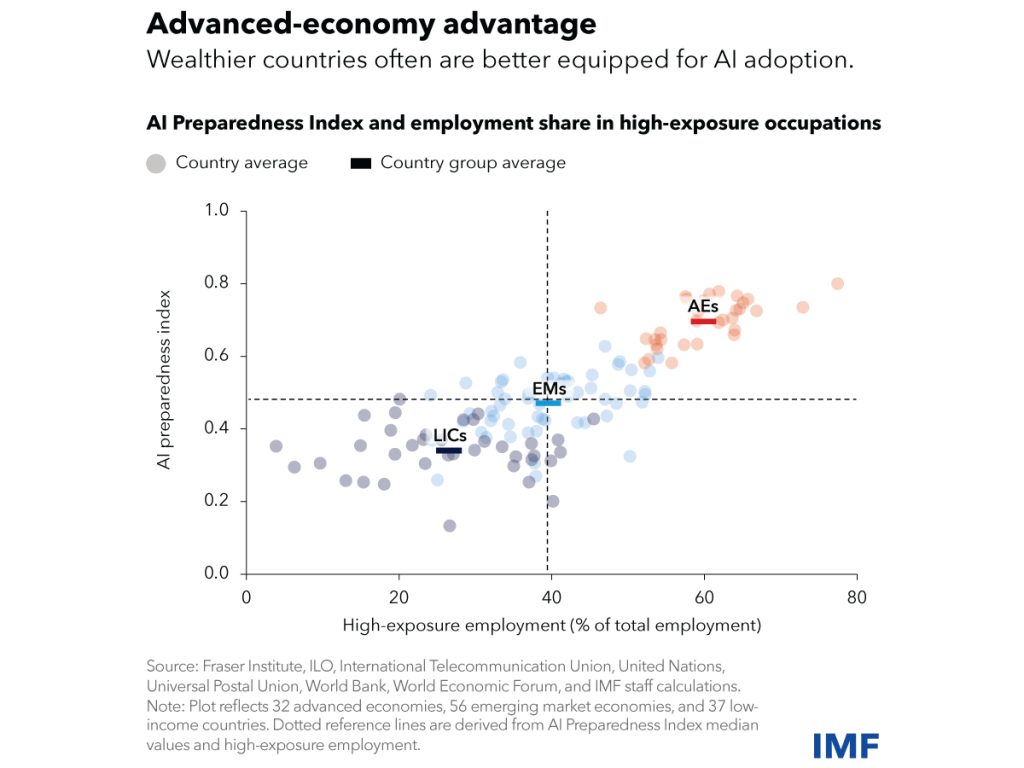
In contrast, emerging markets and low-income countries face lower immediate disruptions, with AI exposure expected at 40% and 26%, respectively. These findings suggest emerging markets and developing economies face fewer immediate disruptions from AI. At the same time, many of these countries don’t have the infrastructure or skilled workforces to harness the benefits of AI, raising the risk that, over time, the technology could worsen inequality among nations.
Income and wealth inequality
The impact of AI is not limited to global employment but extends to income and wealth inequality within countries. The study suggests a potential polarisation within income brackets, with workers adept at utilising AI experiencing increased productivity and wages, while those unable to adapt may need to catch up. Additionally, the technology could exacerbate overall inequality, particularly favouring high-income workers and contributing to social tensions.
“The net effect is difficult to foresee, as AI will ripple through economies in complex ways,” Georgieva said. “What we can say with some confidence is that we will need to develop a set of policies to safely leverage the vast potential of AI for the benefit of humanityAI could also affect income and wealth inequality within countries.”
Need to act
To address these challenges, the IMF emphasises the importance of comprehensive social safety nets and retraining programs for vulnerable workers. Policymakers are urged to tackle the widening inequality trend resulting from AI adoption proactively.
The IMF has developed an AI Preparedness Index to help countries assess their readiness, considering factors such as digital infrastructure, human capital, innovation, and regulation. According to the index, wealthier economies, including Singapore, the United States, and Denmark, are better equipped for AI adoption.
In light of these findings, the IMF Managing Director highlights the need to prioritise AI innovation and integration in advanced economies while developing robust regulatory frameworks to ensure a safe and responsible AI environment.
For emerging markets and developing economies, the focus should be on laying a solid foundation through investments in digital infrastructure and building a digitally competent workforce.