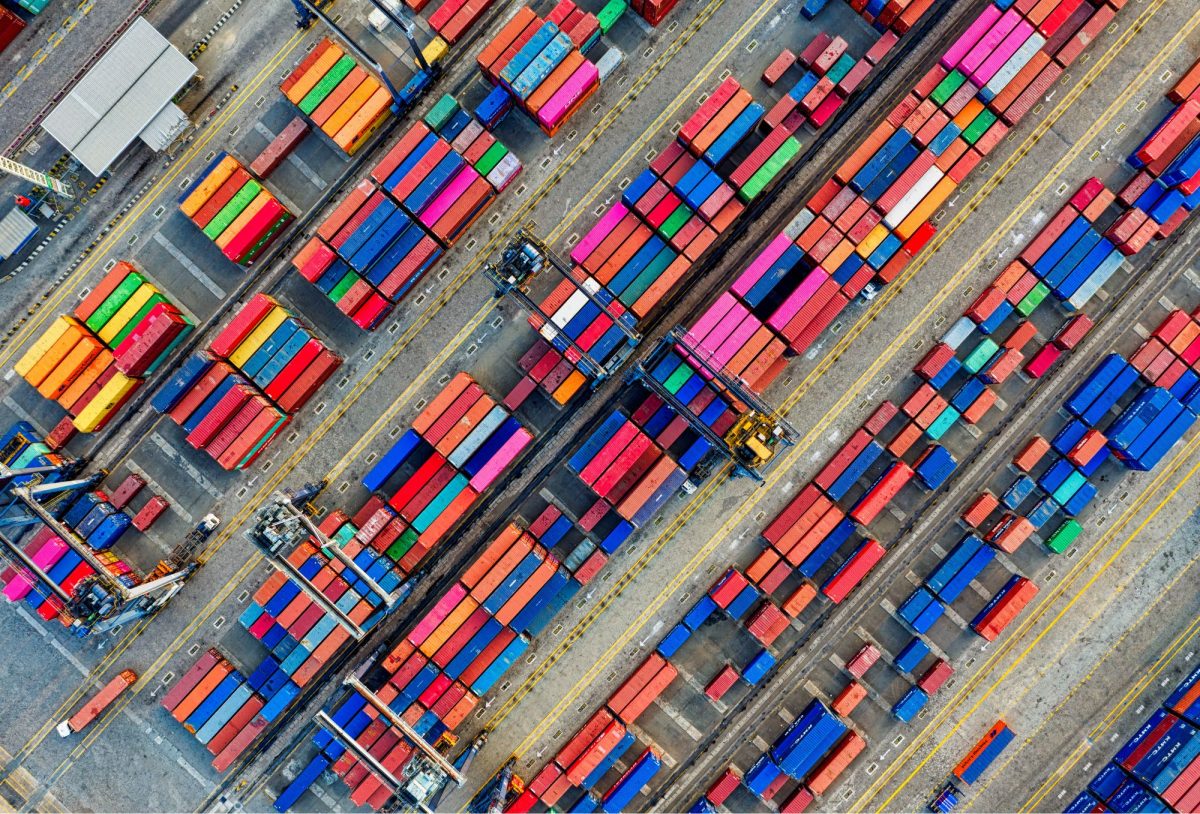
The UAE’s non-oil foreign trade reached Dh1.728 trillion ($470.3 billion) in the first half of 2025, marking a 24% year-on-year increase.
The trade figure was more than double the amount recorded in the first half of 2021 and up 9.1% compared with the second half of 2024. Growth compared to the first halves of 2023 and 2022 stood at 37.8% and 59.5%, respectively.
Non-oil exports rose to Dh369.5 billion, up 44.7% year-on-year and 80% compared to H1 2023. This level represents a 210% increase from the first half of 2019. Exports now account for 21.4% of the UAE’s non-oil trade, compared with 18.4% in H1 2024 and 16.4% in H1 2023.
India, Switzerland, Turkey and Hong Kong were among the top destinations for UAE exports, with CEPA partner countries receiving Dh85.02 billion in exports. India accounted for Dh51.45 billion, up 97.6% from H1 2024, while exports to Turkey stood at Dh27.2 billion, up 24.1%.
The Comprehensive Economic Partnership Agreements (CEPA) programme, launched in September 2021, has seen the UAE sign 28 trade pacts, 10 of which are now active. These agreements cover markets with a combined population of nearly 3 billion and have contributed to the growth in exports.
Re-exports rose to Dh389 billion in H1 2025, up 14% from the same period in 2024. Growth over H1 2023 and H1 2022 stood at 15.8% and 25.4%, respectively.
Imports of non-oil goods totalled Dh969.3 billion, an increase of 22.5% from H1 2024. Imports from the UAE’s top 10 trading partners grew by 20.8%, while imports from other countries rose by 24.3%.
Trade with India grew by 33.9%, while trade with Switzerland more than doubled. The UAE’s trade with Turkey rose 41.4%, and trade with the United States increased 29%. France entered the UAE’s top 10 trading partners for the first time.
The UAE’s total non-oil trade with its top 10 partners rose 25.5% in H1 2025, while trade with the rest of the world rose 23.6%.