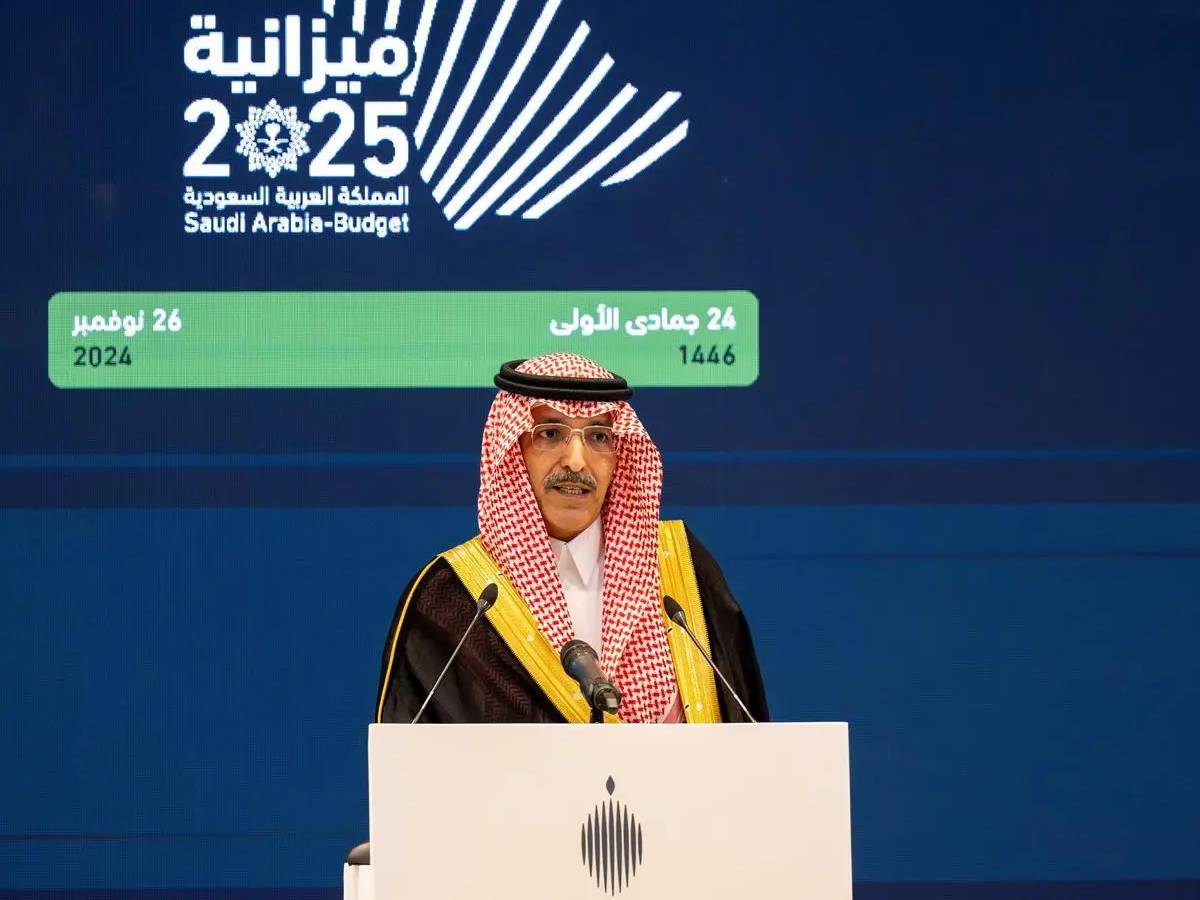
Saudi Arabia’s Minister of Finance, Mohammed Al-Jadaan, has emphasised the Kingdom’s ability to maintain low inflation rates amid global economic challenges. Speaking at a press conference in Riyadh to announce the 2025 state budget, Al-Jadaan stated, “Inflation in Saudi Arabia remains under control at 1.7% this year, far below global averages. Projections indicate it will stay below 2% over the medium term.”
Al-Jadaan attributed this achievement to targeted government policies, including freezing energy prices and ensuring the availability of essential goods. “The government continues to balance spending efficiency with sustained development, ensuring that major economic projects are not impacted,” he said.
2025 budget overview
The 2025 budget projects total expenditures of SAR 1.28 trillion, an increase of 2.7% compared to 2024, with expected revenues of SAR 1.18 trillion, resulting in a deficit of SAR 101 billion. Al-Jadaan clarified that the deficit aligns with the Kingdom’s fiscal planning. “The planned shortfall will continue in the medium term, reaching around SAR 140 billion by 2027,” he noted.
The minister stressed the government’s cautious revenue projections and prudent debt management strategy. “Debt levels in the Kingdom remain lower than most countries in the G20. Borrowing will be considered if the returns on spending through debt exceed the cost of borrowing,” he said.
Non-oil economic growth
Al-Jadaan highlighted the resilience of Saudi Arabia’s economy, driven by non-oil sector growth despite declines in oil GDP. “Nominal GDP has grown by 64% from 2016 to 2023, reaching SAR 4.1 trillion. Non-oil GDP is expected to grow by 4.6% in 2025, with similar averages through 2027,” he stated.
The minister noted the significant growth in private sector contributions to GDP, which have increased by 52% since the launch of Vision 2030. “Private investment now constitutes 24.7% of GDP, reflecting confidence in the Kingdom’s economic reforms,” he added.
Key sectoral allocations
For 2025, SAR 526 billion will be allocated to education, health, social development, and municipal services. Al-Jadaan stressed that these sectors are central to the government’s strategy. “We aim to focus spending on projects and strategies with high economic and social impact,” he said.
The budget also reflects significant investments in infrastructure and mega-projects under Vision 2030, including NEOM, Qiddiya and The Red Sea. “Spending on high-impact projects has increased by 38% annually since Vision 2030’s launch,” he noted.
Tourism and economic diversification
The minister highlighted the growing importance of the tourism sector, which has become the second-largest contributor to the balance of payments after oil. “Tourism revenues reached SAR 48 billion in 2023 and are expected to exceed this in 2024. The sector has transitioned from an importer to an exporter of foreign currency,” he said.
Al-Jadaan also discussed the role of non-oil revenues, which have increased by 154% since 2016 to SAR 472 billion. “This reflects the reduced vulnerability of the Saudi economy to oil price fluctuations,” he said.
Medium-term fiscal outlook
The 2025 budget aligns with long-term fiscal strategies to achieve sustainable economic growth. Al-Jadaan projected revenues of SAR 1.19 trillion in 2026 and SAR 1.28 trillion in 2027, with expenditures expected to grow to SAR 1.42 trillion by 2027.
“These figures are part of our efforts to maintain fiscal sustainability while prioritising spending efficiency and economic impact,” he said.
Challenges and strategic vision
Responding to questions about the budget deficit, Al-Jadaan emphasised that borrowing would be managed carefully to avoid undue economic strain. He also addressed the impact of land compensations and removals on the budget, noting that such actions are undertaken for public benefit and in accordance with regulations.
“The assessment of properties is conducted by licensed professionals to ensure fairness,” he said. Approximately SAR 55 billion was disbursed as compensation in 2024.