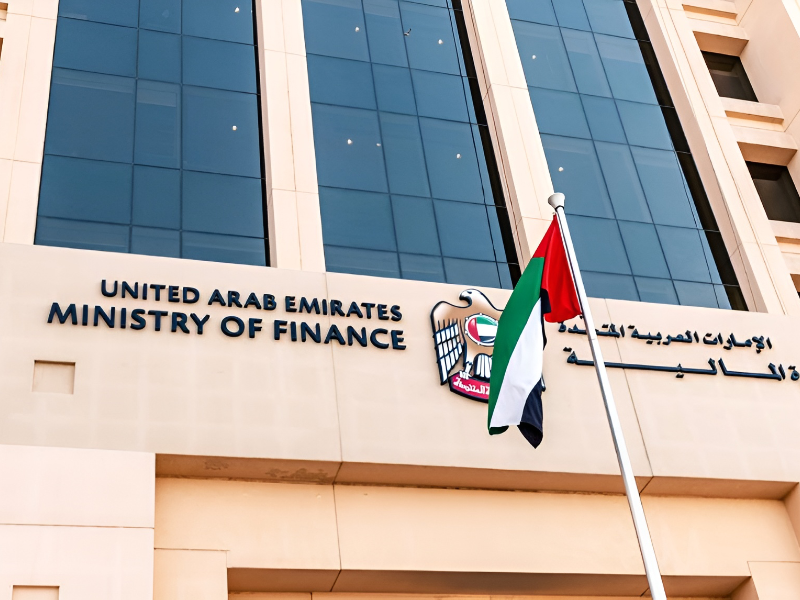

The UAE Ministry of Finance has announced updates to Federal Decree-Law No. 47 of 2022, introducing a 15% Domestic Minimum Top-up Tax (DMTT) and proposing new tax incentives to foster growth and innovation.
“This is a step to align the UAE with international standards and the global minimum tax, as well as continuing to gradually diversify the tax base,” said Scott Livermore, ICAEW Economic Advisor and Chief Economist and Managing Director at Oxford Economics Middle East. “The impact should not be overstated: it does not put the UAE at a competitiveness tax advantage globally with respect to MNCs and the UAE’s attractiveness to foreign investors stretches beyond low corporate tax. Moreover, SMEs and free zone entities will continue to enjoy favourable tax rates.”
Domestic Minimum Top-up Tax
The DMTT will apply to multinational enterprises with consolidated global revenues of €750 million or more in at least two of the four financial years immediately preceding the effective financial year. The measure aligns with the OECD’s Two-Pillar Solution, requiring large corporations to pay a minimum effective tax rate of 15% in each jurisdiction where they operate.
Effective January 1, 2025, the DMTT follows Federal Decree-Law No. 60 of 2023 and closely adheres to the OECD’s GloBE Model Rules.

“As in line with expectations, the UAE has continued to express its support and agreement with the OECD’s Pillar 2 Inclusive Framework and the rules will soon be a reality within domestic tax law for the UAE in the coming months,” said Vishal Sharma, Managing Director and UAE Tax Practice Leader, Alvarez & Marsal.
“In the absence of formal draft legislation at present, it does however remain unclear if the UAE will focus solely on the introduction of a Domestic Minium Top-up Tax or if there are further plans to include other Pillar 2 collection mechanism’s (such as the Income Inclusion Rule) within its domestic legislation (as would be the expectation).”
The Ministry of Finance will issue further details on the legislation in due course.
Proposed tax incentives
The Ministry is also exploring new corporate tax incentives under the same decree-law. These include a Research and Development (R&D) Tax Incentive, expected to take effect from January 1, 2026, offering businesses a 30-50% refundable tax credit based on qualifying R&D activities conducted within the UAE.
Another incentive being considered is a refundable tax credit for high-value employment activities, effective from January 1, 2025. This would apply as a percentage of eligible salary costs for employees in key roles, including C-suite executives and senior personnel contributing significant value to the UAE economy.
“In the short term, a higher tax regime will inevitably impact profitability for businesses that were used to enjoying relatively lower taxes offered by the Gulf state, leading to a negative investor sentiment,” explained Bal Krishen, Chairman of Century Group.

“However, corporations in the country’s free zones will maintain their tax-exempt status, and despite a 15% tax rate, the UAE would still be an attractive business destination relative to countries like the UK and Saudi Arabia, which have a 25% and 20% corporate tax rate, respectively,” he added. “The UAE is trying to bolster business and entrepreneurship with the new act by suggesting the introduction of tax incentives for R&D expenditure, with a potential of 30-50% refundable tax credit, along with tax credits for high-value employment activities.”
The Ministry of Finance is expected to release further details and guidance for businesses on these updates in the coming months.