This week, Saudi Arabia’s Public Investment Fund (PIF) was reported to have entered advanced talks to acquire a $1 billion stake in sports streaming platform DAZN, strengthening its presence in European football broadcasting. Abu Dhabi’s ADQ proposed a 100% acquisition of logistics giant Aramex at Dh3 per share, valuing the company at Dh4.39 billion ($1.2 billion). The meme-inspired cryptocurrency Musk It announced progress in its collaboration with the UAE-based Musk Institute, targeting $1 billion in projects spanning AI and advanced technologies. Al Hilal Bank appointed Jamal Al Awadhi as CEO, continuing its digital-first Islamic banking strategy. Lastly, Samah AlHajeri, Director of New Economy at the UAE Ministry of Economy, outlined the country’s proactive measures to lead in fintech, AI, and blockchain innovations.
These were the top stories this week as selected by Finance Middle East editors.
Saudi Arabia’s PIF in advanced talks for $1 billion stake in DAZN
Saudi Arabia’s Public Investment Fund (PIF), through its sports investment arm, is in advanced discussions to invest at least $1 billion in DAZN Group, the sports streaming service owned by billionaire Len Blavatnik. DAZN holds broadcasting rights for several top European football leagues.
The potential deal would involve PIF acquiring approximately a 10% stake in DAZN, valuing the company between $10 billion and $12 billion, people familiar with the matter told Bloomberg. Discussions have been ongoing since late 2023, with PIF seeking to expand its influence in European football, where DAZN is a broadcasting partner for Italy’s Serie A, Spain’s LaLiga, Germany’s Bundesliga, and France’s Ligue 1.
Abu Dhabi’s ADQ proposes 100% acquisition of Aramex at Dh3 per share
Abu Dhabi’s sovereign wealth fund, ADQ, through its subsidiary Q Logistics Holding LLC, has made a voluntary conditional cash offer to acquire the remaining shares of Aramex PJSC that it does not already own. The offer price is Dh3 per share, representing a 33% premium over Aramex’s last traded share price of Dh2.25 on January 9, 2025.
Currently, Abu Dhabi Ports Company, which is 75.42% owned by ADQ, holds a 22.69% stake in Aramex. Q Logistics Holding does not directly own any shares in the company. The proposed acquisition values Aramex at approximately Dh4.39 billion ($1.2 billion).
Musk It meme coin nears deal with Musk Institute, secures MEXC Exchange listing
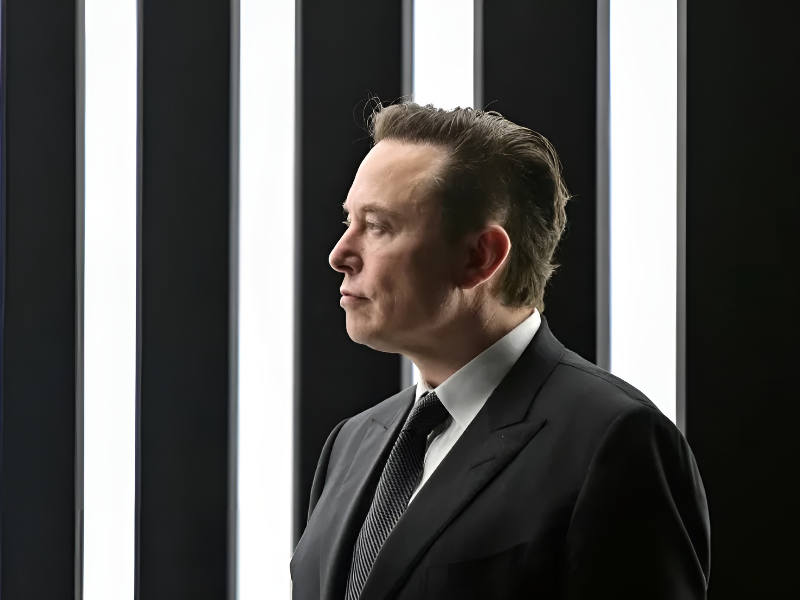
Musk It, a meme-inspired cryptocurrency launched in December 2024, is in advanced discussions with the Musk Institute—a forthcoming think tank in the UAE led by Errol Musk, father of Elon Musk. The collaboration aims to initiate projects worth up to $1 billion across sectors, including artificial intelligence, energy, data storage, communications and space.
The Musk Institute announced in December 2024 plans to establish a science facility in Dubai focusing on advanced research areas such as gravity and nuclear fusion. The institute seeks to attract and retain top global talent, addressing the “brain drain” issue by providing a hub for innovation in the region.
Al Hilal Bank appoints Jamal Al Awadhi as CEO
Al Hilal Bank, a subsidiary of ADCB Group, has appointed Jamal Al Awadhi as its new CEO. Al Awadhi, a UAE national, brings over 20 years of senior leadership experience across the financial services, media, information technology, and aviation sectors. Prior to joining Al Hilal Bank as Deputy CEO in May 2024, he served as Chief Operating Officer at Wio Bank and CEO at Abu Dhabi Media.
Al Hilal Bank has been focusing on a digital-first approach to transform its customer experience model. Since its acquisition by ADCB in 2019, the bank has significantly grown its customer base. It plans to leverage technology, data, and analytics to enhance products, personalisation, and customer service channels, aiming to set new standards for digital Islamic banking in the UAE.
Exclusive: Ministry of Economy’s Samah AlHajeri on how the UAE has redrawn the global financial map
The UAE has long been recognised as a country that anticipates global economic shifts and positions itself accordingly. Once known primarily for its oil wealth, the UAE has successfully diversified its economic base, emerging as a regional and international hub for finance, technology and entrepreneurship. Today, it is forging ahead in shaping policies and frameworks to accommodate new financial technologies—ranging from blockchain and digital currencies to decentralised finance (DeFi) and artificial intelligence (AI)—all while maintaining a delicate balance between innovation, stability and inclusivity.
In a recent conversation, Samah AlHajeri, Director of New Economy at the UAE’s Ministry of Economy, shed light on how the nation is positioning itself to stay ahead of the curve. Drawing on a background steeped in policy-shaping and regulatory innovation, AlHajeri emphasised the UAE’s unique approach: a model that involves listening to markets, embracing agile experimentation and enacting proactive regulations to align with and often anticipate global trends.
Other top stories
SAMA and Google sign agreement to launch Google Pay in Saudi Arabia in 2025
Saudi Arabia’s GACA imposes SAR 18.9 million in fines for civil aviation violations in 2024
ASK Private Wealth launches DIFC office to connect global investors with Indian market
Sharjah approves UAE’s first natural resources corporate tax law
Emaar in talks to sell stake in Indian business, including discussions with Adani Group