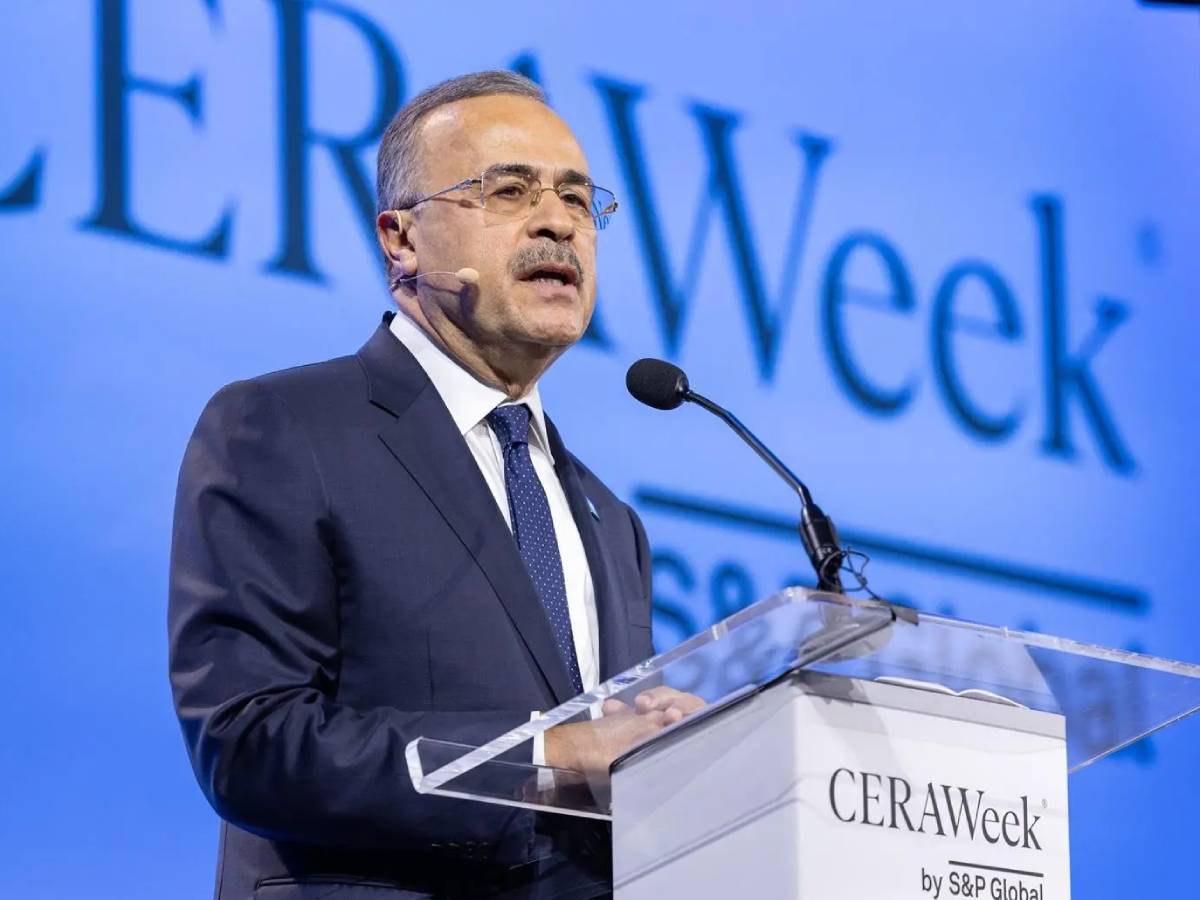
Saudi Aramco President and CEO Amin H. Nasser has warned that current global energy transition strategies are unsustainable and could cost the world an additional $6 trillion to $8 trillion annually unless a more balanced approach is adopted.
Speaking at the CERAWeek 2025 energy conference in Houston, Nasser criticised the emphasis on rapidly replacing traditional energy with renewables while imposing restrictive policies on conventional sources.
“The biggest illusion about the energy transition is the belief that traditional energy can be phased out overnight,” Nasser said. “Traditional sources still supply over 80% of the energy in the United States, about 90% in China, and more than 70% in the European Union. New energy sources do not replace traditional ones; they complement them. New energy sources cannot even meet the growth in demand.”
Nasser added: “Effective traditional energy sources are being discarded in irrational ways. This is a fast track to dystopia—a future marked by crisis and hardship.”
His comments come amid growing debate over how to meet global climate targets while maintaining energy security. The International Energy Agency (IEA) has projected that to reach net-zero emissions by 2050, annual investment in clean energy would need to triple to around $4 trillion by 2030, while fossil fuel investment would need to decline significantly. Aramco has maintained that underinvestment in oil and gas will lead to volatility and energy shortages.
The CERAWeek conference, hosted by S&P Global, has drawn more than 10,000 participants from over 80 countries. The 2025 edition is themed “Moving Ahead: Energy Strategies for a Complex World” and features more than 1,400 speakers, including senior government officials, executives, and analysts. Topics include energy security, climate policy, and emerging technologies.
Aramco, the world’s largest oil producer by volume, has continued to invest in both hydrocarbon production and low-carbon technologies. In 2024, the company announced plans to scale up investments in hydrogen and carbon capture while also maintaining its oil capacity to meet long-term demand.