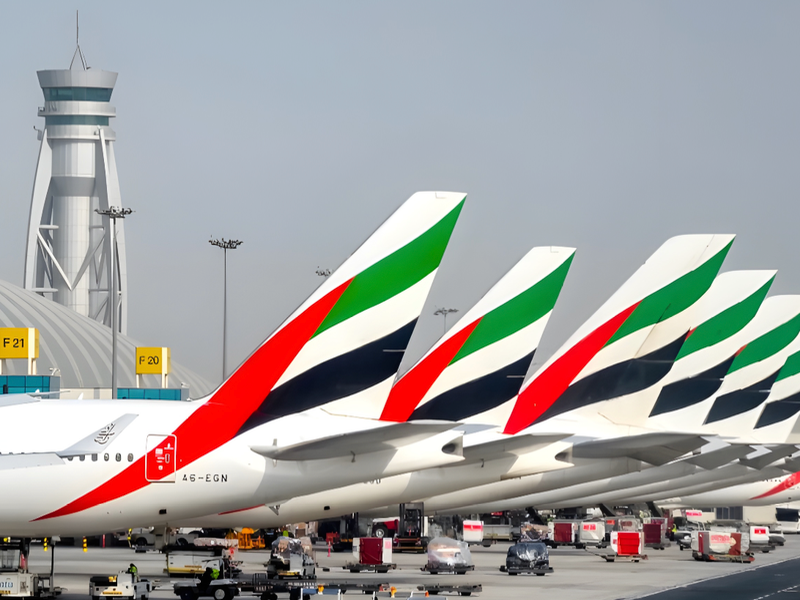

The aviation sector contributed $92 billion to the UAE economy in 2023, equivalent to 18.2% of GDP, according to a new study released by the International Air Transport Association (IATA).
The total impact includes direct contributions from airlines, aviation services, and airport operations, as well as indirect effects through supply chains, employee spending, and tourism linked to aviation.
In 2023, the sector supported 992,000 jobs in the UAE. Of these, 74,500 were directly employed by airlines, 132,300 were employed across other aviation services, and 297,300 were linked to aviation-related tourism. The UAE also handled 1 million tonnes of air cargo over the year.
“The UAE is a critical hub for global connectivity. Supporting nearly a million jobs and 18.2% of GDP, aviation makes an enormous contribution to the UAE’s prosperity,” said Willie Walsh, IATA’s Director-General.
The report highlights three focus areas for maintaining and expanding the UAE’s role in the global aviation sector: sustainability, infrastructure, and workforce development.
On sustainability, the UAE is targeting annual production of 700 million litres of Sustainable Aviation Fuel (SAF) by 2030. It also participates in global efforts such as the SAF Registry, which is operated by the Council on Aviation and Direct Offset (CADO).
Infrastructure development remains a priority, with ongoing investment in major airport expansions including Al Maktoum International Airport (DWC) in Dubai and Zayed International Airport (AUH) in Abu Dhabi. IATA stressed the importance of ensuring cost competitiveness for airlines and passengers as capacity grows.
The UAE is also investing in aviation training to meet future demand. A new IATA training centre has opened in Abu Dhabi as part of efforts to develop a sustainable pipeline of aviation professionals.
IATA expects the sector’s contribution to increase as the UAE continues to invest in regulatory frameworks, connectivity, and workforce capacity.