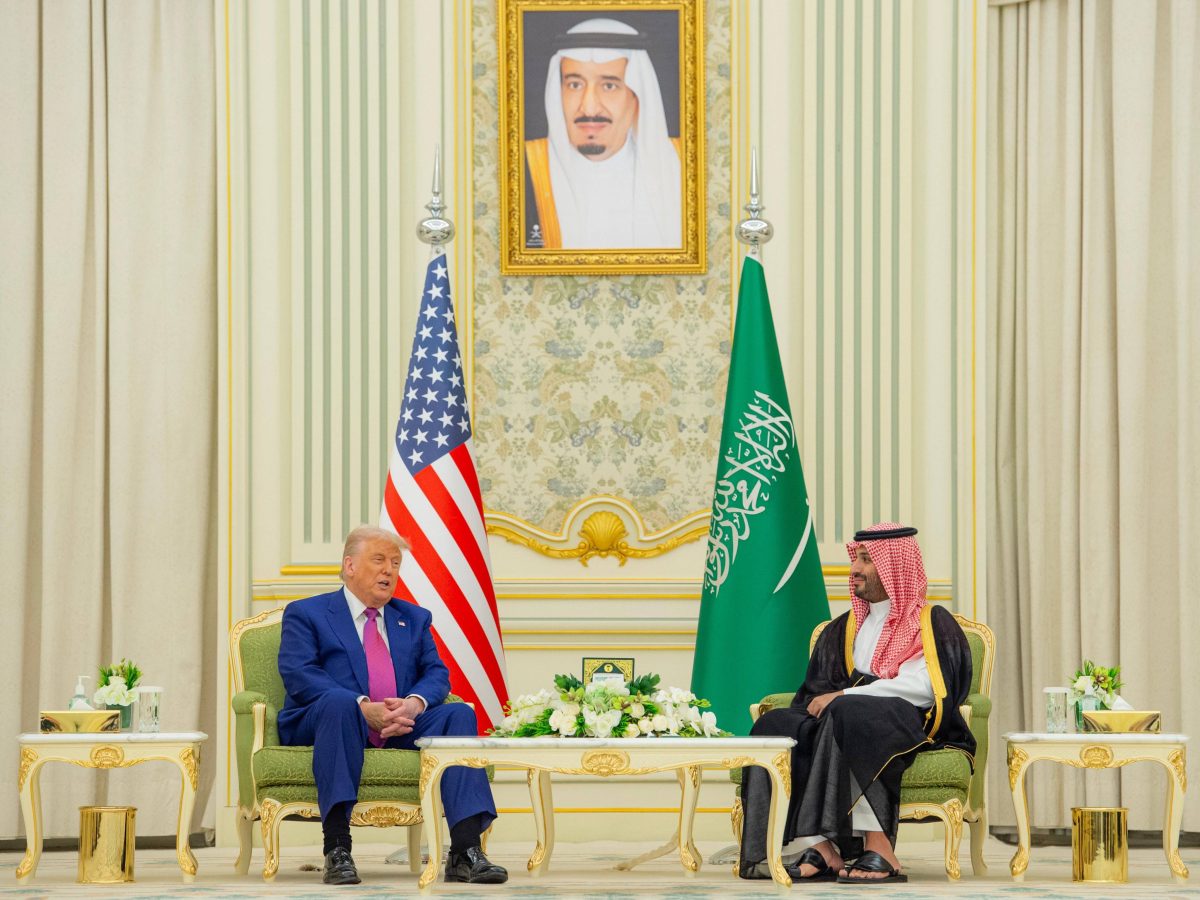
Saudi Arabia has committed to investing over $600 billion in the United States across multiple sectors, including defence, technology, infrastructure, and energy. The announcement was made during former US President Donald Trump’s visit to Riyadh for the Saudi–US Investment Forum, marking the largest commercial agreement package between the two countries to date.
$142 billion arms deal
The cornerstone of the package is a $142 billion defence agreement that includes air and missile defence systems, military training, communications upgrades, and weapons systems from more than a dozen US defence firms. The deal falls into five categories: air force and space capabilities, maritime and coastal security, border security and ground forces modernisation, and command and control infrastructure. Saudi Arabia is already the largest buyer of US military exports, with $129 billion in active cases under the Foreign Military Sales programme.
The deal also includes provisions for training Saudi service personnel and expanding Saudi military academies, positioning the US defence industry for long-term sustainment and logistics contracts in the Kingdom.
$20 billion DataVolt initiative
Saudi firm DataVolt will invest $20 billion in the US’s artificial intelligence data centres and energy infrastructure, marking one of the Kingdom’s largest digital investments abroad. Separately, US-based contractors Hill International, Jacobs, Parsons, and AECOM will execute major infrastructure projects in Saudi Arabia—including King Salman International Airport, Qiddiya City, King Salman Park, and The Vault—generating an estimated $2 billion in US services exports.
Technology partnerships involving companies such as Google, Oracle, Salesforce, AMD, and Uber were also announced, totalling $80 billion in bilateral digital and AI investments.
Healthcare, aviation, and industrial Commitments
Shamekh IV Solutions will invest $5.8 billion in the healthcare sector in the US, including a Michigan-based IV fluid production facility. GE Vernova will export gas turbines and energy systems worth $14.2 billion, while Boeing will deliver 737-8 aircraft to AviLease under a $4.8 billion procurement deal.
Three sector-specific funds were unveiled: a $5 billion energy investment fund, a $5 billion aerospace and defence technology fund, and a $4 billion global sports fund. Each will deploy capital into US-based industries, with stated aims of job creation and supply chain localisation.
Strategic and scientific cooperation
The US Department of Energy and Saudi Arabia’s Ministry of Energy signed a cooperation agreement on energy infrastructure development, covering innovation, financing, and deployment of energy systems. The countries also signed a memorandum of cooperation on mining and critical mineral supply chains.
NASA and the Saudi Space Agency will collaborate on a CubeSat payload for Artemis II, part of the US crewed lunar mission. The CubeSat will measure space weather and be deployed in high Earth orbit.
Transport ties were also broadened. A modernised air transport agreement will allow US cargo carriers to operate between Saudi Arabia and third countries, with reciprocal rights for Saudi carriers.
Cultural and institutional agreements
Cultural initiatives include new partnerships between the Smithsonian and the Royal Commission for AlUla. These include joint research and exhibitions on archaeological artifacts from Dadan and conservation efforts for the endangered Arabian leopard.
Saudi Arabia was the US’s 27th-largest trading partner in 2024, with total goods trade reaching $25.9 billion. US exports stood at $13.2 billion, while imports from the Kingdom were $12.7 billion. Saudi foreign direct investment in the US totalled $9.5 billion in 2023, focusing on transport, real estate, and auto sectors.
The investment package coincides with the 80th anniversary of the 1945 Quincy Agreement, which marked the beginning of formal US–Saudi bilateral relations. It also reflects Riyadh’s economic diversification strategy under Vision 2030, which aims to reduce dependence on hydrocarbons by increasing international capital deployment and strategic partnerships.