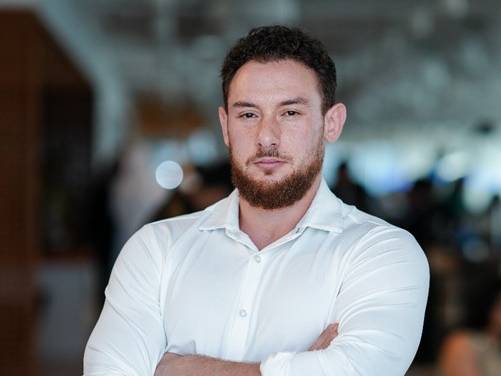
From Los Angeles to the Gulf, Walid Abdul-Wahab is betting big on camel milk. As founder of Desert Farms, a seed-stage startup pioneering camel milk-based infant nutrition, Abdul-Wahab is building a category-defining business with roots in tradition and ambitions for a global scale. In an interview, he explains why he chose the Middle East as his launchpad, what it takes to educate investors, and how he plans to position Abu Dhabi as a food innovation hub.
What drove you to join the startup world?
I’ve always been drawn to solving meaningful problems, particularly in the fields of food and health. The startup world offered the perfect environment to innovate, disrupt and create something with real impact. My journey began when I saw the untapped potential of camel milk—both as a superfood and as a game-changer for infant nutrition.
Why did you choose the Middle East as the place to start/expand the business?
The Middle East has a deep-rooted connection with camel milk, yet ironically, most of the region relies on imported infant formula. By producing locally, we’re not only leveraging the region’s resources but also contributing to food security and economic independence. Saudi Arabia is investing heavily in food innovation, and the UAE is emerging as a regional hub for startups in Agritech and Healthtech.
Being part of Abu Dhabi’s growing innovation ecosystem, with the support of communities like Hub71, has given us access to valuable networks and an innovative environment that enables us to scale Desert Farms with purpose and agility.
How would you describe the region’s startup scene in three words?
Evolving, ambitious, untapped.
Is there something that has surprised you in your journey?
Yes, what surprised me most in our journey is how much knowledge is required to introduce a new product category. Camel milk has been consumed for centuries, but positioning it as a modern, science-backed alternative to traditional formulas meant shifting long-held perceptions, not just among consumers but also among regulators and healthcare professionals. That has been both a challenge and a learning experience.
What are (in your view) the keys to approaching investors successfully?
- Know your numbers: Investors want to see real traction, strong unit economics, and a path to scalability.
- Tell a compelling story: Numbers matter, but your vision and the problem you’re solving are what leave a lasting impression.
- Be persistent: Fundraising is a marathon, not a sprint. You’ll hear a lot of “nos” before you get a “yes.”
- Find the right fit: Not all capital is the right capital. The best investors align with your long-term vision, not just your short-term metrics.
What was the most challenging part of raising funding, and how did you overcome it?
The most challenging part was educating investors on why camel milk is the future of infant nutrition. Many had never heard of it and were sceptical. I overcame that by backing my pitch with scientific research, customer testimonials, and real sales data. Once they saw the traction and the potential, the conversation shifted from “Why?” to “What’s next?”
What is the best piece of financial advice you have received?
“Raise money when you don’t need it.” Timing is everything in fundraising. If you wait until you’re desperate, you lose leverage.
What has been your biggest success and your biggest failure?
The biggest success has been scaling Desert Farms to a multi-million-dollar business with over 30,000 customers while pioneering an entirely new category in infant nutrition.
The biggest setback was underestimating the amount of working capital required for a fast-growing subscription business. We encountered bottlenecks early on, but this experience taught me to plan funding rounds more strategically and build greater operational flexibility.
What is the best quality a leader can have?
Resilience. Startups come with constant highs and lows, and the ability to stay grounded, push through setbacks, and keep the team focused is what makes long-term success possible.
Where would you like to be in 5 years’ time?
In five years, I aim for Desert Farms to be the world’s leading infant formula brand, recognised as the closest formula to human breast milk. Beyond that, I see Abu Dhabi leading the way in food innovation, and I want to play an active role in helping the region shape a healthier, more self-sufficient food system.