The Federal Reserve kept interest rates unchanged on Wednesday, holding the federal funds rate at 4.25–4.50% while signalling that inflationary pressures driven by tariffs could complicate the path to monetary easing later this year.
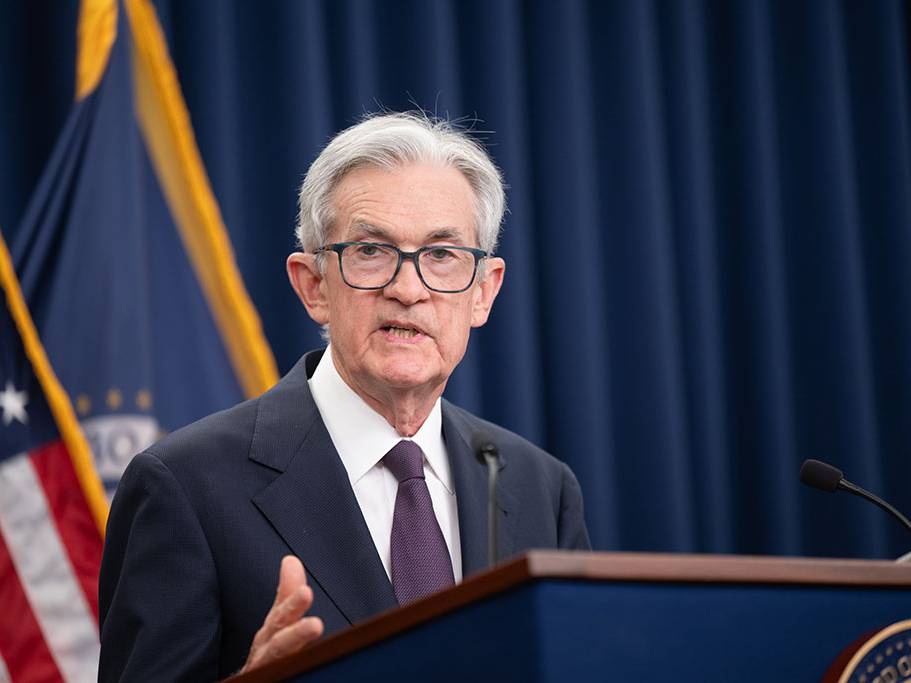
Chair Jerome Powell, speaking at the post-meeting press conference, noted that while the economy remains fundamentally strong, with unemployment at 4.2% and wage growth outpacing inflation, elevated uncertainty linked to trade policy and a recent dip in consumer sentiment have introduced new variables into the Fed’s decision-making process.
Despite a stronger-than-expected 2.5% rise in private domestic final purchases in Q1, headline GDP softened due to a front-loading of imports ahead of tariff hikes, creating distortions in the data. The Fed’s updated Summary of Economic Projections (SEP) now sees growth at 1.4% this year, down from 1.7% in March. Inflation projections have also been revised upward, with core PCE expected to rise 3% in 2025 before easing to 2.1% in 2027.
“Tariffs are likely to push prices higher and weigh on activity,” Powell said, warning that while some of the inflation effects may be transitory, there is a real risk that expectations become unanchored. “Our obligation is to keep longer-term inflation expectations well anchored and to prevent a one-time increase in the price level from becoming an ongoing inflation problem.”
Labour market steady but not overheating
Job growth averaged 135,000 per month over the past three months. Powell described the labour market as “broadly in balance” and said it is not a source of inflationary pressure. The SEP projects unemployment to tick up to 4.5% by year-end, reflecting a gradual softening rather than a deterioration.
Importantly, wage growth continues to outpace inflation, providing households with some breathing room, even as consumer sentiment surveys indicate growing unease. Powell acknowledged that household and business surveys show declining confidence, particularly around trade policy and geopolitical tensions.
Markets still see cuts
While the Fed’s updated dot plot still shows two rate cuts projected in 2025, Powell signalled a cautious approach. “We are well positioned to wait,” he said, adding that further clarity is needed on how long tariff-related price increases will persist and whether they bleed into wages and broader price-setting behaviour.
The bond market reacted with volatility. Treasury yields fell immediately following the statement but rebounded during Powell’s Q&A as traders recalibrated their expectations. Fed funds futures now price in one to two cuts this year, down from three earlier this quarter.
“The Chair sounded more hawkish than the dot plot suggested,” said Priya Misra, global head of rates strategy at TD Securities. “He made clear that if inflation pressures from tariffs prove persistent, the Fed will not hesitate to hold off.”
Inflation path tied to external policy shocks
While overall inflation has eased significantly from the 2022 peak, core PCE remains at 2.6%, and headline PCE rose 2.3% over the 12 months ending in May. Powell said the Fed is closely watching whether tariff impacts prove to be one-off price shifts or more systemic.
“Trade policy is not something we control, but its effects are material,” Powell said. “We have to assess how those changes interact with our mandate.”
Economists warn that if tariffs broaden or persist, they could increase input costs across sectors, particularly in consumer goods and intermediate manufacturing. “The concern is second-round effects,” said Kathy Bostjancic, chief economist at Nationwide. “If firms start passing through costs and workers demand higher wages, that’s how you get entrenched inflation.”
With growth slowing but not stalling and inflation gradually easing, the Fed sees no immediate need to cut. However, risks are mounting on both sides: premature easing could fuel inflation, and waiting too long could weaken labour markets.
“Our job is to balance these risks,” Powell said. “We will take a cautious and flexible approach, adjusting policy only when we have greater confidence in the trajectory of the economy.”
For now, that means rates remain unchanged, and markets will need to live with elevated uncertainty as the Fed waits for clearer signals.
UAE Central Bank maintains interest rate steady
Shortly after the Fed’s announcement, the Central Bank of the UAE (CBUAE) said it has decided to maintain the Base Rate applicable to the Overnight Deposit Facility (ODF) at 4.40%.
“The CBUAE has also decided to maintain the interest rate applicable to borrowing short-term liquidity from the CBUAE at 50 basis points above the Base Rate for all standing credit facilities,” it said in a statement.
“The Base Rate, which is anchored to the US Federal Reserve’s IORB, signals the general stance of monetary policy and provides an effective floor for overnight money market interest rates in the UAE.”