

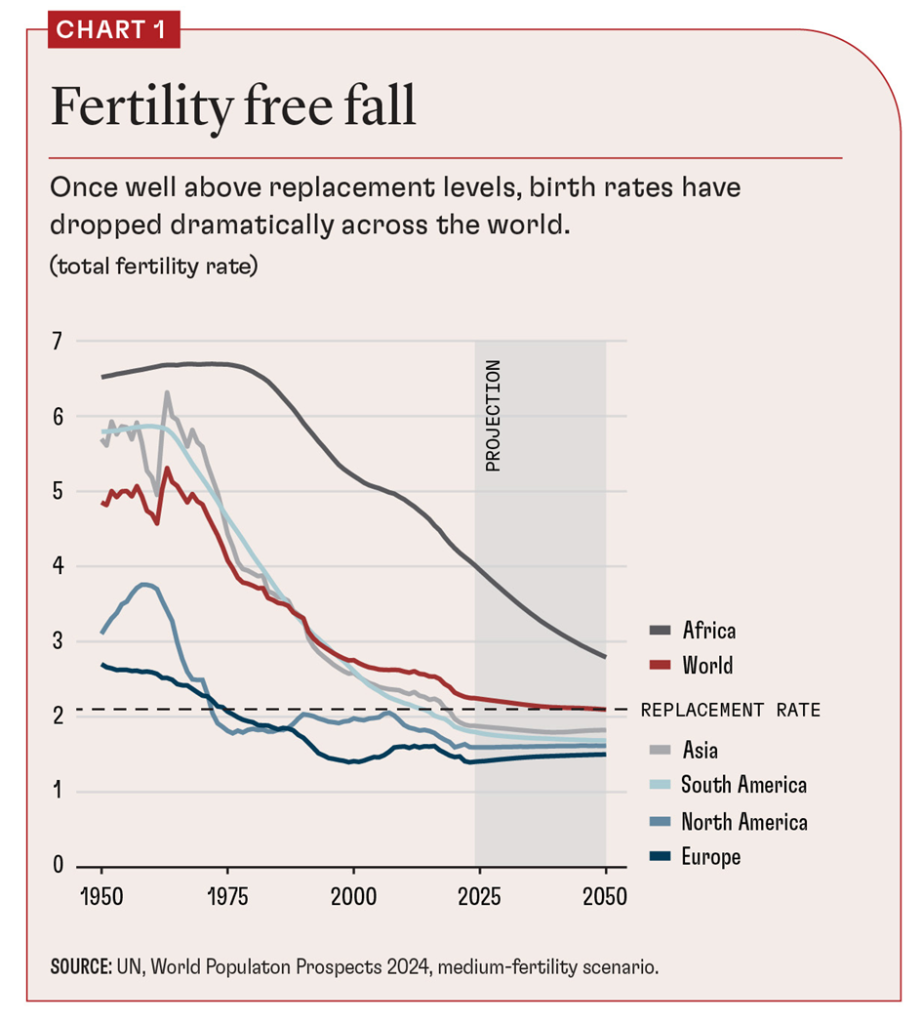
Global fertility rates are declining faster than expected, setting the stage for long-term shifts in labour markets, economic growth, and social welfare systems, according to the International Monetary Fund’s June 2025 analysis. While the global population has surpassed 8 billion and may still rise to 10.3 billion by 2084, the underlying growth engine, fertility, is weakening across most regions.
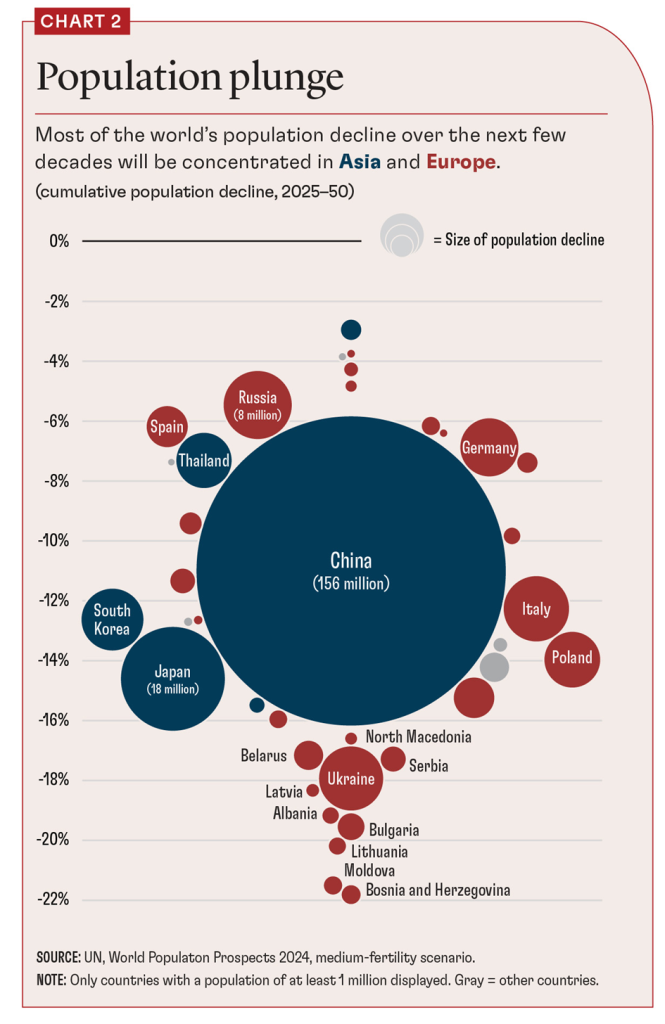
The total fertility rate stood at 2.24 in 2025, down from 5 in 1950. It is projected to fall below the replacement level of 2.1 by mid-century, triggering eventual population contraction. Thirty-eight countries, each with populations exceeding 1 million, are expected to shrink over the next 25 years, led by China, Japan, and Russia. In relative terms, Moldova and several Eastern European nations are facing the steepest declines.
This demographic transition brings a complex mix of challenges and opportunities. Countries with shrinking populations are grappling with rising old-age dependency ratios. The share of people over 65 in such countries is projected to nearly double, from 17.3% in 2025 to 30.9% in 2050, putting strain on pension systems, health services, and labour supply. At the same time, fewer young people could mean reduced productivity, innovation, and consumer spending.
However, lower fertility and smaller populations may also bring economic benefits. With fewer children to raise, households and governments may redirect resources toward research, infrastructure, and capital formation. Labour force participation, particularly among women, tends to increase in lower-fertility environments. In past decades, similar demographic shifts helped fuel income growth in several developed nations.
Some countries are already responding. South Korea recorded its first rise in fertility in nine years. China ended its one-child policy. Japan has introduced flexible work arrangements. European governments are adjusting tax and childcare policies to support working families.
The IMF report also highlights the potential environmental upside of population decline. Smaller populations may reduce stress on natural resources, mitigate climate risks, and slow biodiversity loss.
Nonetheless, reversing fertility declines remains difficult. Policymakers face trade-offs between economic output and social preferences. Effective responses are likely to combine family-friendly tax and welfare policies with investments in education, healthcare, and technology.
Changes in retirement age and workplace norms may also be required to offset the shrinking working-age population.
The report concludes that while falling fertility could hinder growth in the absence of policy action, it also offers a chance to rethink economic models. Nations able to adapt to this demographic shift, through human capital development and innovation, could emerge stronger in the long term.