Startups across the Middle East and North Africa secured $1.2 billion in venture capital funding during the first half of 2025, marking a 24% drop compared to H1 2024, according to new data from Magnitt. Deal volumes fell to 212 from 286 in the same period last year, highlighting a sustained pullback in early-stage activity as investors continue to prioritise later-stage and defensible business models.
While overall funding slowed, the average deal size rose to $5.6 million from $5.2 million a year earlier, driven by a smaller pool of scale-ups attracting capital in a risk-averse environment. Later-stage rounds accounted for 77% of the total funding raised in H1 2025, up from 64% in the same period last year, while early-stage and seed deals declined significantly.
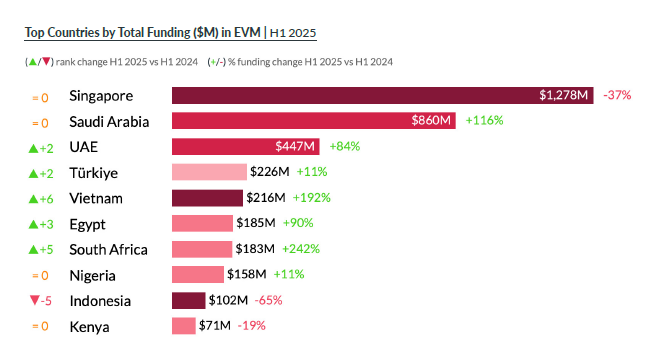
Saudi Arabia remained the region’s most capitalised market, drawing $575 million across 58 deals. The UAE followed with $275 million from 61 deals, while Egypt ranked third with $218 million from 31 deals. Combined, these three markets accounted for nearly 89% of all funding deployed across the region in the first half of the year.
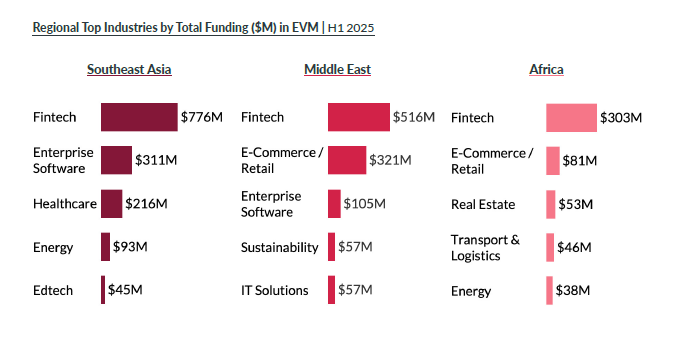
The most funded sectors were e-commerce ($269 million), transport and logistics ($185 million), and fintech ($162 million). B2B-focused ventures attracted the majority of funding, as investors showed a greater appetite for recurring revenue models and enterprise solutions. In contrast, consumer-facing platforms, particularly in discretionary categories, struggled to close follow-on rounds.
Some significant transactions included a $100 million round by Saudi-based logistics firm Transpo, $84 million raised by UAE payments company Tamara, and a $50 million growth round by Egypt’s e-commerce marketplace Cartona. Several large deals were backed by sovereign wealth-linked investors, including PIF’s Sanabil and Mubadala Ventures, highlighting the role of state-backed capital in keeping regional deal activity afloat.
Despite the funding slowdown, MENA startups continued to expand their international footprint. Approximately 25% of all startups funded in H1 2025 operate across two or more regional markets. UAE and Saudi-based companies accounted for the largest cross-border expansions, often leveraging regulatory support and funding programmes tied to economic diversification agendas.
Investors shifted focus towards defensibility, cost discipline and clear paths to profitability. Several companies reported layoffs and operational restructurings in Q1 and Q2, with a renewed focus on core units. Meanwhile, dry powder remains available, but deployment is slower and tied to clearer metrics on margin, cash runway and scalability.
The report noted a 30% drop in seed-stage funding and a near 40% decline in Series A rounds, with many early-stage founders facing extended fundraising cycles or forced consolidation. In contrast, Series B and later-stage rounds remained relatively stable, with top performers raising at or near previous valuations, particularly in infrastructure, financial services, and logistics.
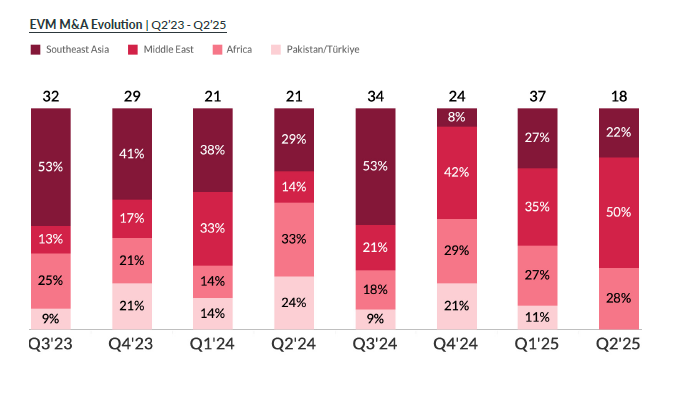
Looking ahead, capital deployment is expected to remain concentrated in startups with strong fundamentals, cross-border potential, and exposure to sectors aligned with government priorities, such as climate tech, healthcare, and AI. The IPO pipeline remains limited, but secondary deals and M&A activity are likely to rise in the second half of the year, especially as regional family offices and strategic buyers seek inorganic growth.