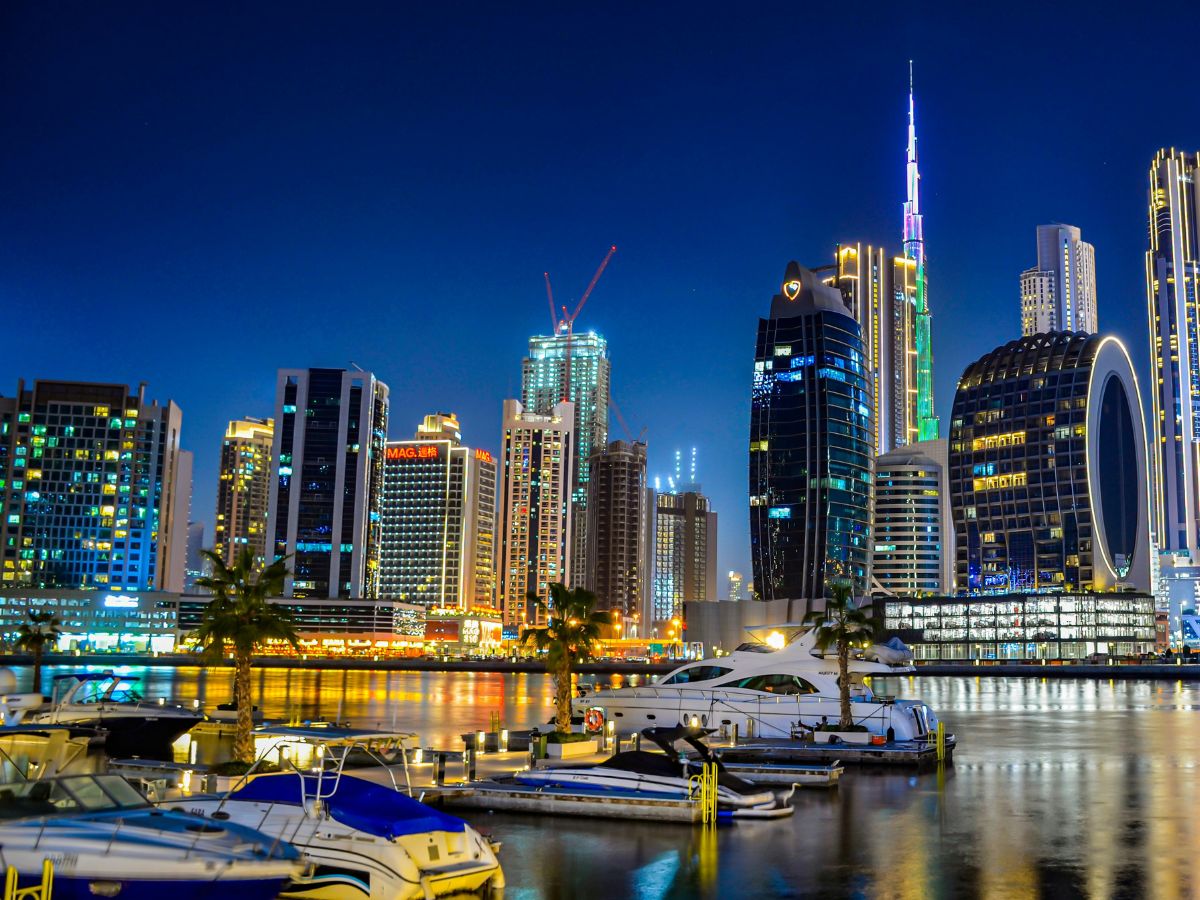
Many cities around the world have undergone significant transformations over the past few decades, but few have done so as quickly and extensively as Dubai. Today, the emirate is a hub at the cutting edge of multiple industries, a gateway to three continents, and a testament to the benefits of careful economic planning. In other words, it’s set up for growth.
Dubai has done this by remaining proactive, helping shape global trends rather than simply reacting. Of course, none of this has come about through luck or coincidence. Over the years, Dubai and the wider UAE have implemented several government visions and initiatives setting goals for the short, medium and long term. They have then pursued them aggressively.
So, Dubai’s approach to growth is not passive, nor is it incidental. It is strategic and coordinated at every level, from the massive infrastructure projects to the remarkable speed at which it has diversified its economy. Dubai is always on the front foot.
This article explores how Dubai has achieved this and how, far from now taking a pause, it is pushing ahead ever more vigorously. The article also looks at how businesses and investors can align with this vision in order to grow alongside the emirate.
Dubai’s proactive approach to growth
Many cities around the world respond to economic shifts reactively. Dubai anticipates change, which is why it has transitioned so effectively to a more diversified economy.
At the top of the initiatives list is the ‘We the Emirates 2031’ vision, which sets out bold national targets to drive long-term economic growth and global competitiveness. This includes doubling the country’s GDP from $0.4 trillion to $0.8 trillion, boosting non-oil exports, and raising the tourism sector’s contribution.
At the city level, the Dubai Economic Agenda D33 outlines specific economic targets to be achieved by 2033, including doubling the size of Dubai’s economy and positioning it among the top global cities in terms of GDP. These targets are not presented as ‘nice to have’ but are broken down into action plans and then supported by regulations and incentives. There is a clear path to achieving them. Additionally, the 2040 Master Plan for Dubai aims to strengthen Dubai’s position as a key regional hub, particularly in terms of economic leadership.
This level of government initiative creates an ecosystem for growth. This is why, year after year, a record number of new businesses start up in Dubai, as well as local branches of international companies.
Why picking the right priorities is the key
Dubai doesn’t grow by trying to do everything at once. Instead, it identifies priority sectors to receive tailored regulatory support and investment incentives. Here are some examples:
- Real estate: Dubai is world-famous for its real estate, and the figures back this up. As of November 2024, real estate transactions in the emirate hit 188,000. That’s a combined value of $170 billion, which was a 38% increase in transaction volume compared to the previous year.
- Tech and innovation: Another feature of Dubai that tends to resonate around the world is its network of free zones. Alongside their numerous benefits (100% foreign ownership, tax exemptions, and simplified setup processes), they support growth in technology and innovation, making it much easier to launch and scale.
- Tourism and hospitality: Dubai continues to position itself as a global tourism hub, with world-class hotels and attractions. It has also become a global hub for corporate events and other major conferences. Last year, the emirate saw 18.72 million international overnight visitors, a 9% increase from 2023.
- Sustainability: Dubai’s Clean Energy Strategy 2050 and Net Zero by 2050 goals are creating new opportunities in renewables, sustainable construction, and environmental tech. These long-term commitments are attracting investors and innovators focused on green solutions, making sustainability a key driver of future economic growth.
- Finance and fintech: Dubai is a major hub for banks and other financial institutions. It’s also shown itself to be a hotbed for startups, particularly in the fintech sector. This has come about through its supportive ecosystem that offers access to the fundamentals: funding, talent, and progressive regulations. All of this positions Dubai as a launchpad for financial innovation. One groundbreaking example of this is the emergence of new solutions that are helping bring banking services to the unbanked.
- Logistics and trade: Dubai’s geographic location is capitalised on through world-class logistics infrastructure, ports and airports. This strategic connectivity enables efficient trade flows and supports the emirate’s role as a global hub for commerce and distribution.
Growth through infrastructure; growth through talent
One of the most visible signs of Dubai’s growth strategy is its infrastructure. This means a network of roads, ports and airports, but also a huge investment in smart city technologies. When these come together, it creates the conditions for business to flourish.
From roads and buildings, growth is nothing without people. Dubai has worked hard to make it easier than ever for companies to attract and retain global talent through the introduction of golden visas, remote work visas, and entrepreneur-focused residency programmes.
This is particularly important in sectors such as tech and finance, where skilled professionals can choose to live and work almost anywhere. Making Dubai the go-to location is critical in attracting both talented individuals and their families to the emirate.
How investors and businesses can join the push
We have talked about government initiatives, and for any business owner, the best way to benefit from Dubai’s growth is to align with these long-term plans. Let’s look at a few potential strategies:
- National visions: Take the time to review the national visions and initiatives and see where your organisation can support them. These sectors are prioritised for a reason, and being part of that can help launch or sustain your business.
- Free zones: Each free zone caters to specific industries, and they come with a variety of benefits. It’s essential to select the free zone that most closely aligns with your business operations, as this increases your chances of finding like-minded individuals and potential future collaborators.
- Local partnerships: There are a number of different ways of forging local partnerships, but joint ventures and other kinds of collaborations with UAE-based organisations can really help with a smoother entry into the market.
- Dubai as a gateway: Dubaiitself is an attractive market, but it also opens up the chance to expand into the wider GCC, Asia and Africa. So you can use it as a launchpad for regional expansion.
- Keep looking forward: Investors and businesses that remain adaptable and open to tech integration and new business models will be better positioned to thrive.
Into the future
Dubai’s success is not accidental. Through careful planning and progressive government policies, the emirate has been set up for growth. Beyond that, the identification of sectors with the most potential has enabled a level of efficiency in this growth, creating a welcoming environment for talent and investment that can play key roles.
Finding where you fit into this picture is an important first step, because as Dubai grows, your business has the opportunity to grow alongside it.