
Dubai Financial Market (DFM) reported net profit before tax of Dh777.1 million for the first half of 2025, a 298% increase from the same period last year, driven by a sharp rise in trading activity and a one-off investment gain.
Consolidated revenue rose 191% to Dh888.9 million, supported by higher operating income, investment returns, and the sale of an investment property. Excluding tax, expenses stood at Dh111.8 million, largely flat year-on-year.
The DFM General Index climbed 10.6% over the six months, while total market capitalisation increased 9.7% to Dh995 billion. Average daily traded value reached Dh692 million, up 75%, pushing total traded value for the period to Dh85 billion. The number of daily trades increased 37% to 13,900.
In the second quarter alone, revenue reached Dh702.5 million and net profit before tax rose to Dh642.2 million from Dh99.8 million in Q2 2024.
The exchange added 53,655 new investors in the first half, 84% of whom were foreign. Institutional activity accounted for 71% of total trading, with foreign investors contributing 53% of total volume and holding 20% of total market capitalisation.
In June, DFM took part in HSBC’s GCC Exchanges Conference in London, which brought together over 300 global investors and 100 corporates. The event underscored international interest in Gulf markets, where IPO activity rose 33% in Q1 2025, according to HSBC.
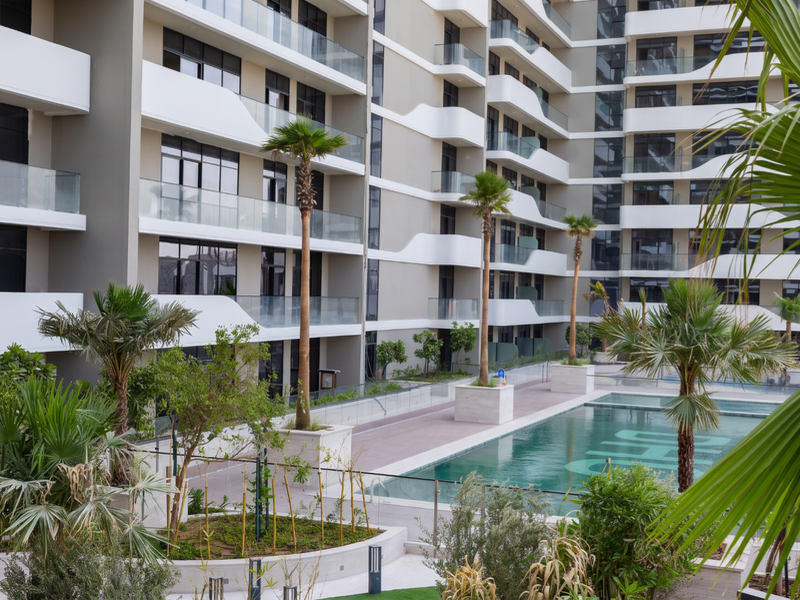
The market hosted the IPO of Dubai Residential REIT (DUBAIRESI), the GCC’s largest listed residential leasing REIT. The listing raised Dh2.145 billion ($584 million) and was oversubscribed 26 times, with total demand exceeding Dh56 billion ($15 billion). DUBAIRESI debuted with a market capitalisation of Dh14.3 billion ($3.9 billion).
Sector breakdown of the Dh995 billion market cap included financials (40%), real estate (20%), utilities (17%), industrials (12%), communications (5%), and others.
DFM also launched AI-powered features for its iVestor app, including Smart Disclosures and Financial Summary, to simplify investor access to company data. It continued to develop its Arena platform, aimed at expanding capital access across asset classes.