
L’imad’s decision to acquire the remaining equity of AD Ports Group is about more than infrastructure and geopolitics. It is about bringing a cash-generating logistics platform fully inside Abu Dhabi’s sovereign capital structure at precisely the moment when control over trade routes has become more valuable.
Yet the Iran war is simply accelerating the decisions implemented long before the war.
L’imad’s Creation
In January this year, Abu Dhabi established L’imad to streamline sovereign investments.
Simplifying oversight into one sovereign manager streamlines capital deployment, reducing overlapping structures while optimising financing across sectors.
However, the creation of L’imad also aligns with the push for diversification in the UAE’s wealthiest emirate. Abu Dhabi occupies a fundamentally different position within the UAE’s financial architecture, given the scale of its hydrocarbon revenues and sovereign investment capacity.
The consolidation of sovereign capital into one fund creates a direct mechanism through which Abu Dhabi can manage strategically important assets and determine where capital is deployed over the long term.
AD Ports’ Strategy
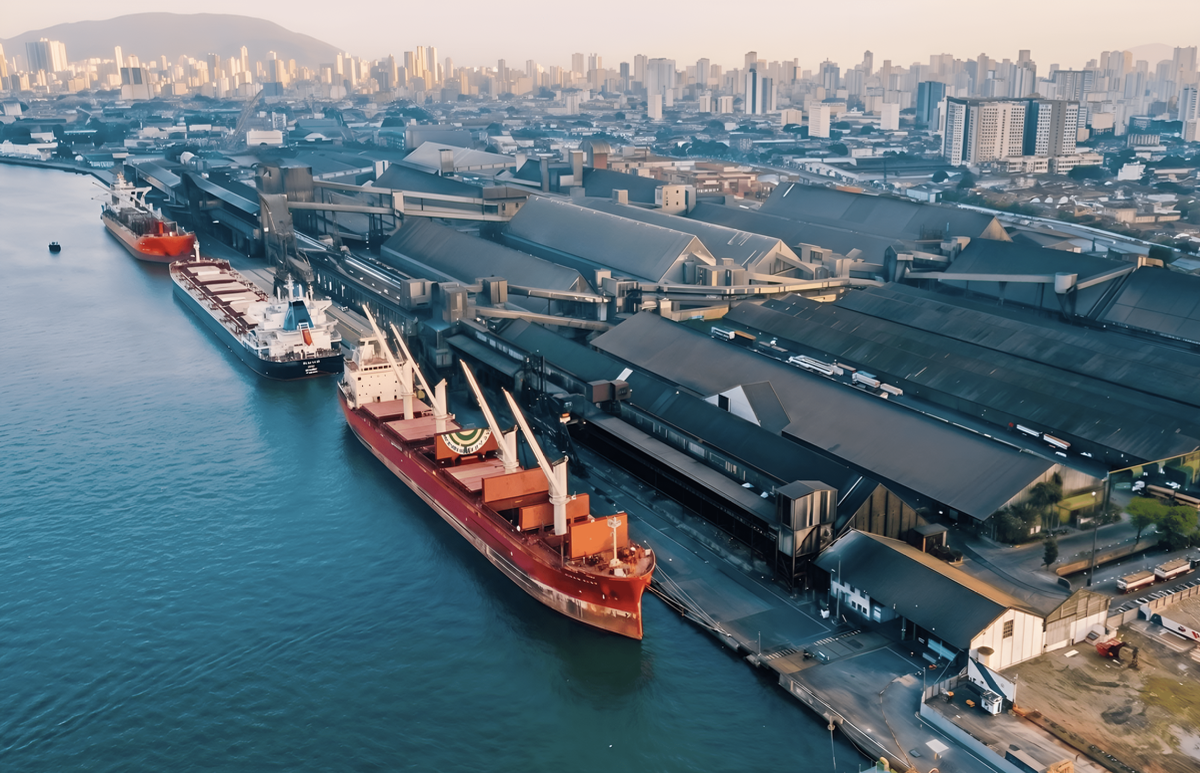
AD Ports Group sits squarely within that strategy.
The logistics operator generated AED 20.8 billion in revenue in FY25 while its H1 FY26 results showed accelerating profitability and margins. EBITDA surged 33% YoY in the first half of FY26 despite the disruption around the Strait of Hormuz.
Full Ownership and Direction
Abu Dhabi’s decision to acquire full ownership of AD Ports comes at a significant moment for regional logistics.
Last Thursday, several ADNOC carriers were reportedly targeted by projectiles while a maritime vessel was hit last week in the Bab el-Mandeb.
Following in the Footsteps of DP World
AD Ports started expanding beyond the UAE, building a portfolio of international logistics and port assets that gives Abu Dhabi exposure to trade routes outside the Gulf especially Africa, after 2022.
The proposed acquisition by L’imad represents a consolidation of an infrastructure strategy that was already underway pre-war.
Full ownership gives L’imad greater control over the company’s finances and strategic direction, while bringing a strategically important logistics operator further into Abu Dhabi’s sovereign investment structure.
Diversification of Trade Routes
The clearest evidence of this strategy can be found in Jordan.
Before the Iran war, AD Ports signed a 30-year concession agreement with the Aqaba Development Corporation to operate and develop the cruise terminal at Aqaba.
On 5 February, Etihad Rail – another L’imad subsidiary – signed a 360-kilometre railway tender connecting the Port of Aqaba with Jordan’s mining industry.
Together, these agreements set in motion Abu Dhabi’s delayed yet deliberate expansion of logistics infrastructure beyond the Strait of Hormuz.
DP World began building its international port network much earlier, securing major concessions including Djibouti and Dakar in Senegal from 2008 onwards.
AD Ports’ international expansion came later, accelerating from c2021 with investments and agreements across markets including Senegal and the Democratic Republic of Congo.
Beyond the Strait of Hormuz
The Iran war has exposed the risks of relying heavily on a single strategic chokepoint.
That does not mean Abu Dhabi can simply bypass Hormuz. It means the value of alternative trade routes has increased.
Ports in markets such as Aqaba, combined with rail and logistics infrastructure connecting them to inland industries, give Abu Dhabi greater exposure to trade routes that do not depend entirely on Gulf maritime access.
For Abu Dhabi, this is ultimately about resilience as much as expansion.
The creation of L’imad provides the sovereign investor with a mechanism to consolidate capital and exercise greater control over strategically important assets. The acquisition of AD Ports brings a major logistics operator fully within that structure at a time when infrastructure, trade security and geopolitical risk are becoming increasingly intertwined.
AED 6.25 per share may look generous today, but the value of full ownership will ultimately be determined by what Abu Dhabi can do with the infrastructure, cash flows and trade-route optionality that AD Ports provides over the next decade.
Stay Up to Date with the Latest Updates at Finance ME
Sarah Al-Shawwaf: Vision 2030 Has Unlocked the Potential of Saudi Women
EDGE’s Rodrigo Torres on Risk, Sovereignty and Defence Finance in a Multipolar World
ADNOC Distribution’s Ali Siddiqi: “Growth, Growth and Growth”