
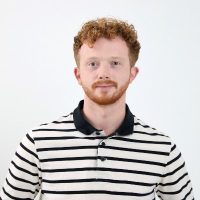
The Gulf’s investment landscape is changing as sovereign investors become more direct, capital flows are rerouted by geopolitics and demand grows for platforms that can connect regional capital with global opportunities.
For Hazem Gacem, the Founder and CEO behind the GCC investment vehicle, BlueFive Capital, those shifts provided the rationale for building a new investment platform after almost three decades in global investing.
“The world does not need another private equity firm,” Hazem said. “The world does not need another asset management.” Speaking at CapLink’s Private Capital summit, the Founder and CEO of the Gulf’s latest investment giant spoke at a closed door session in Dubai.
His comments touched on the firm’s recent 30% acquisition in Bugatti. His attendance at CapLink came as the firm held its first summit in Dubai, neighbouring DIFC, with a distinguished collection of local and international asset managers, sovereign-backed funds and PE firms.
Three Structural Trends
Instead, the CEO identified three structural trends shaping BlueFive’s opportunity: the growing direct investment ambitions of sovereign institutions, the rise of GP staking and increasing demand for Sharia-compliant investment products.
“Sovereign investors and lobby software investors doesn’t necessarily mean software funds. There are so many different pockets within sovereign investors,” the CEO said. “They are becoming significantly more direct than any time in the past.”
Hazem argued that the traditional relationship between Gulf sovereign investors and global asset managers is also changing, with regional institutions increasingly viewing themselves as sophisticated investors with their own access and networks.
“You go to any sovereign institution here, they really see themselves as smart of investors, as sophisticated as you are, and most likely they are.”
BlueFive’s Base
That approach is reflected in BlueFive Capital’s shareholder base and geographic footprint.
Hazem said the platform has attracted Gulf sovereign groups as founding shareholders and, less than two years after launch, has grown to more than $17B in assets under management, with a 65-person team and offices spanning London, Abu Dhabi, Dubai, Bahrain, Muscat, Singapore and Jeddah.
“When you come part of a family access to capital or the relationship becomes very different,” he said, adding that trust remains central to fundraising. “A lot of it also comes with trust and trust takes decades to build.”
Rerouting of Capital
On the recent geopolitical upheaval, the CEO said recent trends have been a catalyst for identifying new investment corridors.
“You can either go hide under a rock and wait until things come down. That’s always an option,” he said. “Or we can try to find what are the pockets of opportunities with those changes.”
One of those opportunities lies in the rerouting of global capital towards the Gulf. Hazem highlighted China, where BlueFive Capital has established a presence and identified pools of institutional capital that may increasingly look towards the Middle East.
“Capital today is available. It’s not available to any other asset managers in the U.S. or other parts of the world. But it is available to investors, particularly in the Middle East,” he said.
Forum’s Mandate
The Founder and CEO’s comments come as
AgriTech and Defence
He also sees structural opportunities within the Gulf itself, particularly across food security, defence and infrastructure.
“Food security, whether that’s agritech, whether that’s kind of the beauty of food security is it’s a global mandate, it’s not a local mandate,” Hazem said.
“Very sadly it’s a sad reality. Defense and I suspect defense will be one of the more important sectors which GCC will be investing in.”
Infrastructure is the third area, with recent disruptions highlighting vulnerabilities in critical systems.
China and the Next Investment Frontier
China is another central component of the platform’s strategy. Hazem pointed to the cost advantage of Chinese technology as one reason for maintaining exposure.
“The cost of an angry robot in China is 1/10 of exactly the same angry robot which is being deployed in the US today,” he said, referring to agricultural robots used to pick produce.
He also sees valuation differences as an opportunity, arguing that comparable businesses in China can trade at a significant discount to US counterparts.
“Comparable businesses in China are probably a quarter the valuation of the us,” he said. “So there is clearly that value arbitrage which you hope to play.”
A Bridge Between Two Economies
For Hazem, the objective is not to choose between the US and China, but to build an investment platform capable of accessing both.
“I don’t see us in the business of taking sides,” he said. “The US is as important to us as China is.”
That philosophy ultimately reflects a broader shift in Gulf investment: from allocating capital across established global markets towards building platforms, relationships and local access capable of following capital as the global investment map changes.
Stay Up to Date with the Latest Updates at Finance ME
EDGE’s Rodrigo Torres on Risk, Sovereignty and Defence Finance in a Multipolar World
ADNOC Distribution’s Ali Siddiqi: “Growth, Growth and Growth”