Gold‘s appeal as an investment during times of market volatility is rooted in its unique properties and long-term stability. Unlike fiat currencies, which can lose value due to inflation and economic shifts, gold consistently maintains its purchasing power over decades and even centuries.
For example, measuring value in US dollars might suggest stability, but this overlooks the dollar’s potential volatility and long-term devaluation. When compared against a basket of commodities, gold’s true stability becomes apparent. Gold is less volatile than the US dollar in real terms, preserving wealth more effectively across various economic scenarios.
In 1920, 10 one-kilogram gold bars were valued at $7,291, enough to buy an average home costing $6,300. By 2020, the same gold bars were worth $625,038, well above the $391,900 average home price. This demonstrates gold’s ability to maintain and increase its purchasing power over a century, whereas the dollar’s value has significantly decreased.

“Gold’s liquidity and universal demand further bolster its appeal,” explained Farah Mourad, Senior Market Analyst at Equiti. “Whether in the form of bullion, coins or ETFs, gold can be easily traded, offering flexibility to investors.”
Central banks worldwide have been increasing their gold reserves, recognising its strategic importance. In 2022 alone, global central banks added over 1,136 tons of gold, the highest annual purchase since 1967. Global official gold reserves increased by 290 metric tons in the first quarter of the year, the largest first-quarter increase since at least 2000, highlighting their need to diversify and protect national wealth against currency risks and economic uncertainties.
Central bank activity significantly influences the gold market through various mechanisms. They hold substantial gold reserves, and their buying or selling can impact gold prices by affecting supply and demand. Policies like quantitative easing or tightening influence interest rates, which in turn affect gold’s attractiveness; lower rates make gold more appealing due to its lack of yield.
Gold prices
Additionally, central banks’ actions can alter currency values, impacting gold prices as gold is typically priced in US dollars. Central bank announcements and policies also serve as market signals, influencing investor behaviour and perceptions of economic stability. Thus, central bank activities are pivotal in shaping gold market dynamics, influencing both short-term price movements and long-term trends.
Hedge against inflation and instability
Unlike fiat currencies that can be printed at will, gold is a finite resource extracted from the Earth with considerable effort and cost. This scarcity and its durability and universal acceptance have preserved its value for thousands of years. Its use in jewellery, technology and as a central bank reserve highlights its enduring appeal.
“As a hedge against inflation, gold’s reliability has been particularly evident in recent years,” explained Mourad. “During the inflation spikes of 2021 and 2022, caused by pandemic-related stimulus measures, supply chain disruptions and geopolitical tensions, gold prices remained robust. While fiat currencies lost purchasing power, gold preserved wealth, proving its role as a safeguard against inflation.”
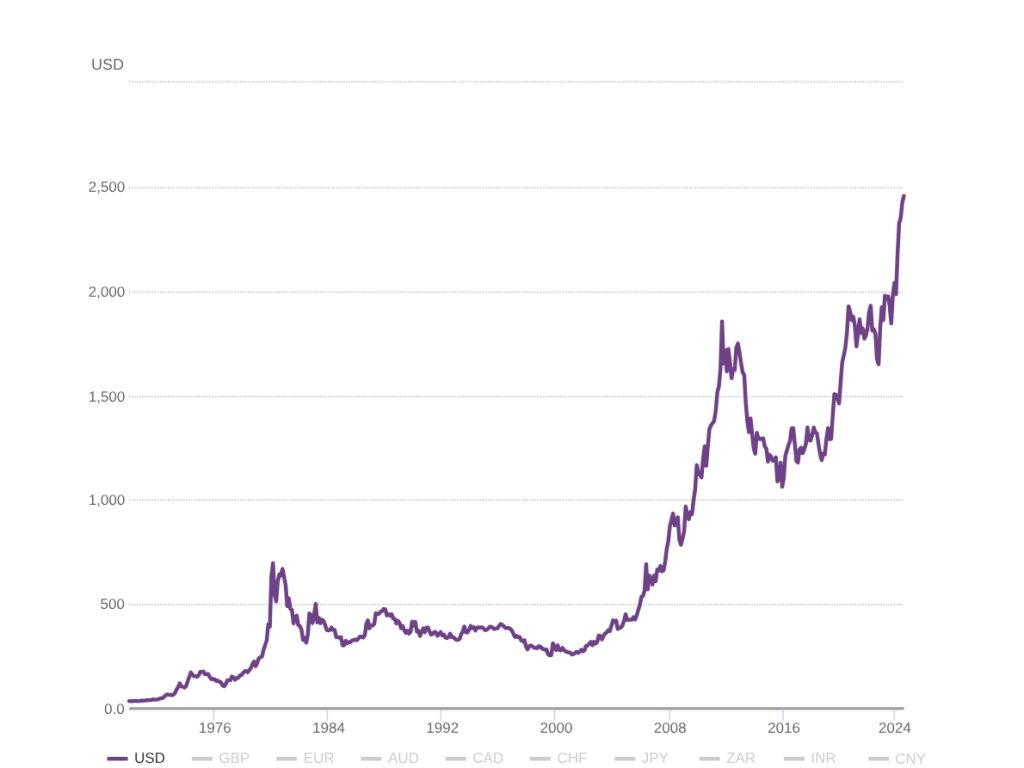
Economic instability further highlights gold’s status as a safe haven. For instance, during the banking turmoil in early 2023, when concerns over bank solvency arose, gold prices surged past $2,000 per ounce. Investors flocked to gold, seeking safety from the volatility in stocks and bonds. A complex interplay of economic, political and fundamental market factors influences the fluctuations in gold prices.
An environment with high interest rates is typically bearish for non-interest-bearing bullion, Vijay Valecha, Chief Investment Officer at Century Financial noted. “The opportunity cost of holding gold increases when interest rates are high because investors can earn higher returns on interest-yielding assets like bonds,” he said.

“Currently, gold has topped $2,400 and is flirting with a new record amidst expectations of a Fed pivot to rate cuts in September 2024. Thus, the prospect of declining interest rates bodes well for gold.”
The ongoing geopolitical crises and over 60 elections around the globe in the past 12 months have also contributed to market uncertainty, driving up gold prices as a stable asset amidst geopolitical instability.

“At times of geopolitical events, overwhelming uncertainty arises, and investors flock to gold as it is a store of value,” stated Nadia ElBilassy, Senior Market Analyst at Equiti. “As gold has maintained its value over time, its stability makes it incredibly attractive to investors as they seek refuge from economic fallouts.”
ElBilassy noted that the scarcity of the yellow metal also contributes to its perceived value and makes it less susceptible to inflation compared to fiat currencies. However, it exhibits less volatility than other commodities, making it a more stable investment option. Gold’s liquidity and universal demand add to its resilience. It can be easily traded in various forms—bullion, coins or ETFs—providing investors with flexibility. Central banks around the world have been increasing their gold reserves, especially in China. This strategic move reflects a desire to diversify and protect national wealth from currency risks and economic uncertainties.
Everything to know before investing in gold
When considering investments, particularly in assets like gold, which have shown significant price increases, achieving quick profits can be enticing. However, newcomers must understand that focusing solely on short-term gains carries risks and may not align with overall financial objectives.
“Gold is traditionally seen as a safe-haven asset, valued for its role in diversifying investment portfolios and its potential to maintain or appreciate in value during economic uncertainty or periods of inflation,” stressed Mourad. “While there is potential for making quick gains by timing the market—buying low and selling high—this approach requires a thorough understanding of market dynamics and involves inherent risks. To effectively incorporate gold into your investment strategy, it’s important to assess its contribution within your overall portfolio.”
Investors often seek to diversify their holdings across different asset classes, including stocks, bonds and alternative investments like gold, to manage risk and enhance portfolio stability. There are various avenues for investing in gold beyond physical holdings, such as gold-backed exchange-traded funds (ETFs), futures, trading, mining company stocks and futures contracts. Each option presents different risk profiles and potential returns, depending on investment experience and long-term financial goals. By selecting the appropriate approach to gold investment, one can strengthen a portfolio’s resilience and work towards achieving financial objectives over time.
Here are some of the key considerations that investors must evaluate before investing in gold:
- Investment objectives: Define your goals, such as diversification or inflation hedging.
- Types of gold investments: Understand the different ways to invest in gold and choose between them, such as physical gold, gold ETFs or gold mining stocks.
- Costs and fees: Be aware of trading fees, storage costs and premiums.
- Liquidity: Consider how easily you can sell your gold investment. For example, physical gold can be less liquid compared to gold ETFs.
- Risk tolerance: Align gold investment with your risk appetite and consider your investment horizon.
- Diversification: Ensure gold is part of a well-diversified portfolio.
Different platforms to trade gold
Gold can be traded through various platforms and methods, catering to different types of investors. Physical gold can be purchased from bullion dealers, banks and online platforms where investors can buy coins, bars and jewellery. Investors looking at securities, gold ETFs and stocks can trade via stock exchanges using brokerage accounts, offering ease of access and the ability to adjust positions quickly in response to market changes.
“Futures and options on gold are available through commodities exchanges like the COMEX, providing opportunities for speculation and hedging with varying degrees of leverage,” noted Raed Alkhedr, Chief Market Strategist at Equiti. “Additionally, digital gold platforms have emerged, allowing investors to buy and sell gold electronically with the security of physical backing. These platforms provide a bridge between physical gold ownership and the liquidity of electronic trading.”

Cost and fees of different gold trading methods
Assessing the costs and fees of various gold trading methods highlights the distinct financial implications of each. Acquiring physical gold, like bullion or coins, incurs a premium over the spot price, typically 2% to 5%. This premium covers minting and distribution. Additional expenses include storage fees ranging from 0.5% to 1% annually and insurance costs for protection against theft or loss. These combined expenses make physical gold relatively costly over time.
According to Ahmad Azzam, Senior Market Analyst at Equiti, gold ETFs offer a more cost-effective investment approach. ETFs like SPDR Gold Shares (GLD) and iShares Gold Trust (IAU) have expense ratios of about 0.40% and 0.25%, respectively.

These fees cover management and administrative expenses. The high liquidity of ETFs results in low transaction costs, similar to regular stock trades.
Contracts for Difference (CFDs) allow traders to speculate on gold price movements without owning the physical asset. CFDs generally feature low spreads and no commissions, making them cost-effective. Leverage in CFD trading can amplify potential returns but also increase risk exposure. CFDs are known for their high liquidity, facilitating easy trade entry and exit.
Investing in gold mining stocks presents another indirect method of exposure to gold prices. Brokerage fees for buying and selling stocks range from $5 to $10 per trade. Mutual funds or ETFs focusing on gold mining stocks have management fees between 0.50% and 1.50% annually. “The performance of these stocks is influenced by both gold prices and the operational success of mining companies, adding another layer of risk and potential reward,” stated Azzam.
Mitigating risks
When asked about tips for navigating the risks associated with gold investment during turbulent market times, analysts recommend three crucial strategies: diversification, hedging and careful market analysis.
Diversification is one of the most effective strategies for mitigating risks in any investment. It involves spreading investment across various asset classes, including gold, to reduce exposure to any single asset’s volatility. Investors can also consider diversifying within the gold market by investing in a mix of physical gold, gold ETFs and gold mining stocks, balancing out their unique risks.

Hedging strategies, such as using gold futures contracts, can protect against price fluctuations. “This approach allows investors to set predetermined prices for buying or selling gold at future dates, thereby locking in prices and reducing uncertainty,” stated Alkhedr.
“Continuous market analysis is crucial because gold prices are impacted by economic and geopolitical developments, such as Fed policies, changes in interest rates and inflation.”
Gold prices are impacted by economic and geopolitical developments, such as Fed policies, changes in interest rates and inflation. Therefore, it is crucial to monitor economic data and central bank meetings to forecast movements in the price of gold. Gold reached its highest level of $2,450 in late May, driven by market expectations of a Fed interest rate cut in 2024.
How to diversify?
Navigating the diverse avenues of the gold market demands careful consideration and strategic planning. Trading platforms provide opportunities to capitalise on short-term price fluctuations, requiring a cautious approach to manage market volatility effectively.
On one hand, in the short term, gold prices are significantly impacted by market volatility, geopolitical tensions and economic uncertainty. Early 2024 saw gold prices surge to new all-time highs, reaching $2,450 per ounce. “This spike was driven by escalating geopolitical tensions, alongside market expectations of rate cuts by major central banks,” said Azzam. “Investors flocked to gold as a safe-haven asset amid fears of economic instability and potential disruptions to global trade.
“The rapid price surge was fueled by heightened demand for gold as a protective measure against the unpredictable market conditions.”
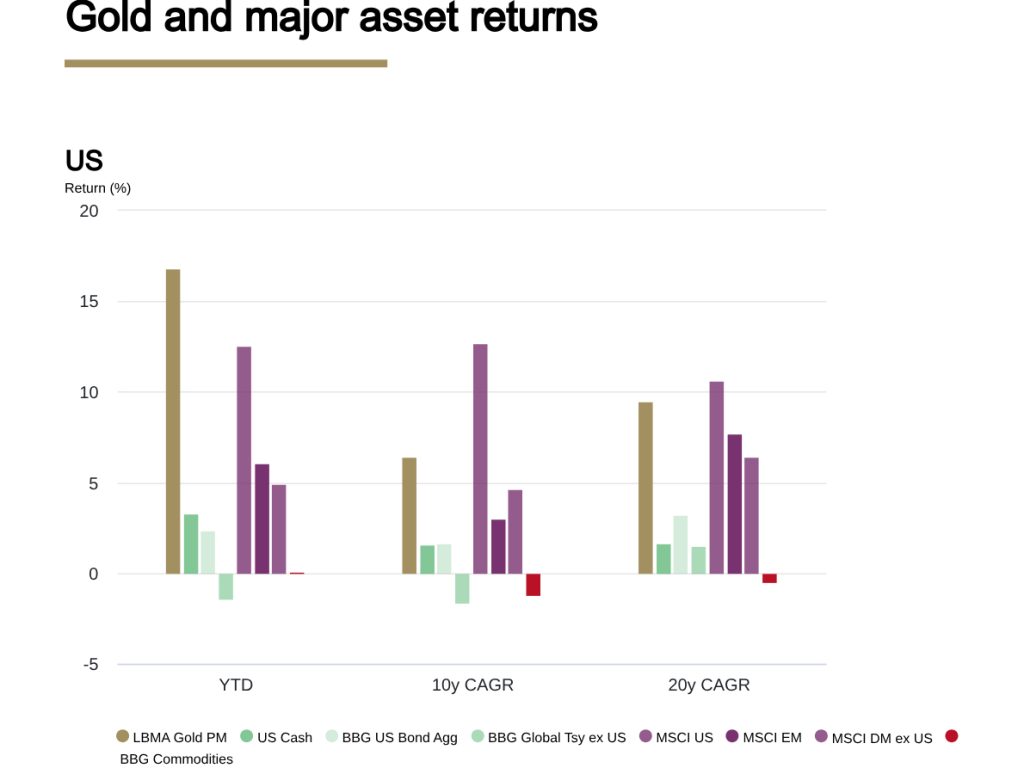
For long-term investors, on the other hand, gold has demonstrated its capacity to preserve value and serve as an inflation hedge. Over the past decade, gold has appreciated significantly, underscoring its role as a safe-haven asset. From 2022 to 2024, gold prices have continued their upward trend, bolstered by persistent inflationary pressures and hawkish monetary policies from central banks. Countries like China have also increased their gold reserves, further supporting long-term price stability. This sustained demand underscores gold’s enduring appeal as a store of value and a hedge against economic uncertainties.
Mastery of market trends, disciplined risk management and real-time data monitoring are crucial for optimising trading strategies.
Investing in gold stocks necessitates thorough research into company management, operational efficiency and financial health. This helps mitigate risks associated with production costs and geopolitical factors impacting mining operations. Diversifying across multiple companies can further spread risk and enhance potential returns.
Gold ETFs offer liquidity, transparency and low expense ratios, making them ideal for short-term trading and long-term investment strategies. Understanding ETF mechanics and their correlation with gold prices is essential for maximising returns while managing risks.
Choosing physical gold emphasises security and ownership verification. Investors benefit from seamless transactions and secure storage conditions, preserving value amidst economic uncertainties.
“Aligning investment choices with risk tolerance and financial objectives is key to building a resilient portfolio that adapts to changing market conditions,” stressed Murad. “Regular portfolio reviews and consultations with financial advisors can further optimise your strategy in navigating the dynamic and rewarding world of gold investments.”