

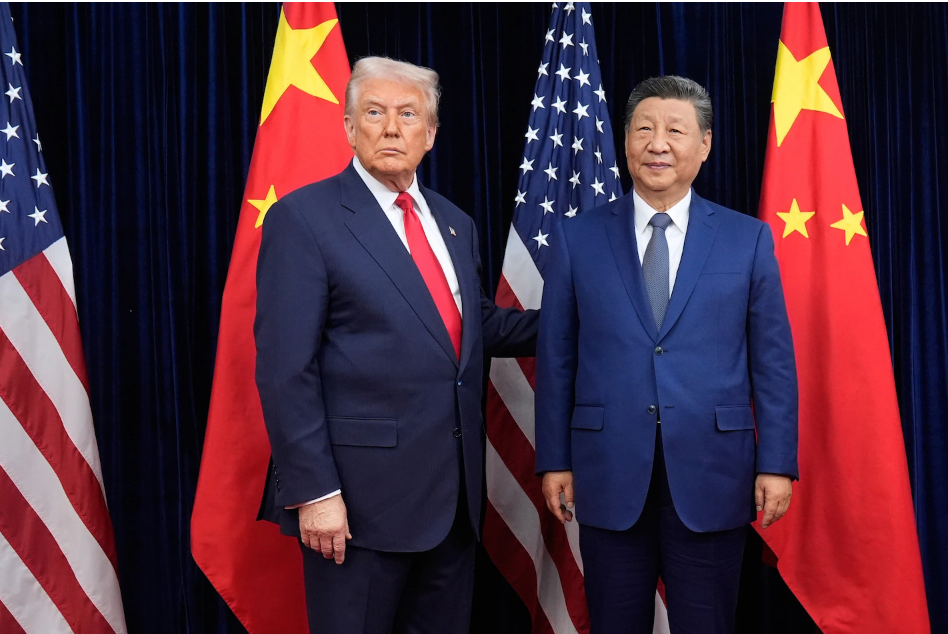
The United States and China remain at loggerheads as President Donald Trump prepares for his upcoming visit to Beijing later next month.
With both nations holding firm on their trade positions, the implications of these policies are far-reaching for global markets.
U.S. Maintains High Tariffs
The U.S. has made it clear that it intends to maintain high tariffs on Chinese goods, with U.S. Trade Representative Jamieson Greer stating that the tariffs will remain in the range of 35% to 50%.
This announcement follows a warning from China that it would take “all necessary measures” in response to any new tariffs imposed by the U.S.
Supreme Court Ruling Adds Complexity
The stakes were further raised by a recent U.S. Supreme Court ruling that invalidated broad emergency tariffs but did not affect the existing levies on China.
Jamieson Greer emphasised during an appearance on Fox Business that the administration plans to uphold the current tariff levels, aiming to avoid escalating tensions beyond the existing trade framework.
Upcoming Talks and Potential Escalation
As both nations prepare to discuss an extension of their tariff truce, the latest ruling is a blowback for the White House on its tariff policy.
Last year, Trump wielded tariffs under the IEEPA justification to temporarily drive China’s already elevated tariff rate to an unprecedented 145%: an attempt to pressure Beijing into trade concessions.
Yet the latest ruling last week undercuts the U.S. administration’s ability to use tariffs as a negotiating tactic as the bilateral summit approaches.
It remains unclear whether any challenge to the U.S. Supreme Court will be effective. Trump responded to the ruling, committing a 10% global tariff on all imports to the U.S. under a never-used law: Section 122.
Significance of Trump’s Visit
With Trump’s visit heralding the first time since 2017 that a U.S. president has travelled to China, the outcome of both the court’s ruling and the bilateral discussions will likely set the tone for future U.S.-China relations.
The uncertainties introduced by judicial rulings and economic pressures make this meeting even more pivotal.
Tariff Landscape and Economic Pressures
Behind these negotiations, the impact on the overall tariff landscape is substantial.
According to Morgan Stanley, the average tariff on Chinese imports is estimated to stand at 24%, though Greer quoted a higher figure of 40%, raising questions about the metrics used in these assessments.
China’s Response and Compliance Claims
China argues that Beijing has upheld its commitments under the “Phase One” trade agreement, despite the pandemic’s challenges, and has emphasised its compliance with promises regarding intellectual property and market access.
However, Beijing claims that U.S. actions, such as tightening export controls and increasing restrictions, have undermined the spirit of the agreement.
Stay Up to Date with the Latest Updates at Finance ME!
Etihad Airways Reports 47% Net Profit YoY Uptick FY25
Citi: Largest Asset Managers Buying Emerging Market Bonds in FY26