The Federal Reserve maintained its benchmark interest rate at 4.3% on Wednesday, pausing after three consecutive rate cuts last year. The decision reflects the Fed’s strategy to assess inflation trends and the impact of potential economic policies under President Donald Trump.
The Fed described the labour market as “solid” and noted that the unemployment rate “has stabilised at a low level.” It also emphasised that inflation “remains somewhat elevated.” Both factors indicate the Fed may be cautious about additional rate cuts in the short term.
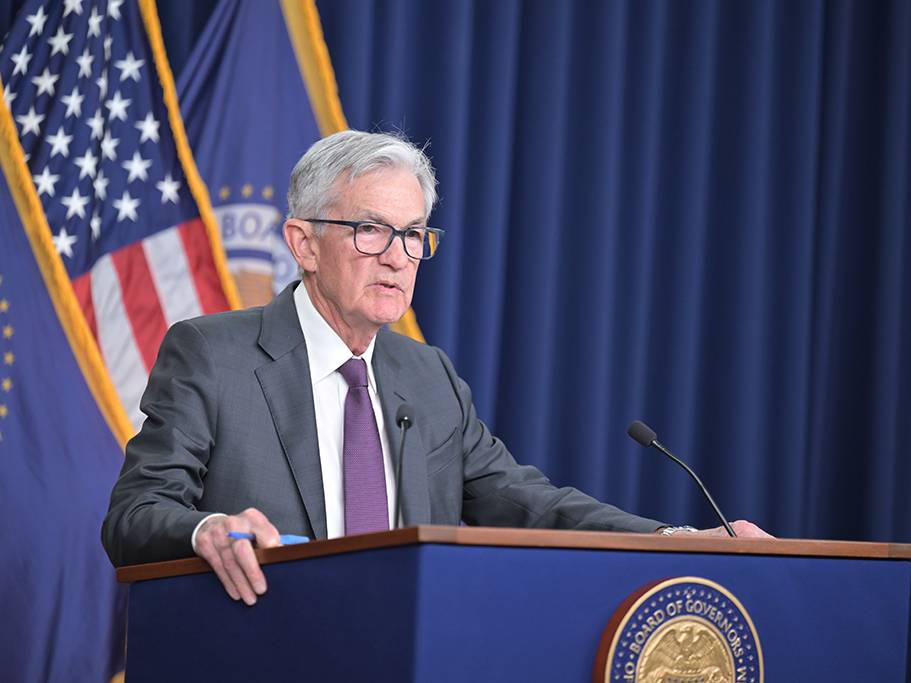
Fed Chair Jerome Powell, in a press conference, declined to comment on recent remarks by Trump, who suggested he would push for lower oil prices and demand lower rates. Powell said he had “no contact” with Trump on the matter.
“With the economy remaining strong, we do not need to be in a hurry to adjust our policy stance,” Powell said. The U.S. unemployment rate is 4.1%, and annualised economic growth topped 3% last fall.
Trump’s economic policies
The Fed is closely monitoring the potential impact of Trump’s proposed policies, including tariffs, immigration reforms, tax cuts, and deregulation. Powell said Fed officials are waiting to see which policies are enacted before determining their economic implications.
“We don’t know what will happen,” Powell said. “We need to let those policies be articulated before we can even begin to make a plausible assessment of what their implications for the economy will be.”.
The Fed reduced its rate from 5.3% to 4.3% last year, driven by concerns over a slowing labour market. Hiring had weakened during the summer, prompting a half-point rate cut in September. However, recent data shows a recovery in hiring, with the unemployment rate declining slightly to 4.1%.
Inflation and rate outlook
Inflation, measured by the Fed’s preferred gauge, was 2.4% in November, near its 2% target. Core inflation, excluding food and energy, rose 2.8% year-over-year. Powell indicated that the Fed would need to see “real progress on inflation” or signs of labour market weakness before considering additional rate cuts.
Goldman Sachs economists project the Fed will cut rates in June and December. Meanwhile, global central banks are pursuing mixed rate strategies. The European Central Bank and the Bank of Canada are reducing borrowing costs, while the Bank of Japan recently raised its rate after sustained deflation.
Despite the Fed’s rate cuts last year, borrowing costs remain elevated. AP reported. The 10-year Treasury yield recently climbed above 4.80%, the highest level since 2023. The average 30-year mortgage rate dropped slightly to just below 7% last week but remains high.
Powell acknowledged the impact on homebuyers and said the affordability challenges would likely persist.
UAE Central Bank maintains interest rate steady
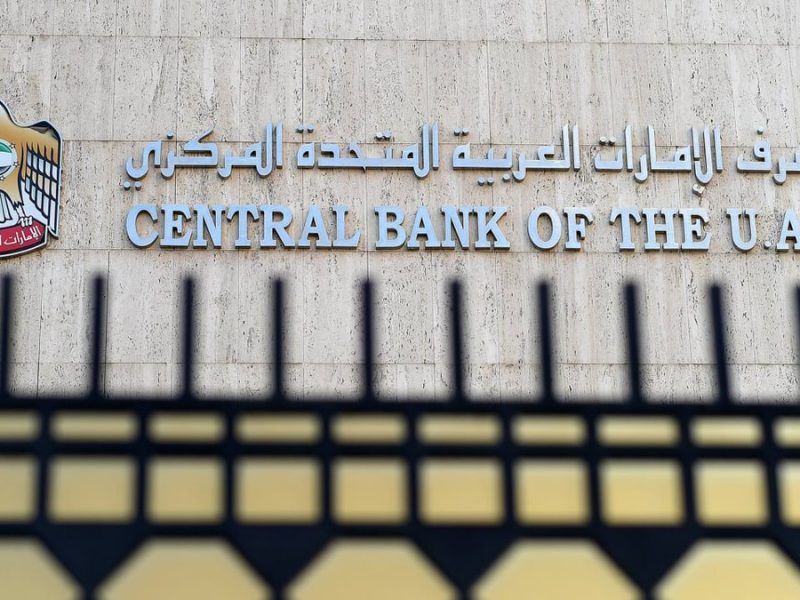
Shortly after the Fed’s announcement, the Central Bank of the UAE (CBUAE) said it has decided to maintain the Base Rate applicable to the Overnight Deposit Facility (ODF) at 4.40%.
“The CBUAE has also decided to maintain the interest rate applicable to borrowing short-term liquidity from the CBUAE at 50 basis points above the Base Rate for all standing credit facilities,” it said in a statement.
“The Base Rate, which is anchored to the US Federal Reserve’s IORB, signals the general stance of monetary policy and provides an effective floor for overnight money market interest rates in the UAE.”