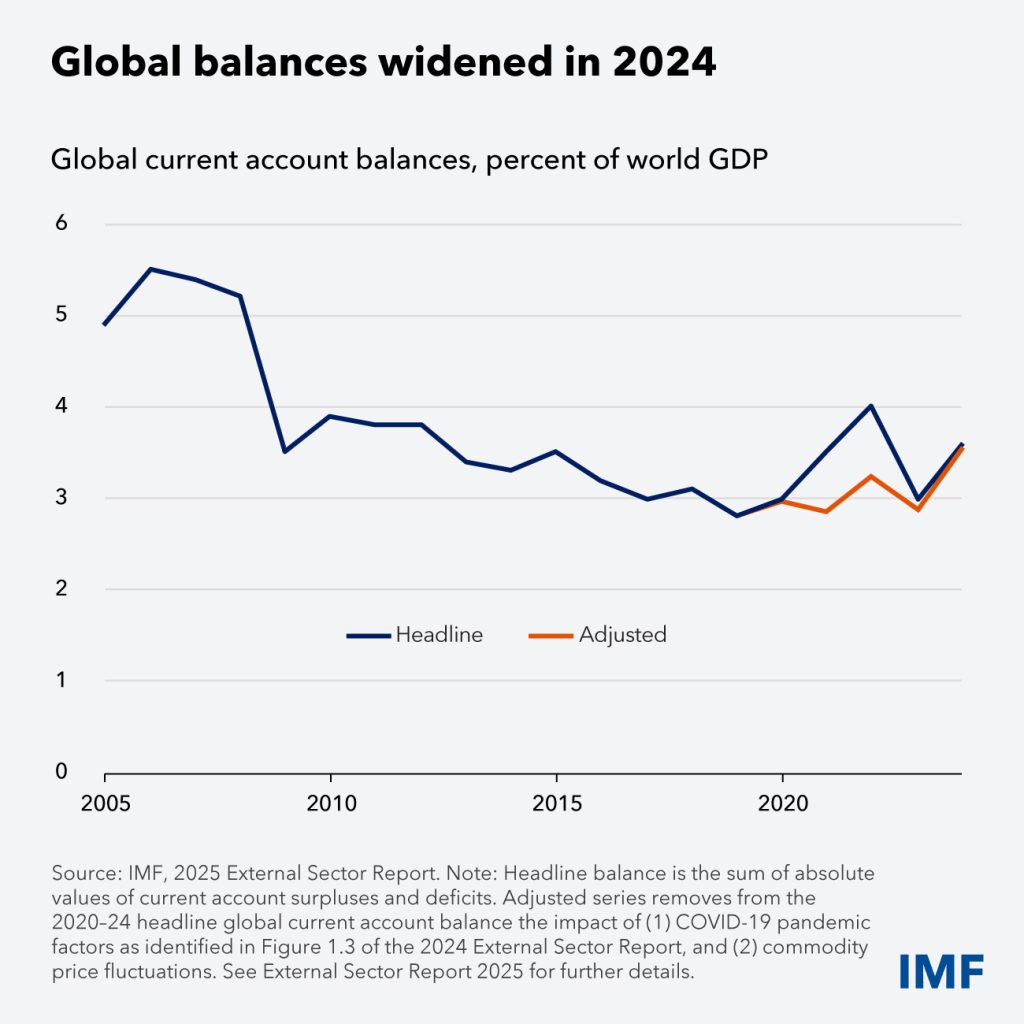
The International Monetary Fund has warned that global current account imbalances widened by 0.6 percentage points of world GDP in 2024, reversing a narrowing trend seen since the global financial crisis. The increase, driven largely by the US and China, marks the largest shift in a decade and suggests a potential structural change in the global economic landscape.
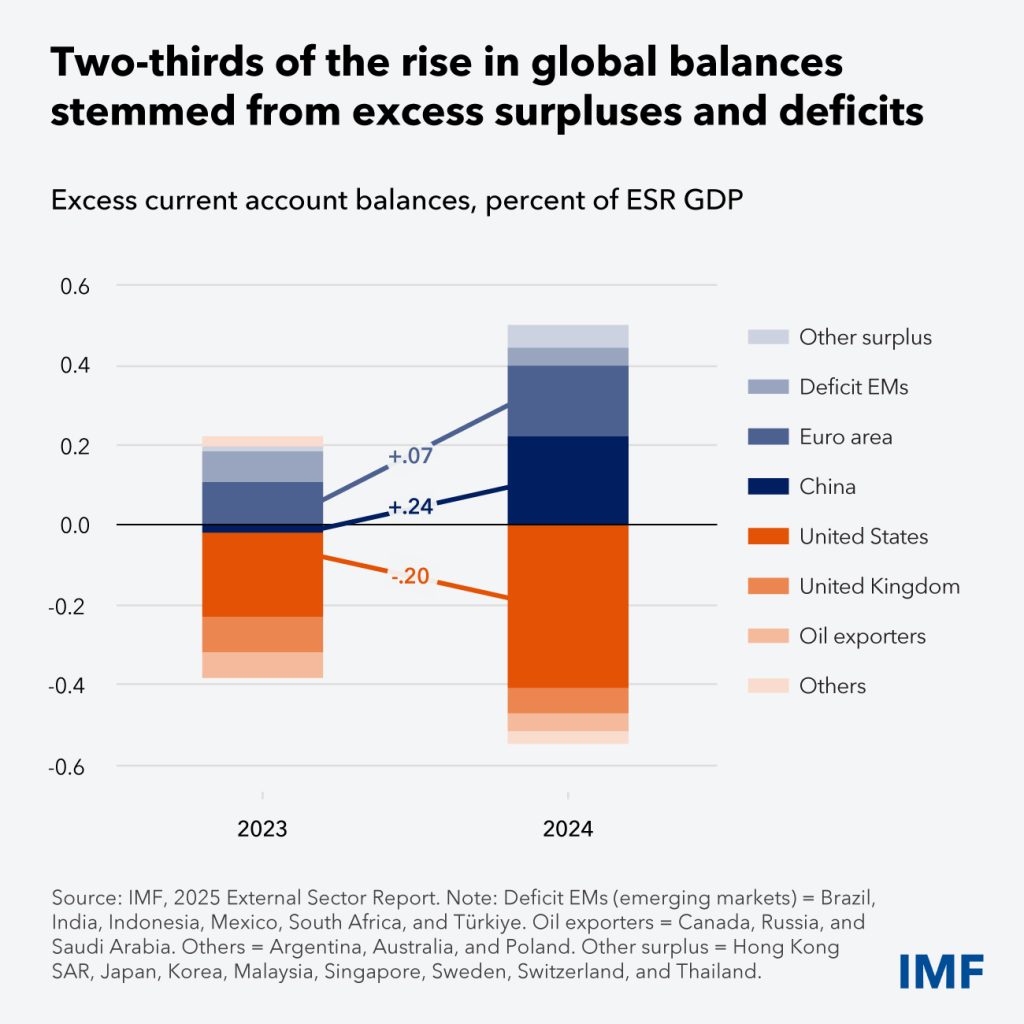
The figures, published in the IMF’s 2025 External Sector Report, show that roughly two-thirds of the expansion in global imbalances is excessive, with underlying causes rooted in domestic policy settings. China accounted for the largest positive shift, adding 0.24 percentage points to the global surplus side, while the US saw its deficit widen by 0.20 points. The euro area added a more modest 0.07 points to the surplus side.
The IMF attributes China’s growing surplus to subdued domestic demand and continued reliance on exports, while the US deficit reflects large fiscal shortfalls and elevated consumption. The euro area’s contribution stems from subdued investment and higher household savings. According to the Fund, these imbalances reflect domestic distortions rather than temporary shocks, indicating the need for structural policy adjustments.
In the Fund’s view, China needs to increase household consumption and reduce its reliance on trade surpluses. The US is urged to reduce fiscal deficits through consolidation. The euro area is advised to increase public investment, particularly in infrastructure, to narrow its productivity gap with the US. While there has been some progress in policy realignment, including modest increases in public investment in China and Europe, the IMF says risks remain tilted to the downside.
The recent depreciation of the renminbi and the US dollar has the potential to further widen China’s trade surplus. Meanwhile, higher US tariffs are expected to have minimal impact on correcting the current account gap. According to the IMF, such tariffs primarily act as a negative supply shock, reducing both investment and saving, while leaving the current account balance largely unchanged.
International monetary system
Beyond the numbers, the report also raises broader concerns about the structure and stability of the international monetary system. The US dollar remains the dominant reserve and transaction currency globally, supported by network effects and deep financial markets. This allows the US to maintain low borrowing costs and run persistent deficits, a dynamic the Fund describes as the dollar’s “exorbitant privilege.”
At the same time, this position exposes the US to global financial risks, effectively making it the de facto insurer of the rest of the world. The dollar’s dominance remains stable despite challenges including rising US debt levels, weakening fiscal discipline, and recent political tensions. However, the IMF notes a growing risk that some investors may begin reassessing their dollar exposure, particularly in light of the currency’s 8% depreciation in the first half of 2025, its largest drop since 1973.
The IMF also warns that rising geopolitical tensions and shifting investment patterns could lead to a more fragmented, multipolar global monetary system. Trade and capital flows are increasingly influenced by political alignments, which can potentially reduce integration between major economies and increase volatility.
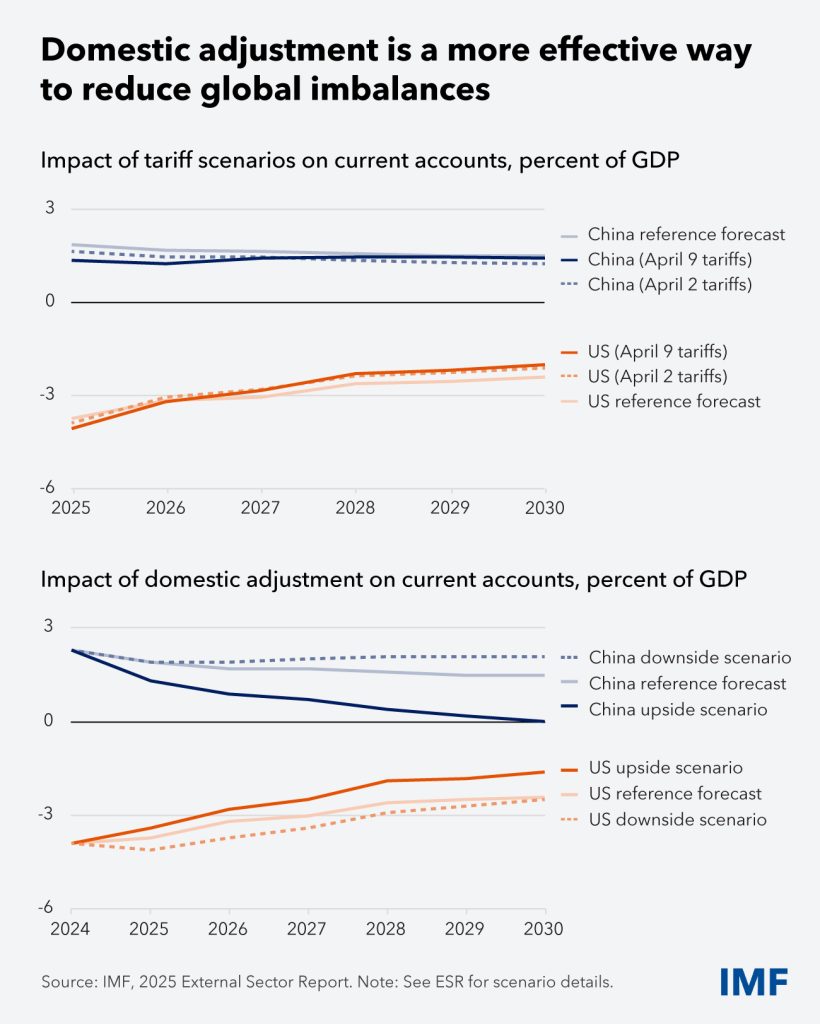
While a stable, integrated international monetary system remains intact, the Fund highlights that rapid increases in global imbalances could trigger cross-border spillovers, capital flow disruptions, and policy overreactions. It calls for countries to strengthen domestic macroeconomic frameworks and avoid using trade barriers as a substitute for structural reform. The Fund cautions that protectionist responses would do little to address underlying imbalances but could inflict lasting harm on the global economy.
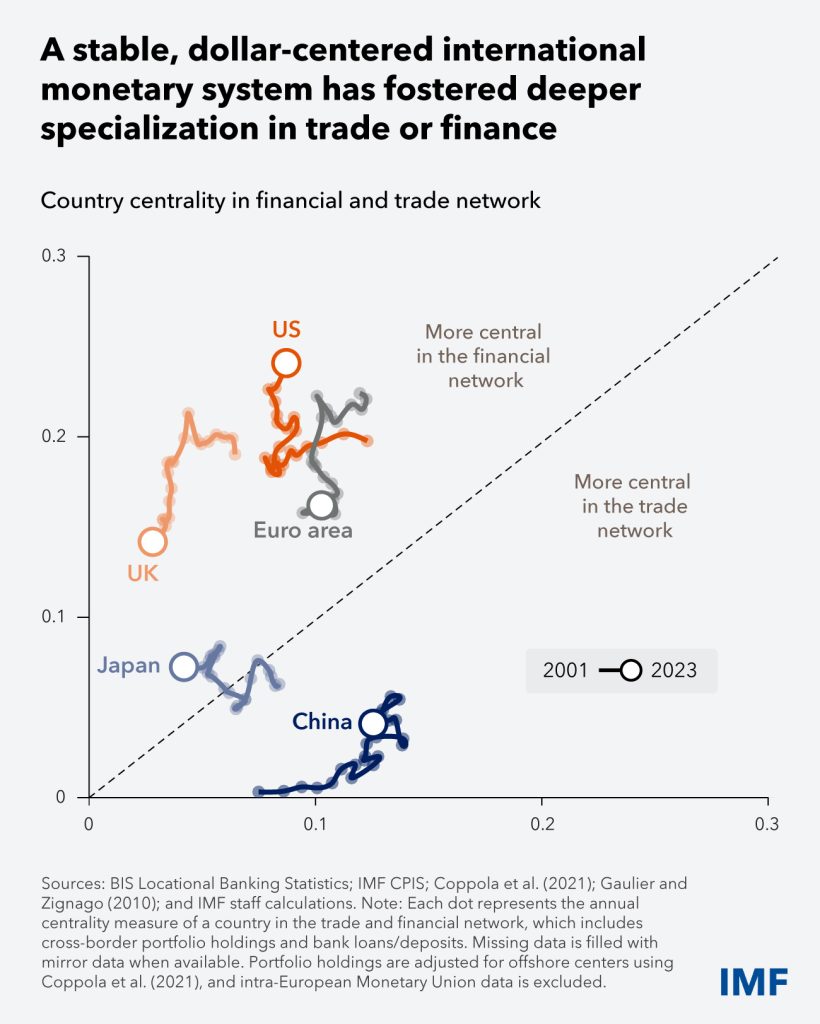
The next few years, the IMF notes, will be critical in determining whether policy shifts can reverse the current divergence or whether the world economy moves into a more unstable and fragmented regime.