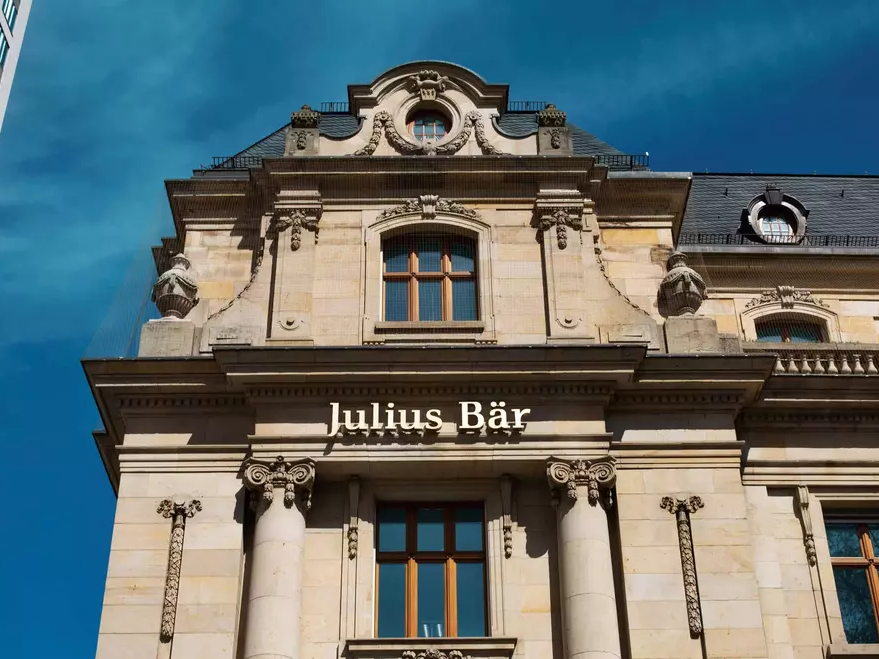
Julius Baer will “take the time that it takes” to appoint a new CEO, its interim chief said on Monday.
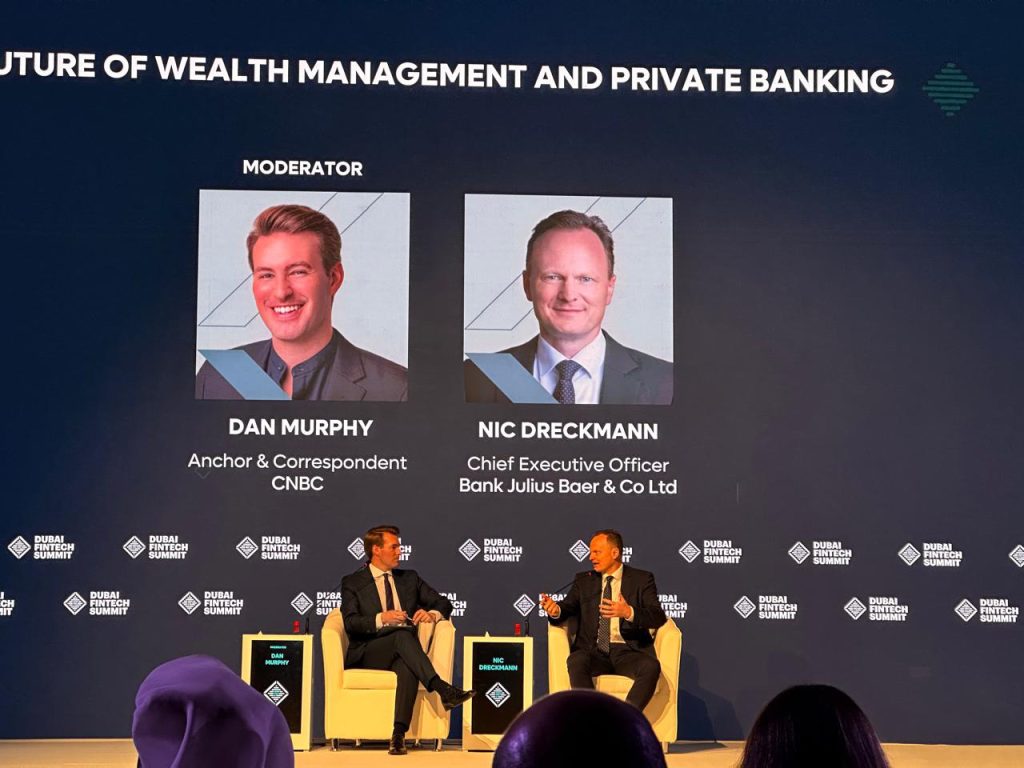
When queried about the bank’s process for selecting a new CEO, Nic Dreckmann said, “You’re talking to the wrong person,” stressing that Julius Baer “will take the time that it takes” to select a successor.
The Swiss private banking company reported a 52% drop in 2023 profits. The decline was attributed to the company’s exposure to the crisis-hit Signa property group, leading to losses of 586 million Swiss francs ($679 million) on loans to Signa (Austrian property magnate Rene Benko’s Signa Group, Julius Baer’s largest client in its private debt business, collapsed into insolvency late last year).
Following the debacle, Julius Baer announced its exit from the private debt business and confirmed the departure of CEO Philipp Rickenbacher. He was temporarily replaced by Nic Dreckmann, deputy CEO and chief operations officer (COO).
The bank reported net profit attributable to shareholders of 454 million Swiss francs for 2023, down 52%, with earnings per share of 2.21 francs. Underlying operating income was slightly lower, excluding the Signa impact, with the benefit from higher rates offset by a stronger Swiss franc and reduced client trading activity.
Dreckmann reflected on the bank’s message to the market amidst the cleanup measures and as they await the new CEO’s appointment, stating, “I think in the end, what’s my key learning is trust and reputation are key, and they’ve been built over 135 years. We also need to cherish that moving forward.
“Again, being close to clients and advising them in their best interest builds this kind of trust. And the more we invest and ensure that these kinds of things are at centre stage for us, the better.”
He acknowledged that the recent events have been “unfortunate” and that the bank dealt very decisively with all of them. “Keep in mind, we’re still a profitable company. We almost printed half a billion Swiss frank in net profit, besides this write-down that we had to do,” stressed Dreckmann. “But I think in that sense, our strategy in terms of focusing on servicing private individuals and high net worth and ultra-high net worth clients around the globe is absolutely sound, I’m very confident that we draw a strong line on all these events. And now it’s a matter of moving forward.”
Macroeconomic outlook
When discussing Julius Baer’s market opportunity, Dreckmann noted that there is still significant growth in the bank’s client segment among net high net worth and ultra-high net worth individuals.
“This year is very interesting with many ups and downs,” he said. “Interest rates remain higher, as we know, and that usually creates opportunities for institutes like Julius Baer because that’s where these kinds of clients seek advice. “That’s where our value proposition actually comes into play.”
He predicted that the bank would end this year higher than where it had started. “There will be several bumps, and there are plenty of elections. I believe there will be many opportunities to profit or to take advantage of some good opportunities. But you need to stay diligent, and you really need to be close to the market and clients.”
The shift in outlook for interest rates, the robust performance of the US economy and a sharp uptick in equity markets helped wealth creation globally. At the end of 2023, there were 4.2% more ultra-high net worth individuals than a year earlier, with nearly 70 very wealthy investors minted every day, taking the global total to just over 626,600. Growth was led by North America (up 7.2%) and the Middle East (6.2%), with only Latin America seeing its number of wealthy individuals fall. While Europe lagged in new wealth generation, the continent remains home to the wealthiest 1%.
Topics like data, digital or distributed ledger technology, cybersecurity, cloud, and artificial intelligence are absolutely key for us.
Nic Dreckmann
Optimistic about the region
Speaking about the region, Dreckmann commented, “The mood is very good overall.” He added, “The situation geopolitically is obviously tricky, but in the end, a tremendous amount of growth, innovation, and business building is happening across the region. And that’s obviously something which is always good for our business.”
The Zurich-based private bank has been granted a digital asset custody license in the DIFC to tap into the UAE’s fast-growing crypto services market.
This move marks Julius Baer’s first significant venture into digital assets beyond Switzerland’s borders. The bank recognises the long-term trend and strategic significance of digital assets in wealth management but emphasises the importance of responsible participation in the space, particularly given recent scandals. Despite the current depressed market sentiment, Julius Baer sees a clear need for a trusted intermediary in both the short and long term.
“We can start looking into these kinds of spaces because these are areas where we see demand, where clients are asking for advice,” he noted.
He stressed that cryptocurrencies are just the first step to digitising other assets, which will be much more of an interesting game-changer for Julius Baer. “In the end, that’s [crypto] where we want to advise once these markets start to emerge, once we can start to sell a fraction, and there is liquidity on an ongoing basis.”
Integrating AI
Dreckmann explained how Julius Baer is leveraging AI, stating that the bank is feeding publicly available research material to an engine and then essentially has claimed requests and has investment advisors that use that to support the advice given to its clients.
“We still have a human being in between to make sure to understand what comes out basically. Is it sensible? Does it make sense? Is it potentially hallucinating or not? Also to understand where has the algorithm picked up? What is the source? And these are all things that we’re looking at as we speak. But again, I think we’re in a very early stage,” he noted. “As I said, we’re talking more about efficiency gains than innovation, new products and new business models.
He reaffirmed that human-to-human interaction will remain essential when it comes to servicing and wealthy individuals. “But what is important, I think, is that obviously that advice that we’re giving to our clients is based on the most efficient tools, all the information that is available, all the rules and regulations, be it tax rules, be that knowledge and experience rules either all suitability things you know that they are obviously properly adhered to.”
Dreckmann said that a human being can almost not do that today as markets move faster and faster. But the way it’s been delivered can be either hybrid, or we call it hybrid either through technology or through human interaction.
Julius Baer is looking to move forward after a tough year. The bank’s future strategy hinges on who they appoint as CEO. Their direction will depend on the leader’s priorities, risk tolerance, and experience.
The bank is focusing on its core business of wealth management for high net worth and ultra-high net worth individuals. It is also looking to capitalise on opportunities in the digital asset market and is leveraging AI to improve efficiency.