
In 1904 and 1908, winning gold at the Olympic Games would mean receiving a medal made from solid gold. Now, the medals winners receive are mostly made of silver. Nonetheless, the rising price of gold, as well as the additional twist included in this year’s value, have significantly driven up the cost of Olympic medals.
The rising cost of making medals
Today’s Olympic medals, although golden, are not only made from gold. In fact, the International Olympic Committee only requires that gold and silver medals be made with a minimum of 92.5% pure silver, which is then gold-plated for the first-prize winners. Yet, it is the high cost of the little gold introduced in the medals that significantly drove up its prize in 2024.
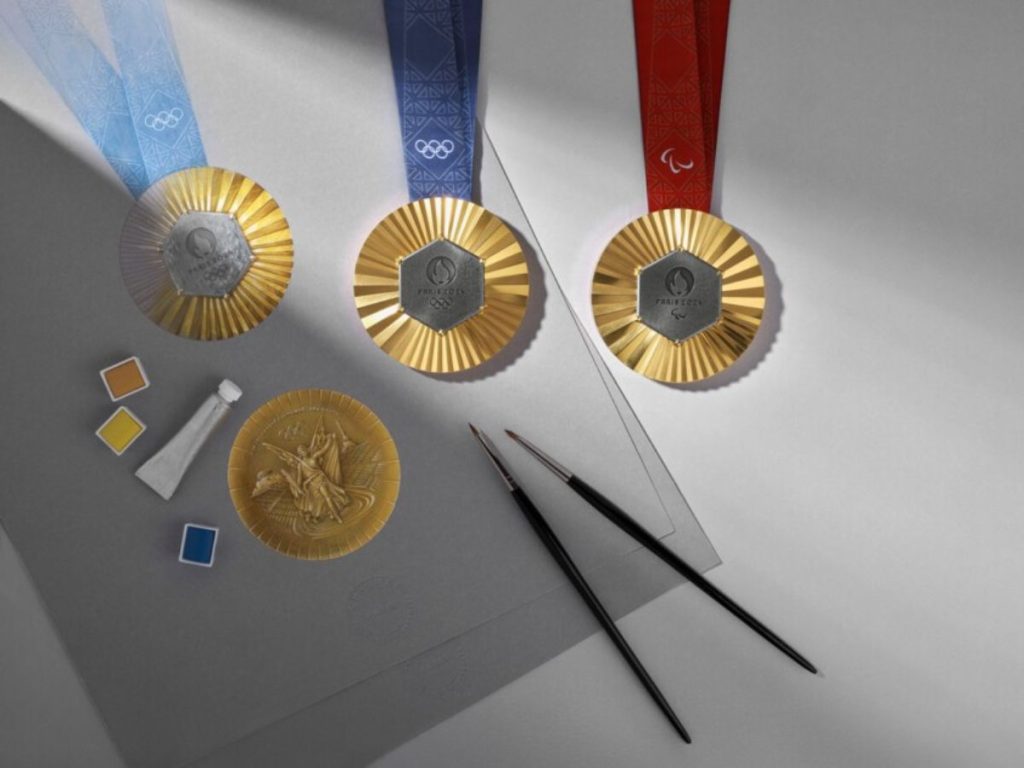
The first-place medals for the Paris 2024 Olympics include 523 grams of silver, coated in 6 grams of gold. Silver medals weigh 525 grams and are made of pure silver, while bronze medals weigh 455 grams and are made of copper, tin and zinc.
Winning an Olympic medal in 2024 could yield considerable investment value.
According to Oxford Economics, this means the gold is worth an estimated $1,027, the silver medal about $535 and the bronze medal approximately $4.60, based on the current prices of the commodities used to make them. This estimate would make the medals the most expensive ones in the history of the modern Olympic Games, surpassing the $708 record for the 2012 London Olympics.
Yet, winning an Olympic medal in 2024 could yield considerable investment value, driven by the buoyant metal markets.
The researchers estimated that, by the 2028 Los Angeles Olympic Games, the gold medals will have increased to$1,136, while silver medals will be $579 and bronze medals will be $5.2. By the 2032 Brisbane Olympics, the medals will be worth $1,612, $608 and $6, respectively.
A Parisian twist
Besides the value of the metals present in the medals, the Paris 2024 winning athletes have taken home a very special prize: a part of the Eiffel Tower.
“What makes this Paris 2024 medal special is that it will feature an original part of the Eiffel Tower,” said Tony Estanguet, the president of the Paris 2024 organising committee, upon presenting the new medal designs. “We wanted to offer all the medalists of Paris 2024, Olympic and Paralympic, a part of the Eiffel Tower from 1889.”
The pieces of the Eiffel Tower that are present in the 2024 Olympic and Paralympic Games in Paris will feature scrap metal from the Tower taken during refurbishments and repairs. These metal leftovers had been stored for years in a warehouse in a secret location. Each medal will include 18 grams of iron taken from the Eiffel Tower.