Diversification remains paramount in the current economic climate as various income streams offer tangible diversification benefits, acting as a risk mitigation strategy. The reciprocal relationship between stocks and bonds becomes evident during market fluctuations, emphasising the crucial aspect of diversification.
“We modelled our own profiles on their long-term expected returns, and they are more or less five, six, and 7% on average per year for our cautious, moderate, and aggressive profiles in the next 10 years,” said Maurice Gravier, Chief Investment Officer of Emirates NBD.
“So, it doesn’t tell you what will happen next year or the following but indicates how well quantitative models work.”
Gravier advocates for diversification not only across asset classes but also among regions and segments. A tailored strategic allocation aligned with individual investment horizons is deemed essential.
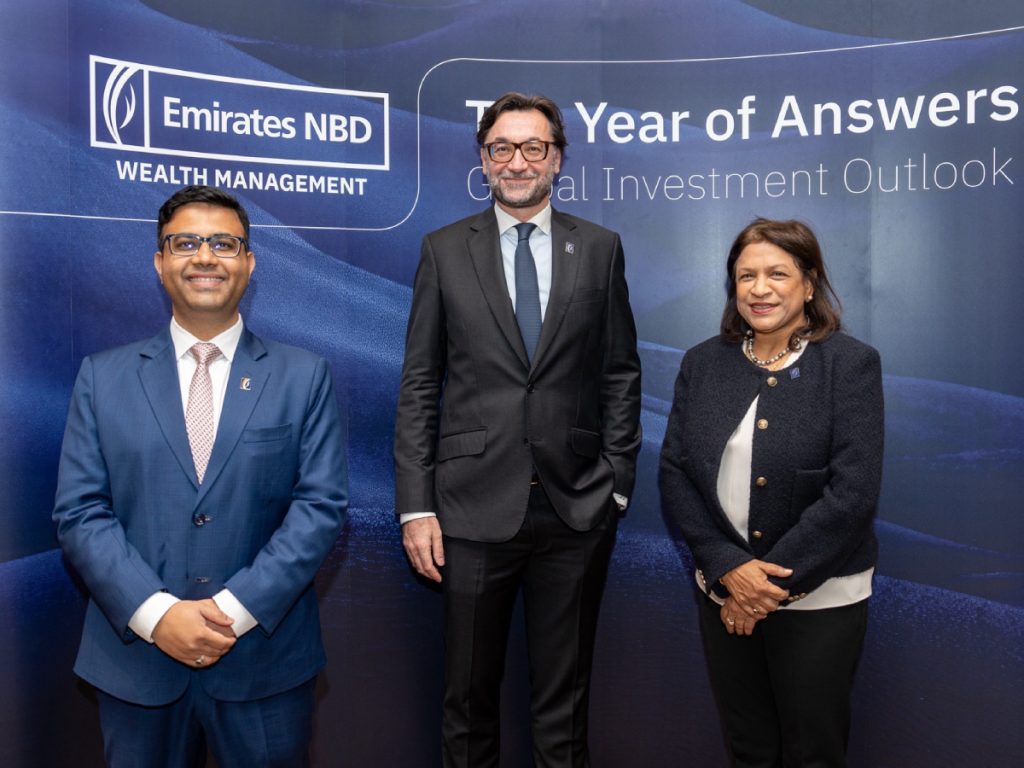
Speaking on the sidelines of the Annual Global Investment Outlook for 2024 presentation, Gravier explained that the big questions of 2023 are still here, but 2024 will provide answers. “Growth, inflation, central banks, geopolitics, elections and policies will take a direction,” he said. “These will be catalysts for the year and clues for the future.”
Anticipating a shift in central bank approaches, Gravier suggests a move towards less radical, more predictable measures. The investment landscape is witnessing transformative changes driven by international order and technology shifts.
Despite markets incorporating an ultra-consensual scenario, Gravier predicts sustained significant volatility. Economic data challenging existing scenarios and geopolitical developments are potential sources of market fluctuations. Certain asset classes may face limited upside potential in 2024 and heightened vulnerability to risk aversion.
Key trends
Regarding key trends, Gravier said 2024 will be a year of fundamentals. He anticipates slower growth, moderating inflation and less radical central banks that leaves room for fundamental analysis “because it’s not one big macro factor dominating everything”.
“We believe in selectivity and diversification because with central banks being less radical, you probably have the correlation between bonds and stocks that will change,” Gravier told Finance Middle East. “So at the portfolio level, when the big theme is diversification—have bonds and stocks, not just bonds, not just stocks.”
On the equity front, analysts expect the landscape to be determined by earnings growth. “We have seen an uptick in global earnings, and that’s very important for where valuations are, because after the rally in 2023, valuations are elevated, especially in developed markets and in India,” said Anita Gupta, Head of Equity Strategy at Emirates NBD. “Valuations are up for all the markets with over a 20% rise in 2023. Hence, earnings growth becomes extremely important.”
Gupta said that the factors that drove the rally in 2023 are expected to continue in 2024.
She emphasised that the one key factor that takes equities up in this region has always been dividend yield. So it’s a lot about income.
“So the companies that have increased the dividend payout both in absolute amounts as well as the percentage yield, we expect that to continue,” she explained. “The average return from IPOs in the UAE over the last three years has been 46%, and there are more companies coming to IPO this year that will add to the breadth and depth of the market.”

In fixed income, attractive yields are returning after a long time. Analysts expect the yields to move in an upward trajectory in 2024. “That’s because a lot of aggressive rate cut expectations are priced in, and because US economic data is pretty strong, that slowly get phased out, and that’s where you will see the long debted yields moving slightly up,” explained Satyajit Singh, CFA – Head, Fixed Income Strategy.
Market sentiment
Gravier reckons that the market is too confident when asked about market sentiment. “Frankly, it’s [market sentiment] a bit too confident, to be honest, because we have corrected the excesses of pessimism. Everyone was depressed at the end of October, and it took one good CPI and one change in the treasury allocation, and then the Fed began to change everything we didn’t say we had before. We have a lot of confidence.”
“Currently, there’s a substantial consensus forming around the idea of a soft landing. While we’re not dismissing it as baseless, it’s essential to note that the market may not be adequately prepared for adverse developments,” he added.
Rate hikes and economic impact
The impact of aggressive monetary tightening is surfacing, with signs of a cooling US labour market. Indicators like the three-month average of nonfarm payrolls and composite PMI readings suggest a tentative slowdown. Household spending, a key GDP growth supporter, will decrease as savings buffers from the pandemic era deplete. The Fed forecasts a growth slump to 1.4% in 2024 from an estimated 2.6% in 2023.
The UK and Eurozone economies hover on the edge of a technical recession, with composite PMI readings indicating anaemic growth. Emerging economies, particularly India, are anticipated to outpace their developed counterparts in 2024, with the IMF forecasting a 4% expansion.
Regional economic outlook
In 2023, global growth slowed to 2.9% from the post-pandemic rebound in 2022, accompanied by continued tightening of central bank monetary policies. The GCC, influenced by this global downturn, experienced a decline in headline GDP to 0.5% in 2023 from 7.6% in 2022. According to Emirates NBD’s Global Investment Outlook Report, this reduction was primarily due to significant cuts in oil production, particularly by Saudi Arabia. However, the non-oil sector displayed resilience, maintaining a growth rate of 3.7% in 2023, albeit lower than the 5.3% recorded in 2022.
Looser fiscal policies in Saudi Arabia and the UAE, with respective increases in government spending by 9.5% and 7.9% year-on-year, supported non-oil growth. Population growth contributed to aggregate consumer spending, countering the effects of higher interest rates and cost of living pressures. A rebound in tourism further stimulated activity in the transportation, hospitality and retail sectors. Government and private sector investments in strategic industries and mega projects significantly drove regional growth.
Looking ahead to 2024, global growth is expected to decelerate slightly to 2.9% from 3.0% in 2023, reflecting the impact of tight monetary policies dampening demand and investment, particularly in the first half of the year. The oil demand is anticipated to soften, particularly in advanced economies, exerting a drag on oil GDP growth in the GCC.
Oil prices are projected to average $82.5 per barrel for Brent crude oil in 2024, similar to 2023. Non-oil growth is anticipated to remain robust, averaging 3.6% across the GCC in 2024, supported by ongoing investment in ambitious economic diversification programs by oil-exporting countries.
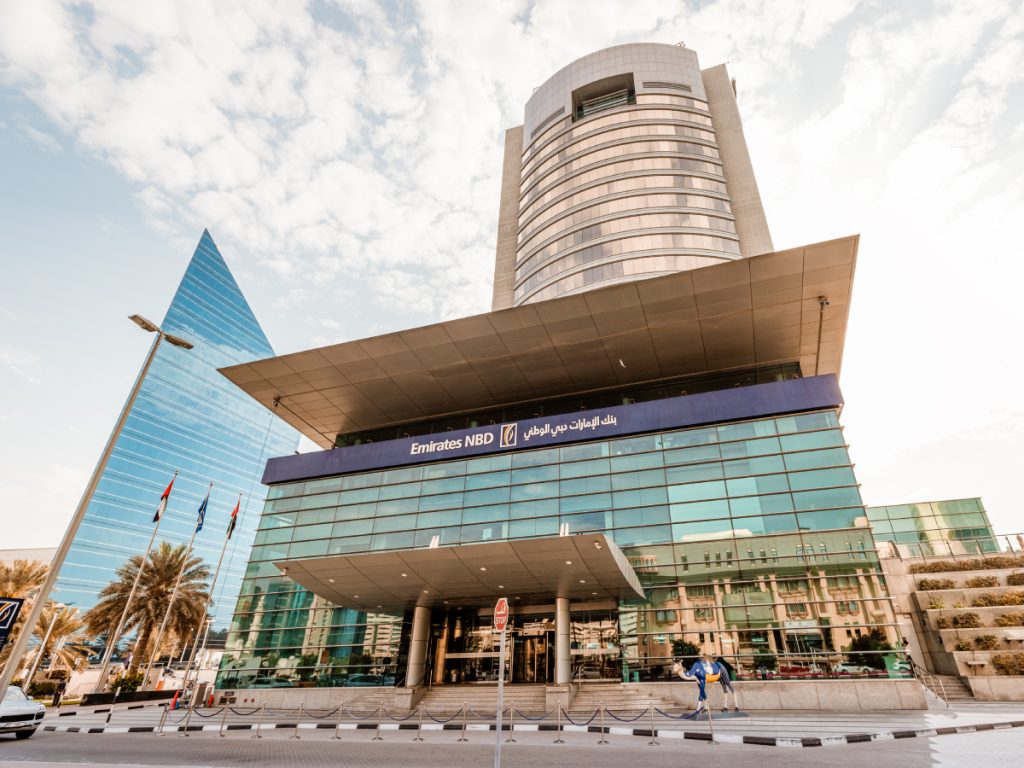
While government expenditure growth is expected to be more moderate in 2024, The report states that governments are not likely to cut spending or tighten fiscal policy significantly through higher taxes. Economic and social reforms will likely drive continued private-sector investment and growth in the expatriate population, particularly in Saudi Arabia and the UAE. Anticipated rate cuts from the Federal Reserve in the second half of 2024 are expected to boost demand for credit, supporting investment and consumption.
Tourism is expected to remain a pivotal driver of economic growth in the region in 2024 and beyond, with the return of visitors from China and the development of the Saudi tourism sector.
Inflation in the GCC, weighted by nominal GDP, slowed to an average of 2.8% in 2023 from 3.5% in 2022. Rising housing costs counterbalanced lower fuel, food, and services inflation in the UAE and Saudi Arabia. The disinflation trend is expected to persist in 2024, with the average Consumer Price Index (CPI) inflation forecast at 2.6% for the region.
Budget balance to shrink
Budget surpluses of 2022 narrowed in 2023 due to oil production cuts, lower oil prices, and increased spending. With little anticipated rebound in oil revenues in 2024, governments must curb spending growth to prevent further shrinkage in budget balances.
Saudi Arabia is expected to run a deficit of -4.3% of GDP in 2024, up from -1.9% in 2023, driven by continued investment spending for ambitious development plans. Bahrain and Kuwait are likely to incur small deficits, while Oman, the UAE, and Qatar are expected to maintain surpluses. Overall, sovereign balance sheets in the GCC are more robust than in previous years, characterised by lower public debt and healthy foreign exchange reserves, providing the flexibility to access capital markets at favourable rates if needed.